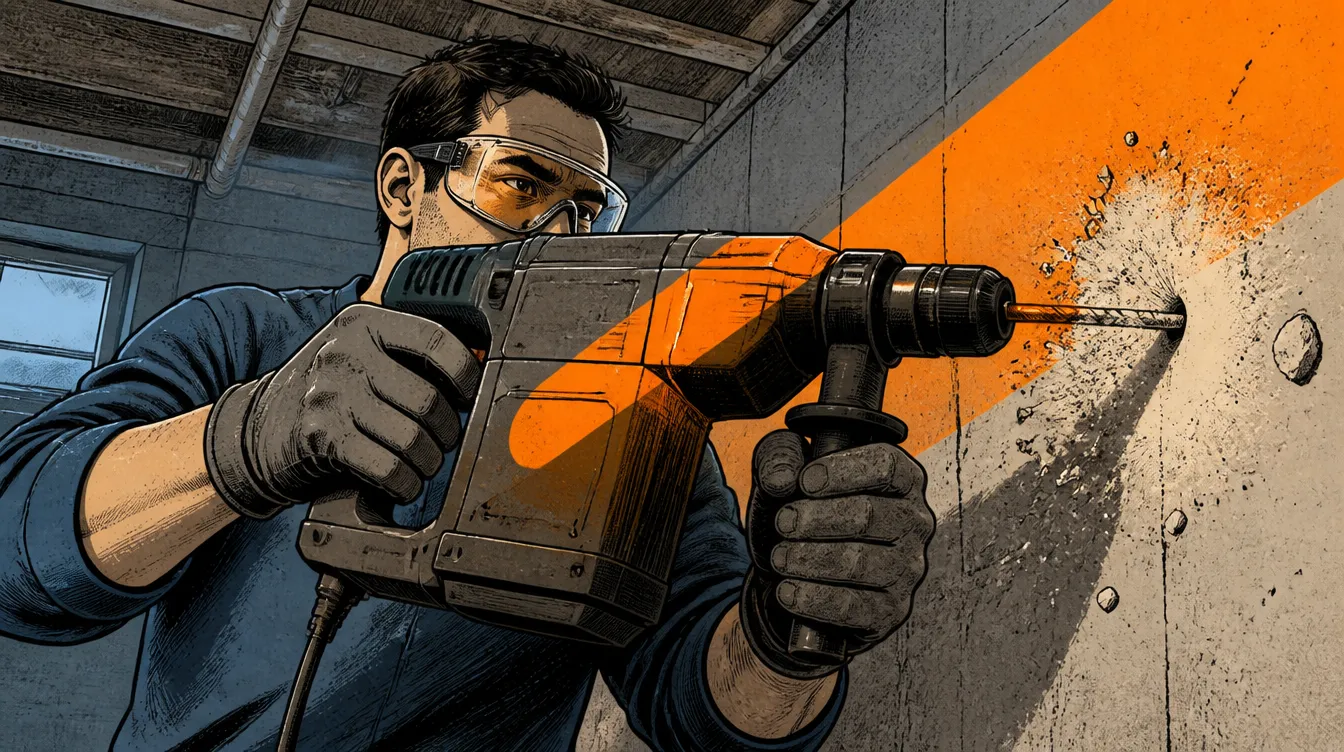
A rotary hammer and a cordless hammer drill are not technically the same tool. A true SDS rotary hammer is a heavier, dedicated concrete-drilling machine, while a hammer drill is the everyday cordless tool that adds a hammer mode on top of standard drilling and driving. No dedicated rotary hammer shootout exists in the testing corpus behind this guide, but a real, hands-on comparison of 11 cordless hammer drills does exist, and it answers the exact question most rotary hammer shoppers are actually asking: which brand's chuck and drivetrain can take real abuse without slipping.
What the testing showed
The numbers below come from Project Farm's cordless hammer drill comparison, which put 11 drills through identical mechanical tests. This test covers cordless hammer drills, not dedicated SDS rotary hammers, and the guide is upfront about that distinction, but the chuck-strength and construction findings translate directly to anyone shopping in the heavy-duty drilling category.
The lineup included Kimo, Hercules, DCK, Skil, Craftsman, Ridgid, Ryobi One+ HP, Makita, Milwaukee, DeWalt, and Flex, ranging from 57 dollars to 279 dollars for the full kit.

Runner-up
Milwaukee
Price shown in test: $249 (drill only)
Affiliate link. We may earn a commission at no extra cost to you.
The standout measurement across the whole test was the chuck grip test, which measured, in inch-pounds, how much torque a chuck could withstand before the bit slipped.
The Flex edged the field overall, Makita crushed the chuck test

Winner
Flex
Price shown in test: $279 (drill, 6Ah battery, charger, and carrying case)
Affiliate link. We may earn a commission at no extra cost to you.
The Flex finished with the best average result across the whole comparison, described directly: "The Flex came out with the best average finish at 2.3." Milwaukee was the runner-up. At 279 dollars, the Flex is the only 24V system in the lineup, built around a stacked lithium battery the brand claims delivers "200% more power" than standard 18-20V packs, and it backed that up with a chuck grip result of 210 in-lb, second only to the outright chuck-test winner.
That outright winner was the Makita, which posted 218 in-lb of chuck grip, the best of all 11 drills tested, described in the test as gripping so hard "the drill motor itself began rotating, forcing the narrator to stop the test." That is a meaningful data point for anyone drilling into masonry or concrete, where a chuck that slips under load is the single most common failure point.
Where the budget drills fell apart
The Kimo, at just 57 dollars with two batteries and a charger, lost its grip at only 54 in-lb, the worst result of all 11 drills. The DCK, at 80 dollars, was even weaker, losing grip at 50 in-lb, tied for the worst in the field. Both are a fraction of the price of the Makita and Flex, and the chuck test shows exactly where that savings comes from.
The mid-tier surprises
Hercules, sold at Harbor Freight for around 190 dollars with battery and charger, posted a genuinely strong 159 in-lb chuck grip result, over 100 in-lb better than the Kimo, and the test called its ratcheting-chuck marketing claim "an honest marketing claim," a rare compliment for a budget-adjacent brand. The Ryobi One+ HP, at 129 dollars for the drill only, posted 119 in-lb, ahead of both the Ridgid (85 in-lb) and the pricier Craftsman kit (102 in-lb) at that stage of testing.
How to read this for your own purchase
Since a dedicated SDS rotary hammer test does not exist in this corpus, use the chuck-strength and construction lessons from the cordless hammer drill comparison, and be honest with yourself about which tool your job actually calls for.
If you are drilling repeated large-diameter holes into concrete or masonry and considering a step up to a true SDS rotary hammer, the tested data here still applies to the underlying question: a chuck or bit-retention system that slips under torque is the failure mode to avoid, and that is exactly what separated the Makita and Flex from the Kimo and DCK in this test.
If a cordless hammer drill is genuinely what you need (occasional masonry anchors, mixed wood and concrete work), the Makita's chuck-test win and the Flex's overall win both point to real, measured durability advantages worth the higher price, while the Ryobi One+ HP offers a credible middle ground at 129 dollars.
Consider vibration reduction features for repeated concrete or masonry work. None of the drills in this test were dedicated SDS rotary hammers, so anti-vibration handles and dampened chuck assemblies, common on true rotary hammers, were not part of the measured comparison. If your work involves sustained overhead or repeated drilling into masonry, that feature matters for user fatigue in a way this hammer-drill test could not capture.
A few universal rules this test supports for heavy-duty drilling tools:
- Chuck design matters as much as motor power. The Makita's all-metal, self-ratcheting chuck outperformed drills with higher claimed torque ratings once actual grip strength was measured.
- A ratcheting chuck claim is worth verifying, not assuming. Several drills in this lineup claim a ratcheting or metal chuck, but the measured results separated the ones that actually delivered from the ones that did not.
- Match battery voltage to the tool's real power delivery. The 24V Flex and the highest-voltage systems in this test posted some of the strongest chuck results, though the Makita's 18V system still beat it on this specific measurement.
Browse the rest of the power tools tests for drills, impact drivers, and saws measured on real torque, speed, and durability numbers.