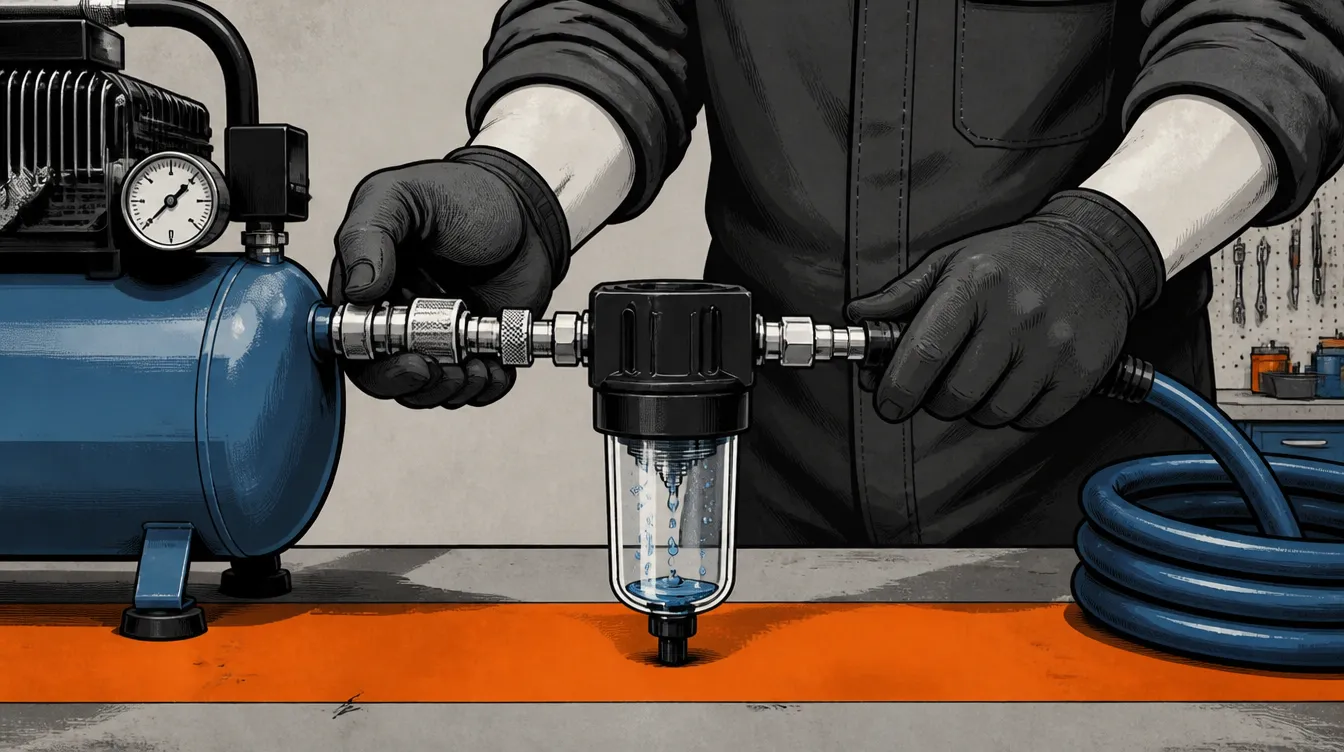
Moisture in a compressed air line is the quiet problem that ruins paint jobs, rusts tool internals, and clogs spray equipment months after the compressor itself seems fine. An air dryer accessory is the fix, but no dedicated air dryer shootout exists in the testing corpus behind this guide. What does exist is a real, hands-on comparison of 13 air compressors, and while it does not test dryer accessories directly, it exposes exactly the kind of unreliable manufacturer claims that make an independent measurement so valuable before you spend money on any air-system accessory.
What the testing showed
The numbers below come from Project Farm's air compressor comparison, a 13-unit test. This is not an air dryer test specifically, no moisture-removal accessory was part of this comparison, but the compressor data it covers, CFM output, claimed versus real performance, and internally inconsistent specs, is directly relevant to anyone building out a complete, moisture-managed air system.
DeWalt finished as the overall winner at 279 dollars, described in the test as running "circles around the competition" on raw performance, with claims of 200 max PSI, far above the 100-135 PSI typical of the rest of the tested field, and 3 CFM at 90 PSI. Husky was the runner-up, claiming 80 percent quieter operation and using a metal silencer the test noted was different from the plastic silencers on most other brands. Fornax, at 135 dollars, was named the budget pick.

Winner
DeWalt
Price shown in test: $279
Affiliate link. We may earn a commission at no extra cost to you.

Runner-up
Husky
Price shown in test: $159
Affiliate link. We may earn a commission at no extra cost to you.

Budget pick
Fornax
Price shown in test: $135
Affiliate link. We may earn a commission at no extra cost to you.
Marketing claims did not always match up internally
Campbell Hausfeld's own packaging contained a direct contradiction flagged in the test: "the marketing material claims 2 HP but the box it ships in claims 1 HP, an internal claim conflict the presenter calls out directly." That kind of inconsistency is exactly the reason to be skeptical of any compressed-air accessory's claims, dryers included, unless they come with independent verification.
CFM at 90 PSI, the figure that determines actual sustained air delivery, ranged from 0.5 CFM on the Craftsman up to 3 CFM on the DeWalt, a six-fold difference across a field that mostly clustered around similar price points.
How to read this for your own purchase
Since no air dryer accessory was part of any cited test, apply the lesson this compressor data makes clear about verifying claims independently, and think through the moisture problem at the system level rather than trusting a single accessory's marketing.
Moisture accumulates based on your compressor's CFM output and duty cycle, not just tank size. A compressor pushing more CFM moves more humid air through the system faster, which means more condensation to manage. Match any dryer accessory's rated flow capacity to your specific compressor's tested (not just claimed) CFM output.
Refrigerated and desiccant dryers solve different problems. A refrigerated dryer cools the air to condense out moisture continuously and suits a compressor that runs long duty cycles; a desiccant dryer uses an absorbent material and suits intermittent, lower-volume use like a home garage. Neither type was covered by any cited test, so choose based on your actual duty cycle rather than brand reputation alone.
Check the actual duty cycle of your compressor before sizing a dryer. The tested units in this comparison ranged from a 0.5 CFM Craftsman up to a 3 CFM DeWalt, and a dryer rated for a small, intermittent-use compressor will bottleneck airflow if paired with a higher-output unit, while an oversized dryer on a small compressor is simply wasted money. Match the dryer's rated CFM capacity to the compressor's actual tested output, not its claimed maximum, since this comparison showed real gaps between the two on several units.
A few universal rules the compressor data supports for building a complete, dry air system:
- Verify a claimed spec against an independent test wherever one exists, since this comparison showed real gaps between marketing language and delivered performance, and one brand's own packaging disagreeing with its own marketing.
- A simple, cheap fix, an inline water trap drained regularly, catches a meaningful amount of moisture before it ever reaches a dedicated dryer, and costs a fraction of a full dryer unit.
- Locate your air dryer as close to the point of use as practical. Moisture continues to condense in the line between the compressor and the dryer, so a dryer mounted right at the tool connection catches more than one mounted immediately at the tank.
Consider your ambient humidity and how many hours a day the compressor actually runs. A garage in a humid coastal climate running a compressor for hours of continuous spray painting needs a more capable dryer than an occasional weekend user in a dry climate running short bursts for a nail gun, even with an identical compressor. None of the units in this test were paired with a dryer during testing, so this is a planning consideration to apply on top of the tested CFM figures rather than something the source data measures directly.
Browse the rest of the power tools tests for more compressed-air and shop equipment measured against its own claims.