A circular saw lives or dies on how fast and clean it cuts through the material actually in front of you, not on the RPM number printed on the box. Milwaukee's cordless circular saws carry a premium price and a loyal following, but that reputation gets tested the moment you put a stopwatch and a tachometer on the blade next to nine other saws doing the exact same cut.
That is exactly what happened in a recent hands-on comparison, and the Milwaukee did not walk away with an easy win. It finished close to the top, but a cheaper rival edged it out, and a genuinely inexpensive option turned in a result nobody expected.
What the testing showed
The numbers below come from Project Farm's cordless circular saw comparison, which measured 10 saws under the same conditions. The lineup included FLEX, Milwaukee Fuel, Craftsman, Kobalt, WORX Nitro, Bosch, Makita, DeWalt, Ryobi One+ HP, and Ridgid, ranging from 70 dollars up to 300 dollars for the tool, battery, and charger together.
Budget pick
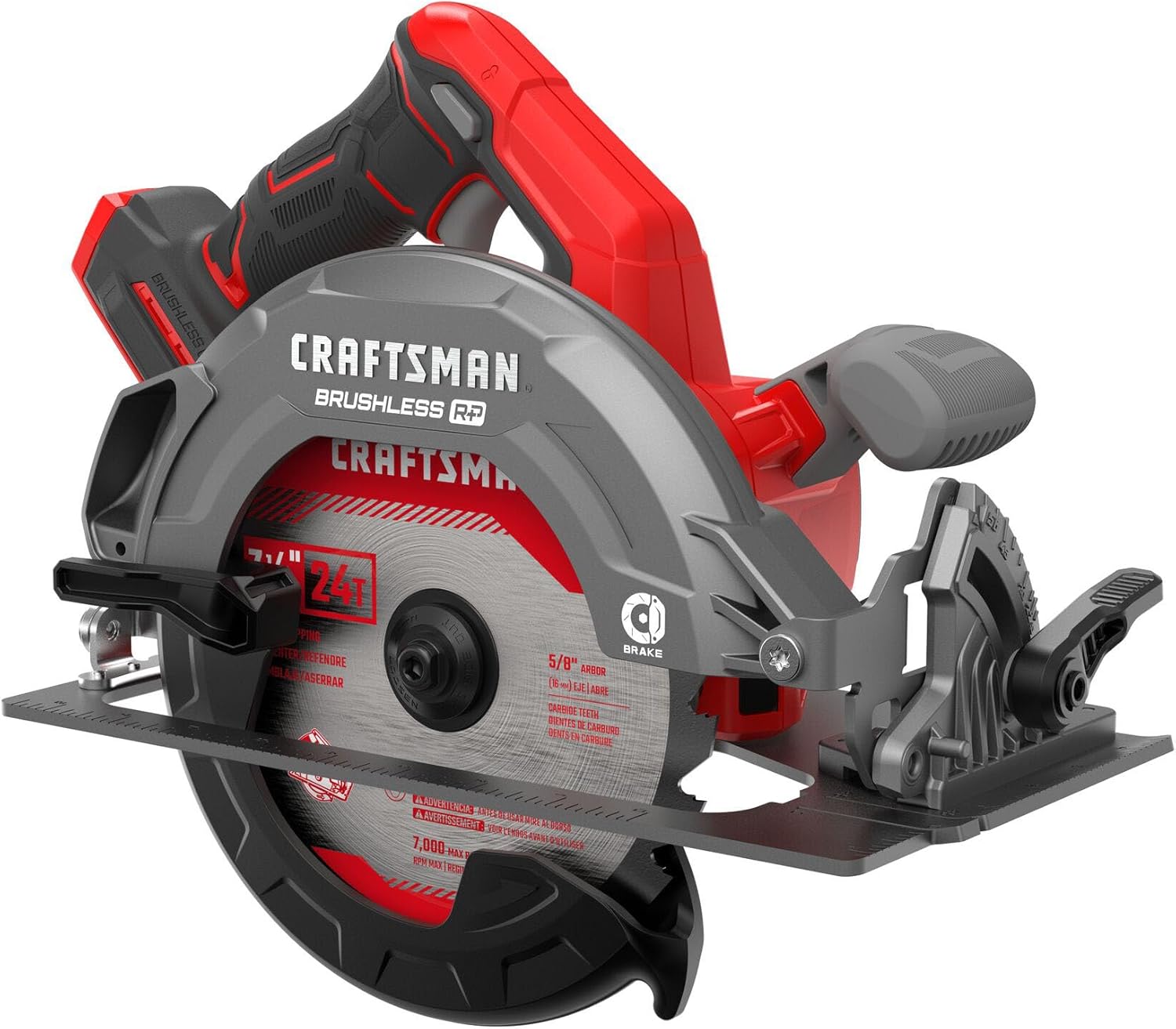
Craftsman
Price shown in test: $70, described in the transcript as the same price as the Ridgid
Affiliate link. We may earn a commission at no extra cost to you.
The core measurement was motor RPM, both the manufacturer's claimed figure and the actual measured spin rate under no load.
The FLEX edged out the Milwaukee, barely

Winner
FLEX
Price shown in test: $300 for the saw, the battery, and the charger (no tool-only option was found)
Affiliate link. We may earn a commission at no extra cost to you.

Runner-up
Milwaukee Fuel
Price shown in test: $274 for just the saw and not the battery and charger
Affiliate link. We may earn a commission at no extra cost to you.
The FLEX finished on top with an average finish of 2.6 across the categories measured, with the video crediting it directly: "Looking at just saw performance, the Flex came out on top with an average finish of 2.6, but the Milwaukee finished in a close second." The FLEX, at 300 dollars for the saw, battery, and charger, claimed 5,800 RPM and measured 5,925 RPM, the highest raw spin rate of any saw tested.
The Milwaukee Fuel, priced at 274 dollars for just the saw (no battery or charger included), claimed the same 5,800 RPM figure and measured 5,848 RPM, described in the test as the fastest-spinning saw at that point in the video, though its final measured number was edged out by the FLEX once every saw had been checked.
The budget pick came in well under the leaders
Craftsman, at just 70 dollars, the same price as the Ridgid, was named the test's budget pick. It claimed up to 5,000 RPM but "came up about 500 short of his advertised RPM rating," which against the stated claim works out to roughly 4,500 RPM measured, a shortfall the test flags directly rather than smoothing over.
The WORX Nitro, at 118 dollars, claimed up to 6,100 RPM and measured 5,646, described as the fastest-spinning saw up to that point in the video sequence before the FLEX and Milwaukee were tested. The Makita, at 170 dollars, measured 5,812 RPM, close behind the top two.
The rest of the field
The Kobalt XTR, running at a higher 24V system like the FLEX, claimed 5,500 RPM and measured 5,331. The DeWalt measured 5,275 against a claimed 5,500. The Bosch Core 18V measured 4,977, close to its claimed 5,000. The Ryobi One+ HP measured 4,193 against a claimed 4,300 figure, essentially matching its own rating. The Ridgid, the only saw in the test with a brushed rather than brushless motor, measured 3,401 RPM against a claimed 3,700, "about 300 RPM short of the claim," and was the slowest saw of the 10 tested.
How to read this for your own purchase
The tight gap at the top of this test, FLEX at 5,925 RPM and Milwaukee at 5,848, is the real story here. Both are excellent, both are close, and the difference in practice is unlikely to be noticeable on a typical cut. That should change how you weigh the purchase decision.
If you already own the Milwaukee M18 platform, this test gives you real confidence: the Milwaukee Fuel finished second out of 10 saws by a razor-thin margin, ahead of every other 18V saw in the lineup including the DeWalt, Bosch, and Makita. You are not sacrificing meaningful cutting speed by staying in the ecosystem.
If you are choosing a platform from scratch, the FLEX posted the single highest measured RPM in the test, but at 300 dollars for the full kit it is also one of the pricier options. The Craftsman, at less than a quarter of that price, still delivered a workable saw even though it missed its own advertised spec by a meaningful margin.
Consider blade compatibility and bevel range alongside raw RPM. This test measured motor speed specifically, not blade capacity or bevel angle range, both of which vary across the 10 saws and matter just as much for real cutting tasks like ripping thick stock or cutting angled trim, so check those specs directly on whichever saw's RPM result you find most compelling.
A few universal rules the RPM data backs up:
- Claimed RPM and measured RPM are two different numbers. Several saws in this test, including the Craftsman and DeWalt, measured meaningfully below their own advertised figures, so treat the spec sheet as a starting point, not a guarantee.
- Brushless motors outperformed the one brushed saw in the field. The Ridgid, the only brushed motor tested, finished last on measured RPM by a wide margin.
- Higher voltage does not automatically mean higher RPM. The 24V Kobalt XTR measured lower than several 18-20V saws in the same test, so voltage alone is not the deciding spec.
Keep comparing the tools that do the heavy lifting on the power tools hub, where saws, drills, and impact drivers get put through the same kind of measured, head-to-head testing.