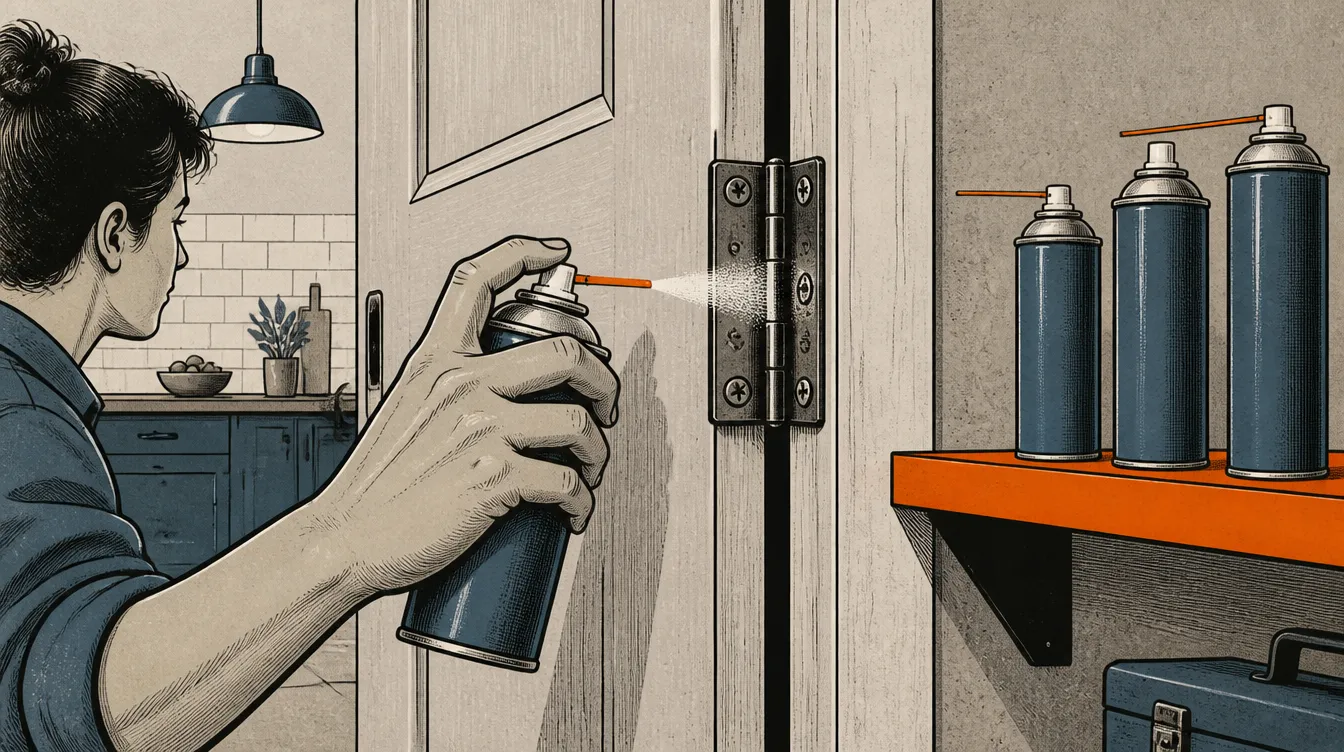
Silicone spray gets bought for the small, unglamorous jobs: a squeaky garage door track, a sticky drawer slide, a rubber seal that needs to stay pliable through winter. It is cheap, it is everywhere at the hardware store, and almost nobody has ever seen a real comparison of one brand against another for the thing that actually matters, whether it protects the metal it touches from rust and corrosion over time.
No dedicated silicone spray shootout exists in the testing corpus behind this site. What does exist is a close relative: an 11-brand comparison of penetrating oils and rust-protection sprays, tested with the exact kind of salt-water exposure that a garage door track or an outdoor hinge actually faces. The chemistry is not identical to silicone spray, but the buying lessons, and the gap between marketing claims and measured protection, translate directly.
What the testing showed
The numbers below come from Project Farm's penetrating oil and rust-protection comparison, which tested 11 products including Royal Purple, Fluid Film, Seafoam Deep Creep, WD-40, Liquid Wrench, WD-40 Rust Specialist, CRC Knock'er Loose, BG In-Force, PB Blaster, AeroKroil, and even brake fluid as a corrosive control. This is not a silicone-spray-specific test, and no product here is a silicone lubricant, but it is the closest available data on how a light protective spray performs against rust over time.
Every product was applied to flat metal in a salt-water spray test, five applications over two hours, then graded on how much rust formed.
The top performers, and a near-tie at the very top
Royal Purple Max Film and Fluid Film finished essentially tied at the top. The video's own summary put it plainly: "I really think that royal purple and fluid film came out on top and a virtual tie followed very closely by seafoam." Fluid Film showed no visible rust formation whatsoever and earned an A+. Royal Purple also showed no visible rust and was rated among the best products the tester has ever evaluated for this purpose. Seafoam Deep Creep came in close behind at an A grade, with the only rust noted attributed to wash-over from an adjacent surface, described as the tester's own error rather than a product failure.
Where familiar names landed
WD-40, the product most people already have in the garage, graded a solid B on the salt-water test, described as performing "better than the PB Blaster but not nearly as good as several other products." WD-40 Rust Specialist, a different formula from the same brand aimed specifically at rust prevention, graded a B, "very close to CRC Knock'er Loose."
Liquid Wrench, which does not even market itself as a rust preventer, was tested anyway and graded a C, with "quite a bit of rust formation." AeroKroil, at best, also landed a C, described as only slightly better than an untreated control and clearly beaten by PB Blaster in a direct side-by-side comparison.
The control that failed worst
Brake fluid, included as a corrosive reference point rather than a real recommendation, produced "a tremendous amount of deep corrosion, far worse than even the untreated control," and earned an F. It is a useful reminder that not every liquid in a shop is safe to use as an improvised lubricant or protectant, whatever internet folklore suggests.
How to read this for your own purchase
Since no product tested here is technically a silicone spray, use this data the way it is meant to be used: as evidence about which chemistries and brands actually deliver on rust and corrosion protection claims, and apply that skepticism to your silicone spray purchase too.
If rust and corrosion prevention is the main job (an outdoor hinge, a trailer latch, exposed hardware), the tested data points toward products in the same family as Fluid Film or Royal Purple over a generic all-purpose spray, since those two graded at the very top of a genuinely tough salt-water test.
If the job is just reducing friction and squeak on an indoor track or a rubber seal, which is what most silicone spray purchases are actually for, the rust-protection ranking matters less than checking the can specifically states it is silicone-safe for rubber and plastic, since some penetrating oils and lubricants can degrade rubber seals over time.
Test compatibility with rubber and plastic before full application. Some penetrating oils and general lubricants in the tested corpus are formulated primarily for metal-on-metal friction and rust protection, not for extended contact with rubber seals, gaskets, or plastic housings, the exact surfaces a silicone spray is usually reaching for. Since silicone spray is specifically marketed as rubber and plastic safe, verify that claim on the can before assuming a rust-protection winner from this test is a safe substitute on those materials.
A few universal rules this test supports for any spray lubricant purchase:
- A brand's general reputation does not guarantee it wins on the specific claim it's making. WD-40 is the most recognized name in the category and still graded behind several less famous rivals on rust protection specifically.
- Don't substitute an unrelated shop liquid for a purpose-built product. Brake fluid's F grade in this test, far worse than doing nothing at all, is the clearest possible warning against that instinct.
- Reapplication schedule matters as much as the product. Every top performer in this test was applied multiple times over the test window, not once and forgotten.
For more shop chemicals and lubricants judged on real results instead of label claims, browse the chemicals and lubricants hub.