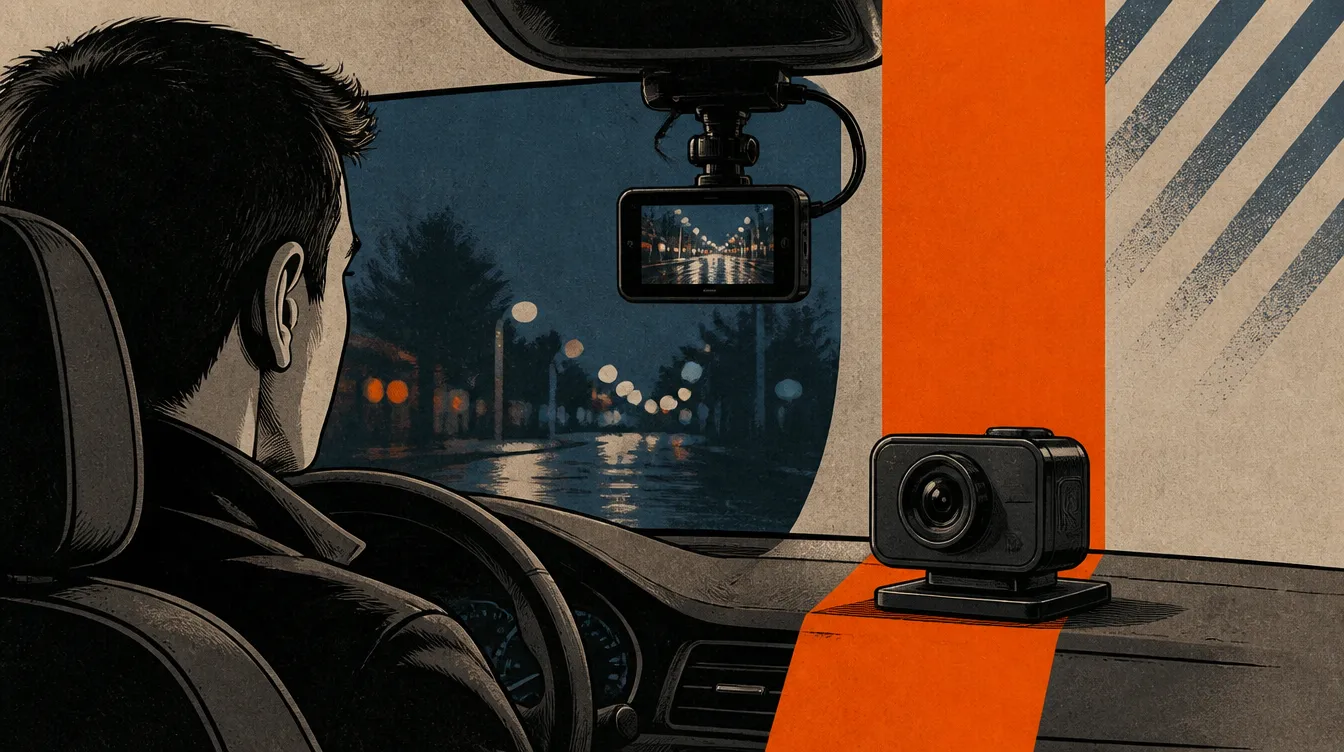
Dash cam footage is only as good as the worst lighting condition it has to handle. A camera that looks crisp parked in your driveway at noon can turn into a blurry, glare-washed mess the moment you drive west into a sunset, or a grainy smear once the sun goes down. And since accidents do not schedule themselves around good lighting, the conditions that actually matter are the hard ones: sun glare, night driving, and reading a plate or sign at real driving speed.
So a hands-on tester bought 11 dash cams and specifically pushed them through daytime, sunset-glare, and night vision readability tests side by side. The gap between how these cameras perform in easy light versus hard light turned out to be the whole story.
Here is what actually held up.
What the testing showed
Every result below comes from Project Farm's independent comparison. You can watch the full breakdown on the complete dash cam showdown, which specifically stresses each camera with sunset and night conditions in addition to normal daytime driving.
The 11 cameras were tested on license plate readability facing into the sunset at increasing static distances, road sign readability while driving past at 35 miles per hour, intersection readability facing directly into the sunset, night vision readability of a street sign at stepped distances, and readability of a digital light box and gas station price sign. Each camera received an overall average finish rank across all five conditions.
Sunset glare separated the field hard
Facing straight into a low sun is one of the toughest things any camera sensor has to do, and this test built two separate stress points around it: the license plate test and the intersection test, both shot facing into the sunset. Cameras that looked competitive in normal daylight readability noticeably dropped off once the glare was factored in, which is exactly the scenario an insurance claim or a hit-and-run report would depend on.
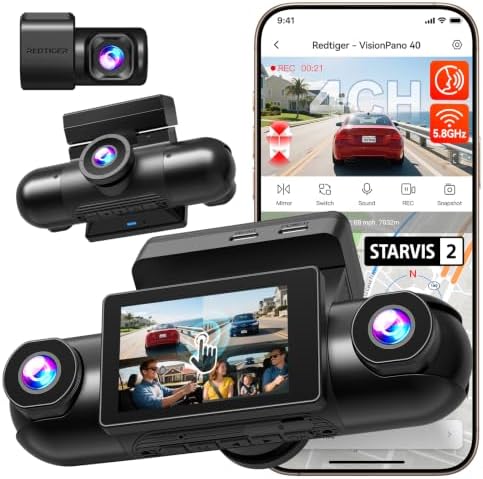
Runner-up
Red Tiger
Price shown in test: $100 with coupon
Affiliate link. We may earn a commission at no extra cost to you.
Night vision was not a simple resolution contest
The night vision test measured readability of a street sign at stepped distances in the dark, a different challenge than the daytime tests since it depends heavily on sensor sensitivity (measured in this test lineup by specs like Starvis and Starvis 2 sensors) rather than raw resolution. Viofo's 5MP Starvis sensor and Rove's Starvis 2 sensor were both built specifically around low-light performance, and that shows up in how the two cameras were positioned in the overall field: Viofo finished on top overall with an average rank of 1.3, while Rove was noted as performing fairly well throughout, just not quite matching Cool Crazy on average across every test.

Winner
Viofo
Price shown in test: $114
Affiliate link. We may earn a commission at no extra cost to you.
The overall winner held up across every condition, not just the easy ones
Viofo's 1440p, 60 frames per second, Starvis-sensor camera finished with the best average result of the 11 tested, at 114 dollars. The tester's verdict: "the VIFO pretty much ran circles around the competition and had an average finish of 1.3... If I can only choose one dash cam, I'd definitely go with the VIOFO." That is notable specifically because the win held across the sunset-glare and night-vision conditions, not just in easy daytime driving, which is the harder and more meaningful bar to clear.
The weakest performers struggled specifically once conditions got difficult
The V300, the cheapest camera tested at 22 dollars with no included memory card, was consistently the weakest or near-weakest performer across nearly every test in the video, and that gap widened in the harder lighting conditions. The Ovaman, at 30 dollars, was described as struggling quite a bit throughout the showdown as well. Both illustrate the same pattern: a budget camera might look adequate in a parking lot demo, but the gap to a well-tested sensor shows up hardest exactly when you would need the footage most.
How to read this for your own purchase
If you are buying a dash cam specifically to have usable evidence when it counts, daytime performance in good light is close to irrelevant. What matters is how the camera holds up facing a low sun and how it resolves detail at night, and that is exactly where this test drew its clearest separations.
If your commute involves regular sunrise or sunset driving, prioritize a camera that was specifically tested and held up under sunset-facing conditions, since that is one of the hardest and most common real-world scenarios a dash cam will face.
If most of your driving happens at night, pay attention to sensor specs like Starvis or Starvis 2, which were the differentiator between cameras that could actually read a street sign in the dark and cameras that could not.
A few universal rules the results support:
- Test conditions matter more than test scores. A camera's overall rank is only useful if it was actually stressed under sunset glare and night driving, not just measured in ideal daylight.
- A cheap camera's weaknesses concentrate in hard conditions. The lowest-priced cameras in this test were not just slightly behind in easy light, they fell apart specifically once glare or darkness entered the picture.
- Buffered parking mode and a quality SD card matter for actually retrieving footage after an incident, which is a separate consideration from image quality but just as important in practice.
Want to see how these cameras compare on brand-versus-brand overall rankings rather than lighting conditions specifically? Browse the rest of the gadgets and tech tests for more head-to-head breakdowns.