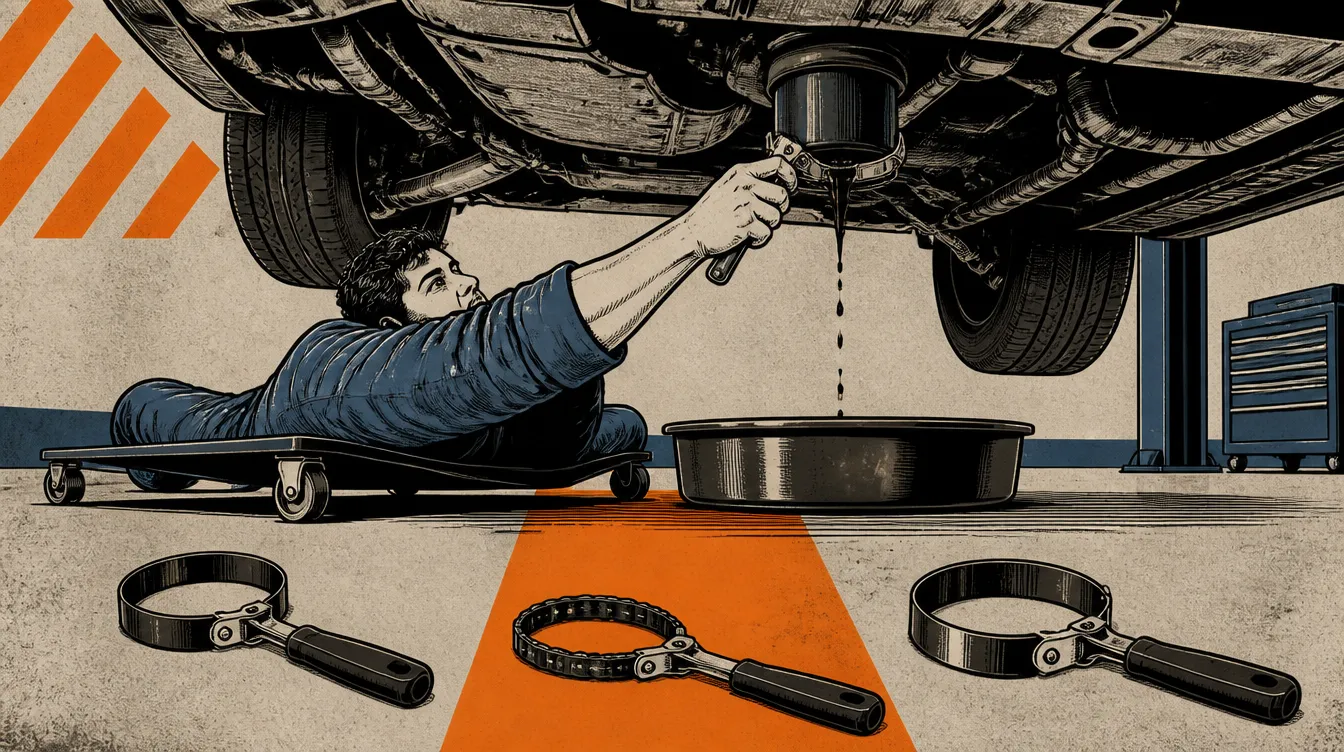
A stuck oil filter turns a 20 minute driveway oil change into an hour of skinned knuckles and a trip back to the store for a different tool. Every filter wrench on the shelf, whether it is a strap, a cap, or a claw style, promises the same thing: grip on a smooth, oily, awkwardly placed cylinder that does not want to move. None of them tell you which style actually holds under real torque once the filter has been baked onto the block by heat and time.
Here is the honest situation. There is no hands-on test of oil filter wrenches specifically in this archive yet. What does exist is a close cousin: a 17-tool bench test of extractor wrenches, the class of tool built for exactly the problem an old, seized filter presents: a rounded, damaged, or slick fastener that a normal wrench cannot bite into. The mechanics are the same, so the results are worth reading before you buy.
What the testing showed
The numbers below come from Project Farm, who bought 17 wrenches designed for stuck, rounded, or damaged fasteners and tested them against undamaged, partially rounded, and fully rounded bolts. The full test is on the 17-tool extractor wrench comparison, and none of it was run on an actual oil filter, so treat the numbers below as evidence about grip mechanics, not a direct filter wrench ranking.
The lineup included locking pliers, universal sockets, self-adjusting wrenches, and dedicated extractor sets from Irwin Vise Grip, Stanley, Crescent, GearWrench, Capri Tools, Snap-on, Matco, and more, each run through three rounds:
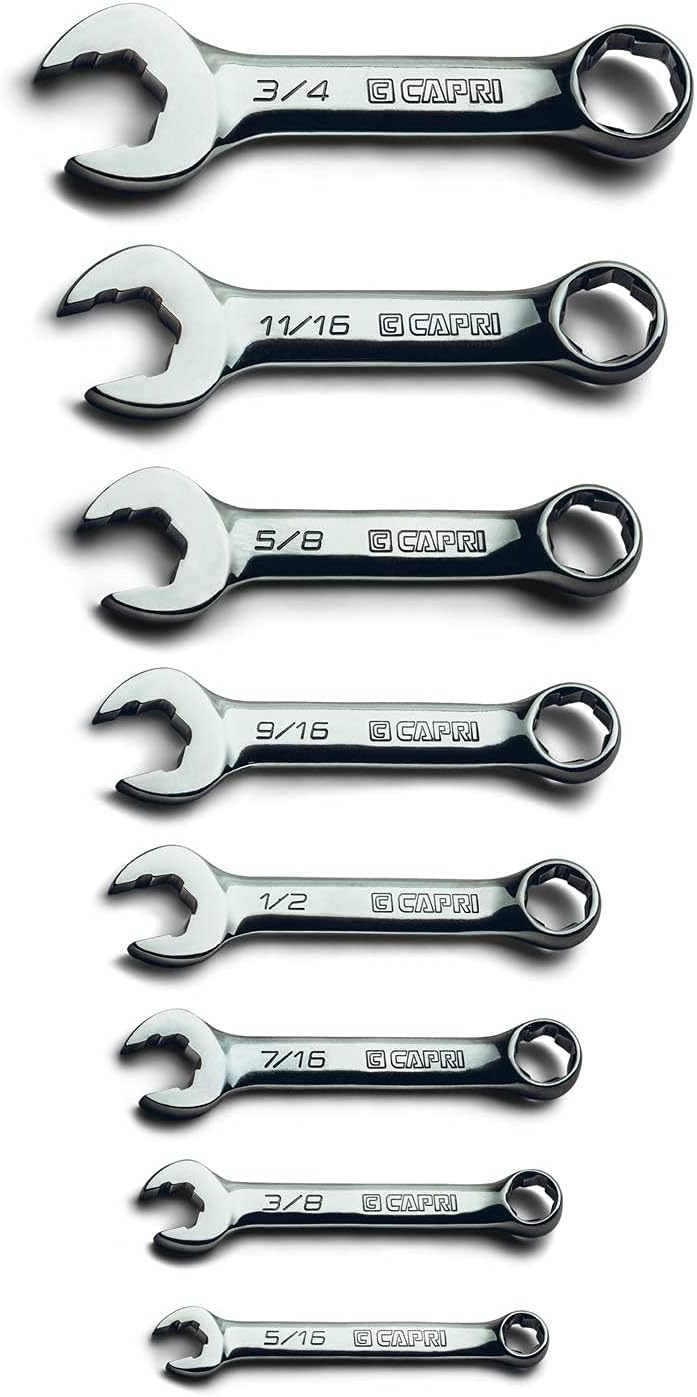
Winner
Capri Tools
Price shown in test: $98 for eight wrenches or $12.25 each
Affiliate link. We may earn a commission at no extra cost to you.
- Round 1, grip on an undamaged bolt, a partially rounded bolt, and a fully rounded bolt.
- Round 2, open-end max torque on undamaged and partially rounded bolts.
- Round 3, six-sided contact max torque, plus a durability check.
Cheap grip tools held their own against expensive sets
The 14 dollar Irwin Vise Grip locking pliers were the cheapest tool in the entire test and still turned in the best overall performance in the open-end max torque test on an undamaged bolt, producing 100 foot-lb. On a fully rounded bolt, though, even the Irwin gave up at only 20 foot-lb, a reminder that no single tool covers every stage of fastener damage.
The GearWrench extractor set, working out to about 3 dollars per wrench, tied with Snap-on for causing the least visible damage to the bolt in round 1 and had one of the smallest open-side footprints in the lineup, useful in a tight engine bay where an oil filter is often wedged against the frame or an exhaust manifold.
The purpose-built extractor set won on damaged fasteners
Capri Tools, at roughly 12 dollars per wrench in an eight-piece set, was the reviewer's declared favorite specifically for damaged and rounded fasteners. It maintained grip on a partially rounded bolt at 61 foot-lb of torque, well above tools that gave up much earlier, though the testing notes flag that the wrench applies pressure away from the bolt's corners, which caused visible bolt damage and some chrome plating wear on the tool itself over repeated use.
The pattern across the whole test: purpose-built extractor geometry beat generic adjustable wrenches once a fastener was rounded, but that same aggressive grip geometry could mark up an otherwise good bolt on the first round.
The most expensive tool in the test was not built for this job
Snap-on, at 469 dollars for a set of seven wrenches, working out to 67 dollars each, was by far the most expensive tool in the entire lineup, more than thirty times the cost of the Irwin locking pliers. The test notes are direct about why that price did not translate into a rounded-fastener specialist result: "Snap-on does not claim that these wrenches are specifically designed for rounded fasteners," and the brand was only included because viewers requested it. A separate tool built specifically for the rounded-bolt job, the Bionic Wrench at 33 dollars, actually broke under the added-grip test condition, losing two teeth, a reminder that even a purpose-built design can fail outright once pushed past its limit. The Universal Socket, at 16 dollars, relies on an internal spring-loaded steel pin mechanism, visible when the reviewer cut one open at the end of the test to show how it grips.
How to read this for your own purchase
Since no filter-specific test exists yet, the honest translation from this data to an oil filter wrench purchase is about grip mechanics, not a brand-by-brand filter ranking.
If your filter is not yet stuck, a basic strap or cap wrench that matches your filter's exact diameter will out-perform anything fancier, the same way the cheap Irwin pliers out-performed pricier tools on an undamaged bolt in this test.
If a filter has been on for years and will not budge, the extractor-wrench data suggests reaching for a tool with an aggressive, self-tightening grip pattern rather than a smooth strap, since smooth-grip tools lost hold entirely once a fastener degraded.
A few rules that translate directly:
- Size the tool to the filter, not the other way around. A cap or socket-style wrench only works if it is the exact diameter and fluting count for your specific filter.
- Cheap does not mean weak. The least expensive tool in this test produced the single best torque number on a clean fastener.
- Expect some marking on the part. Every tool aggressive enough to grip a damaged fastener also risks damaging an undamaged one; that is an unavoidable trade-off, not a defect.
For chargers, testers, and the rest of the gear that keeps a car running, browse the hand tools tested the same hands-on way.