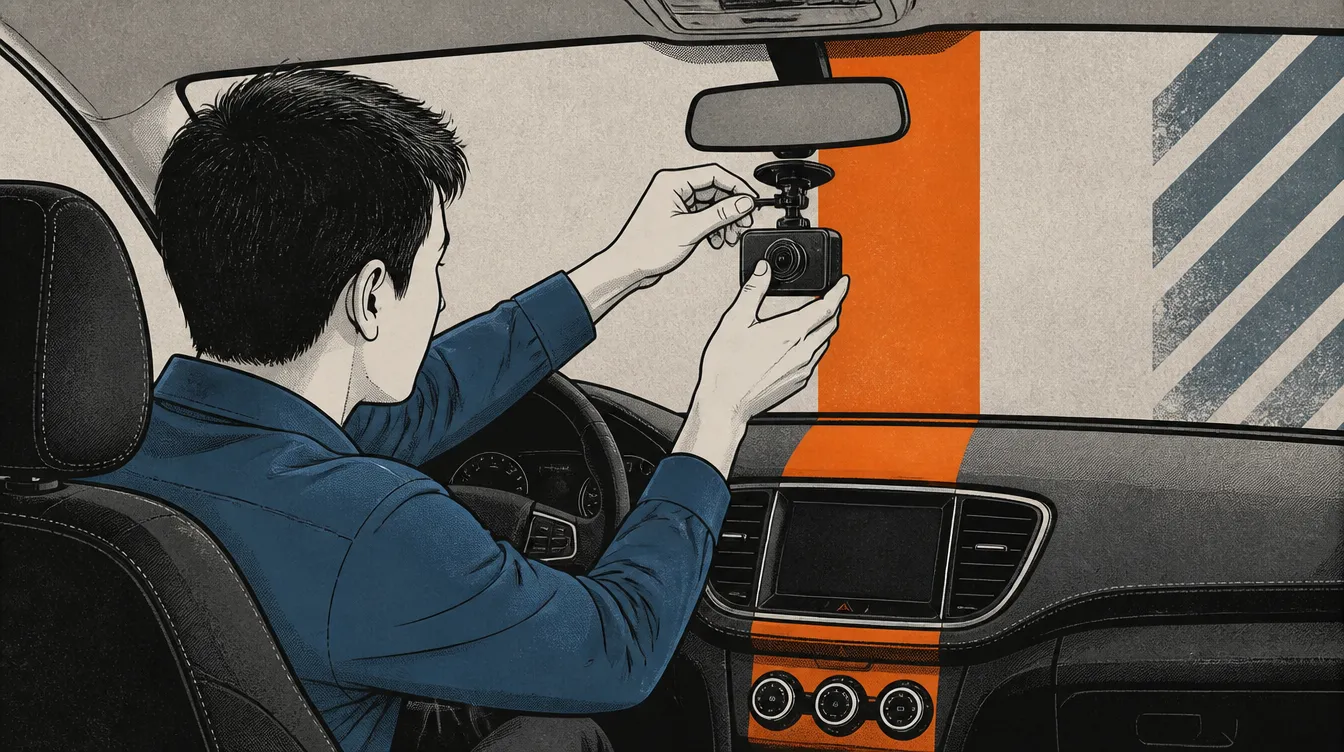
A dash cam is supposed to be the one piece of evidence that settles an argument nobody wants to have: whose fault a crash was, whether a license plate was actually readable, whether that near-miss really happened the way you remember it. The problem is that footage only helps if the camera can actually resolve fine detail, and the marketing photos on every dash cam box look identically sharp regardless of what the sensor can really do in daylight, at night, or squinting into a sunset.
So a hands-on tester bought 11 dash cams and ran them through the same readability gauntlet: license plates, road signs, intersections facing straight into the sun, and night driving. One brand pulled dramatically ahead of the rest of the field.
Here is what the footage actually showed.
What the testing showed
Every result below comes from Project Farm's independent hands-on comparison. You can watch the full breakdown on the complete dash cam showdown, which ranks 11 cameras from first to eleventh place with an average finish score.
The 11 dash cams went through license plate readability facing into the sunset at increasing static distances, road sign readability while driving past at 35 miles per hour, intersection readability facing into the sunset, night vision readability of a street sign at stepped distances, and digital light box and gas station price sign readability. Every camera was ranked on the same scale and given an overall average finish.
Viofo ran away with it

Winner
Viofo
Price shown in test: $114
Affiliate link. We may earn a commission at no extra cost to you.
Viofo's 1440p front-only camera, at 114 dollars, finished with an average rank of 1.3, the best result of any camera by a wide margin. The tester's own words: "the VIFO pretty much ran circles around the competition and had an average finish of 1.3... If I can only choose one dash cam, I'd definitely go with the VIOFO." That is a 1440p sensor at 60 frames per second with a 5MP Starvis low-light sensor, and notably it only records forward, with no rear camera option in the tested configuration.
Red Tiger backed up its popularity with real performance
Runner-up
Red Tiger
Price shown in test: $100 with coupon
Affiliate link. We may earn a commission at no extra cost to you.
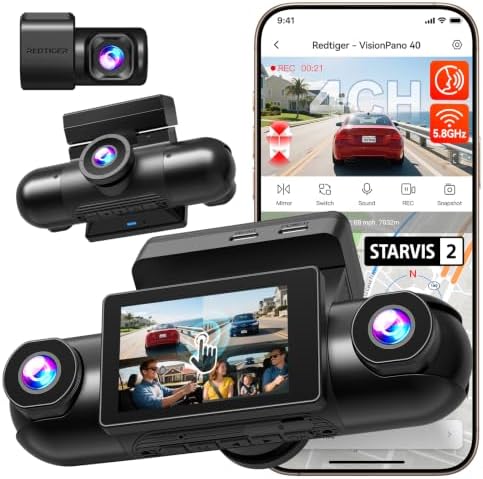
Red Tiger finished as runner-up. At around 100 dollars with a typical coupon applied, it claims a full 4K front camera, includes a rear camera, GPS, and Wi-Fi, and the tester noted it is genuinely one of the most popular dash cams on the market, moving over 10,000 units a month. The tester said he would buy this one too if the price landed right.
Price did not track cleanly with performance
Several mid-priced cameras claiming 4K resolution and dual front-and-rear setups, including Cool Crazy, Wolfbox, and Rove, landed in the middle of the pack rather than near the top, despite spec sheets that read similarly to the winner's. Meanwhile the two weakest performers in the entire test, the Ovaman and the V300, were both among the least expensive cameras tested, with the 22 dollar V300 consistently the weakest or near-weakest across nearly every category. Higher resolution claims did not automatically translate into better real-world readability once distance, sun glare, and motion were factored in.
How to read this for your own purchase
The test result here is unusually clean: one camera won almost every category outright, and the field behind it was tightly bunched rather than gradually stepped. That makes the buying decision simpler than most gear comparisons.
If you want the single best-performing dash cam from this test, the data points squarely at Viofo, with the caveat that the tested unit is front-only. If you specifically need a rear-facing camera as part of the same system, that is worth weighing against the win.
If you want a two-camera front-and-rear system and do not want to spend Viofo-plus-a-second-unit money, Red Tiger's strong runner-up finish at roughly 100 dollars makes it the more practical single-purchase option for most drivers.
A few universal rules the results support:
- Ignore the resolution number as your primary decision point. Several 4K-claiming cameras in this test underperformed a 1440p camera on actual readability, which is the metric that matters when you need to identify a plate or a sign after an incident.
- Sun glare and night driving are the real stress tests. Daytime readability at a stop is the easy case; a dash cam earns its keep in low light and facing directly into the sun, exactly the conditions this test measured.
- A cheap price tag often means a cheap sensor, not just a cheap plastic case. The lowest-priced cameras in this test were also consistently the weakest performers.
Want to compare more of the electronics that ride in a vehicle? Browse the rest of the gadgets and tech tests for chargers, multimeters, and diagnostic tools put through similar side-by-side testing.