18650 batteries power everything from flashlights to vape mods to DIY power banks, and the mAh rating printed on the wrapper is the single number most buyers use to decide. The problem is that generic 18650 cells sold online, often from unfamiliar Chinese brands with inflated claims, can print almost any number they want, since there is rarely an independent check before the sale.
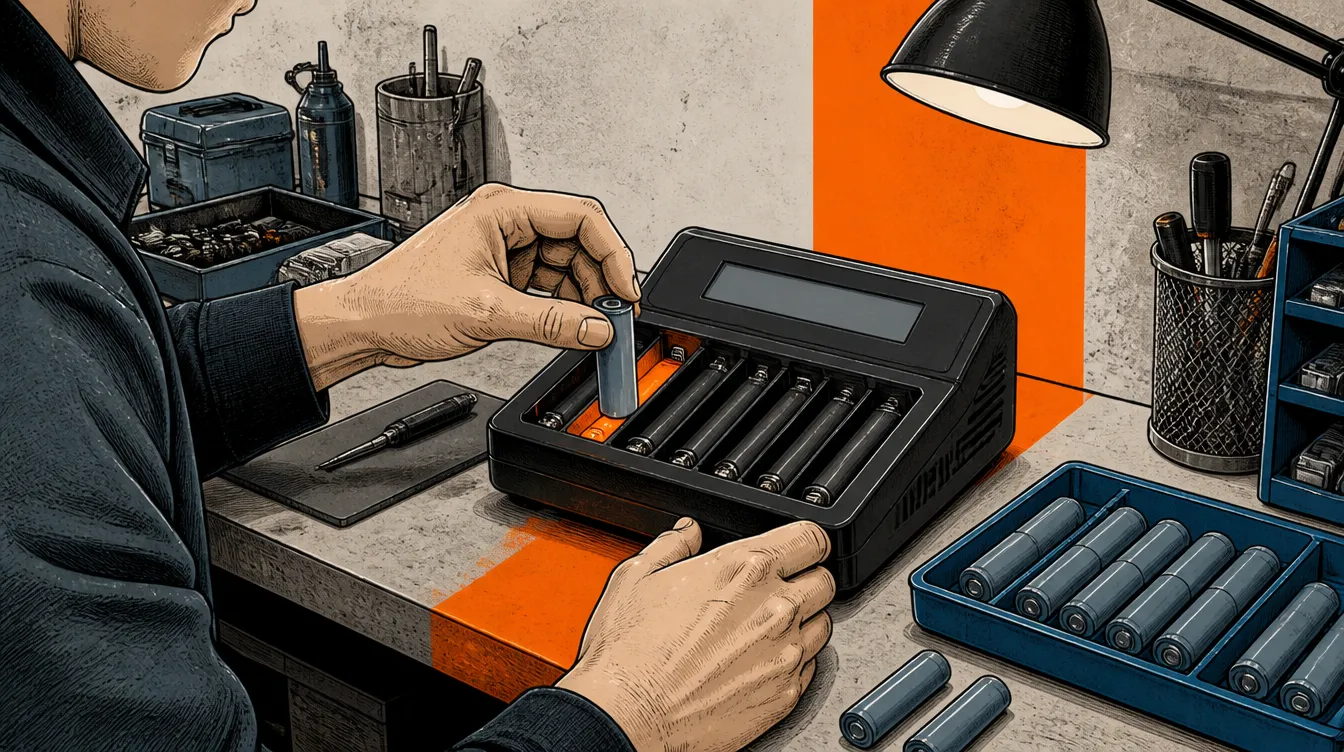
A hands-on lab test of twelve 18650 cells, including name brands like LG, Samsung, Sony, and Panasonic alongside several unbranded Chinese cells, put a real capacity meter on every one of them. The gap between claimed and delivered capacity on some of the cheaper cells was not a rounding error. It was a near-total fabrication.
What the testing showed
The numbers below come from Project Farm, who tested twelve 18650 lithium-ion cells for rated capacity, internal resistance, real measured capacity at a 1000mA discharge, cold-temperature performance, high-drain voltage sag, and fan-runtime endurance. You can watch the full breakdown on the 18650 battery test. No single brand was named the outright overall winner, since the video's own final showdown came down to two cells.
Name-brand cells matched or beat their own ratings
- LG HE4 ($2.99): rated 2,500 mAh, measured 2,524 mAh in both samples tested, slightly exceeding its own rating, and was grouped among the best cold-temperature performers.
- Samsung 25R ($3.42): rated 2,500 mAh, measured 2,545 and 2,528 mAh, also exceeding its rating, with internal resistance tied for the lowest among the non-Sony cells at 11.7 milliohms.
- Sony Murata VTC5A ($6.47): the highest-rated cell for continuous discharge current at 35A, with the lowest internal resistance of all twelve cells tested (9.2 to 9.4 milliohms) and the best high-drain voltage sag results of the whole field.
- LG MJ1 ($3.42): won the fan-runtime endurance showdown outright at 307 minutes, the best of all twelve cells tested, and posted the best mAh-per-penny value figure in the video at 10.5 mAh per penny.
The final showdown came down to LG MJ1 and Samsung 35E
After the fan-runtime endurance test, LG's MJ1 and Samsung's 35E were the last two cells standing, with Samsung 35E singled out as the only brand that dipped to exactly 93 percent capacity retention (the other eight non-Chinese cells all held at least 97 percent).
At least one Chinese-brand cell delivered a small fraction of its claimed capacity
BXE, a cell claiming a rated capacity of 9,800 mAh, actually measured 1,194 and 1,244 mAh in the real capacity test, about 12 percent of its claimed rating. Its internal resistance was also far higher than every name-brand cell tested (53 to 55 milliohms versus roughly 10 to 27 milliohms for the reputable brands), and its fan-runtime result (104 minutes) was less than half of the weakest name-brand cell's result. The test notes flag this as one of four Chinese-made cells with an inflated mAh rating that delivered only a small fraction of its claim.
How to read this for your own purchase
The rated mAh number on an 18650 wrapper is only meaningful if it comes from a manufacturer with a track record of independent verification. This test shows exactly how far that number can drift from reality on unverified cells.
If you are buying 18650 cells for a flashlight, vape device, or anything where real capacity and safe discharge current matter, stick to the name brands this test actually measured against their own claims: LG, Samsung, Sony, and Panasonic all matched or exceeded their stated ratings.
If you see an 18650 cell online claiming a capacity above roughly 3,500 mAh, be skeptical. No cell in this test with a legitimate manufacturer name claimed anywhere near the 9,800 mAh figure that one unverified brand printed on its wrapper, and physics limits how much energy actually fits in an 18650-format cell.
If you need the lowest internal resistance for high-drain applications like a flashlight on turbo mode or a high-power device, Sony's Murata VTC5A posted the best internal resistance and high-drain voltage sag results of the entire field, at a price premium over the standard capacity-focused cells.
It is also worth understanding why an inflated mAh claim is even possible on an 18650 cell, since the format itself is a fixed physical size. A genuine 18650 cell is limited by real lithium-ion chemistry to roughly 2,500 to 3,500 mAh in current commercial production, which is exactly the range every legitimate name-brand cell in this test fell into. A cell claiming 9,800 mAh or more in that same physical size is not using some undisclosed breakthrough chemistry, it is simply printing a number that has no basis in the cell's actual construction, counting on the fact that most buyers have no way to independently verify it. Treat any 18650 capacity claim well outside that established range as a red flag rather than a bonus feature.
A few universal rules the data supports:
- A claimed mAh rating from an unverified brand is not a fact, it is a marketing number. This test found one such claim off by roughly eight times.
- Internal resistance is a real, measurable difference, not marketing fluff; it ranged from about 9 milliohms on the best name-brand cell to over 50 milliohms on the weakest cell tested.
- Cold-weather performance separates cells that look similar warm. Some cells held close to their rated capacity in cold testing while unverified brands dropped well below 25 percent of their claim.
Want to see how these cells compare to other rechargeable batteries and power banks? Browse the rest of the batteries and power banks tests for the complete lineup.