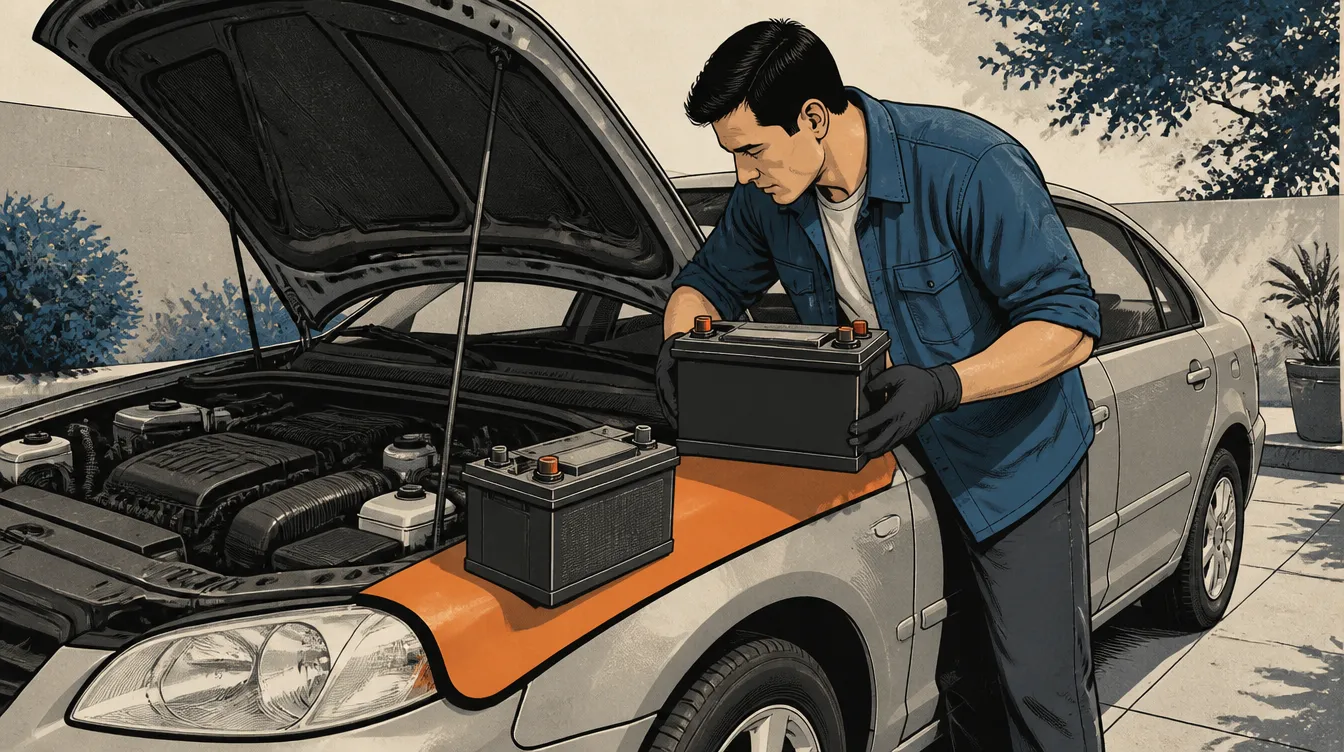
Searching for the "right" battery for a specific car, a Honda Accord or otherwise, usually turns up a wall of fitment charts and brand names without much explanation of why one battery actually outperforms another once it is in the engine bay. Here is the honest scope of what follows: there is no dedicated Honda Accord battery test, or any per-model car battery test, in the data this guide draws from. What does exist is a detailed, hands-on comparison of six popular car battery brands tested for the properties that matter in any vehicle, cranking power, cold performance, and recovery after a load, regardless of which car the battery ends up in.
Group size and terminal configuration determine fitment, and those specs come from your Accord's owner's manual or a fitment lookup tool, not from any battery test. Performance within the right group size is what the testing below actually measures.
What the testing showed
The numbers below come from Project Farm, who bench-tested six car batteries (four flooded lead-acid, two AGM) through cranking, load, recharge, and freezer tests. No battery here was tested specifically in a Honda Accord. You can watch the full breakdown on the car battery test. No single overall winner was named; the video instead gave use-case-specific recommendations.
The cheapest battery in the test posted the best cold-weather numbers
EverStart, the cheapest battery tested at $119.76, produced 766 cold cranking amps at 0F, the best raw output of all six batteries and the smallest shortfall below its own 810 CCA rating. At negative 20F it produced 708 amps, tied with the pricier Duralast for the best result at that temperature. The test also found EverStart is made by Johnson Controls, the same manufacturer behind the costlier Duralast and AutoCraft batteries in the same lineup, meaning a much cheaper battery can share a manufacturing line with pricier siblings.

Budget pick
EverStart
Price shown in test: $119.76
Affiliate link. We may earn a commission at no extra cost to you.
AGM batteries offered real advantages, but not across every measure
Optima's RedTop AGM battery, the most expensive tested at $224.99, had the lowest internal resistance of the group at room temperature and the best internal resistance at extreme cold, confirming AGM's core marketing claim. But its overnight recovery after a load test was the weakest of all six batteries, and its raw cold cranking amp output at 0F (751) trailed the budget flooded EverStart's 766.
Paying more within the same battery type did not reliably buy more performance
Duralast Gold, priced $40 more than EverStart despite sharing the same manufacturer, actually performed slightly worse on the room-temperature cranking test (1,022 cranking amps versus EverStart's 1,115). The test's narrator explicitly recommended against paying that premium, noting the two batteries looked identical apart from the exterior labeling.
How to read this for your own purchase
Since no Accord-specific test exists, the practical approach is to determine your Accord's correct battery group size and terminal layout first, from your owner's manual or a parts-store fitment lookup, then apply this brand-level performance data within that group size.
If your Accord uses a standard flooded battery, which most non-hybrid Accords do, this test's clearest signal is to buy on price and warranty rather than brand prestige within the correct group size, since the cheapest flooded battery tested matched or beat pricier flooded competitors on cold output.
If you specifically want an AGM battery, common on newer Accords with idle-stop or heavier electrical loads, know that the test found real cold-resistance advantages for AGM technology, but did not find a decisive cold cranking amp advantage over a good flooded battery, so confirm your Accord actually calls for AGM before paying the premium.
Regardless of battery type, this test's warning about paying more within the same manufacturer applies broadly: check who actually makes a battery before assuming a higher price buys a better product.
It is also worth understanding why "the right battery for my car" is really a fitment question layered on top of a performance question, and why testing data like this can only answer the second half. Group size and terminal layout exist because different vehicles have different battery tray dimensions and different cable routing to the terminals, a purely mechanical constraint that has nothing to do with how well a battery cranks or holds a charge. Two batteries built with the exact same internal chemistry and construction can be sold under different group-size labels simply to fit different trays, which is part of why the test found batteries from the same manufacturer performing almost identically despite different branding and different group-size packaging. Get the fitment right first, from your Accord's specific manual, then let this kind of performance data decide between the options that actually fit.
A few universal rules the data supports for a Honda Accord or any vehicle:
- Match the group size and terminal layout exactly. No test result matters if the battery does not physically fit your Accord's tray and terminal placement.
- Buy the freshest battery available. All lead-acid batteries lose capacity sitting on a shelf; check the date code before buying.
- Weigh the warranty heavily. A longer free-replacement period is worth real money on a part that eventually fails on everyone.
Want to compare more of the gear that keeps a car running? Browse the rest of the jump starters and car power tests for chargers, jump starters, and testers put through the same hands-on grind.