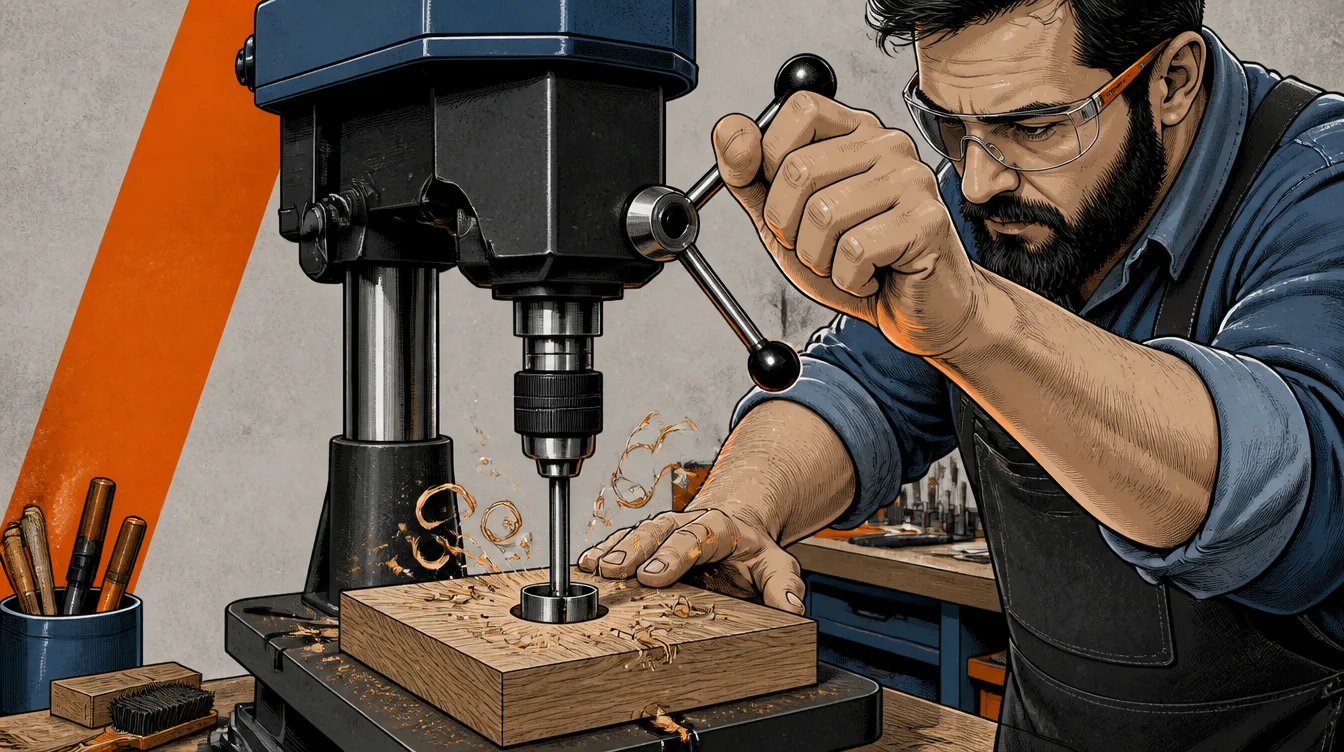
Anyone who has drilled a rough hole through a stud for wiring or plumbing knows there are three real families of wood-boring bit to choose from: spade bits (the flat paddle-shaped ones), Forstner bits (the ones that leave a clean, flat-bottomed hole), and augers (the long spiral bits for deep holes). Each one gets marketed as the "best" for rough carpentry, and the price gap between a cheap set and a premium brand can be four or five times over.
A hands-on test that ran twelve brands of wood-drilling bits through the same gauntlet gives real numbers on speed, durability, and how they hold up when you inevitably hit a hidden nail. It is worth being upfront about scope here: the test used spade bits specifically, not Forstner bits, so treat the numbers below as the closest available head-to-head data on wood-boring bit performance rather than a direct Forstner test.
What the testing showed
The numbers below come from Project Farm, who bought twelve brands of spade-style wood-drilling bits and ran them through identical drilling, speed, and durability tests. You can watch the full breakdown on the wood drilling bits test. This test did not include true Forstner bits, so if a flat-bottomed hole is specifically what you need, use these results for general wood-boring bit quality and durability, not a Forstner-specific ranking.
Each bit went through the same checks:
- 2x4 speed test (three holes), timed for the initial run.
- Oak speed test, a harder wood that separates the pack more clearly.
- Durability retest after 100 holes drilled, to see how much speed each bit lost.
- Nail strike test, deliberately driving the bit into an embedded nail, which is the single most common real-world failure mode for wood bits.
- Post-nail-strike speed test, to measure how much damage the nail actually caused.
The two cheapest brands tested best for nail-free wood
DeWalt and Diablo spade bits, both priced at $11 for six bits ($1.83 each), were named jointly in the closing verdict as the best affordable pick for wood without embedded fasteners. DeWalt posted the fastest start in the 2x4 test (average 7.8 seconds across three holes) and the outright fastest oak-drilling time of all twelve brands at 5 seconds. Diablo took the lead on average 2x4 speed after both bits were run, at 7.6 seconds, and showed zero measurable slowdown after its 100-hole durability retest.
Nail strikes separate the durable bits from the disposable ones
This is where the real spread showed up. DeWalt held up "fairly well" after a nail strike but nearly lost a tooth to the nail, and its post-nail 2x4 speed dropped from 7.8 to 13 seconds, nearly double. Diablo fared better structurally, with only minor damage to one of its two spurs, and posted zero slowdown on its post-nail 2x4 pass (8 seconds before, 8 seconds after). The budget pick, Comoware, was named the cheapest bit in the test at $1.80 per bit but was also described as the slowest in every single test, a reminder that the lowest sticker price and the best value pick are not always the same product.

Budget pick
Comoware Spade (cheapest at $1.80 each, though slowest in every test)
Price shown in test: $10.79 for six bits ($1.80 each)
Affiliate link. We may earn a commission at no extra cost to you.
How to read this for your own purchase
The test did not crown one single overall winner across every category, and it did not test true Forstner bits at all, so treat this as a guide to bit quality and durability broadly rather than a Forstner-specific verdict.
If you are drilling clean new lumber with no hidden fasteners, the test supports buying budget: DeWalt and Diablo, both under $2 per bit, matched or beat pricier competitors on raw speed.
If you are drilling into old framing, reclaimed wood, or anywhere a hidden nail is plausible, durability after a nail strike matters more than initial speed. Diablo's near-zero slowdown after its nail test is the more relevant data point than its raw 2x4 time.
If you specifically need a flat-bottomed hole, hinge mortises, or dowel holes, a true Forstner bit is still the right tool for the job; this test simply does not have data on that specific bit geometry, and no vendor's marketing claim about Forstner bit performance should be taken at face value without its own test.
It is also worth thinking about hole geometry before picking a bit family at all, regardless of brand. A spade bit like the ones in this test drills fast and leaves a rougher, slightly conical hole, fine for framing, wiring runs, and anywhere the hole will be hidden behind drywall or trim. A Forstner bit trades speed for a flat-bottomed, clean-edged hole, the right call for hinge mortises, dowel joinery, or anything visible in finished furniture. An auger bit trades both of those properties for depth, built for boring long holes through multiple studs in one pass, something none of the bits in this test were designed to do. Buying the wrong geometry for the job wastes both the bit's strengths and your time, no matter how well that bit performed in a speed test built around a different task.
A few universal rules the data supports regardless of bit style:
- Cheap does not always mean slow, and expensive does not always mean durable. The two cheapest bits in this test performed the best on clean wood.
- Test your material for hidden fasteners before drilling, especially in older framing, since nail strikes were the single biggest performance-killer in the whole test.
- Buy sets, not singles, so a damaged bit does not stop the job; every brand here sold in multi-packs for a reason.
Looking for the cutting tools that back up these kinds of claims? Browse the rest of the blades, bits and abrasives tests for drill bits, saw blades, and sharpeners tested the same hands-on way.