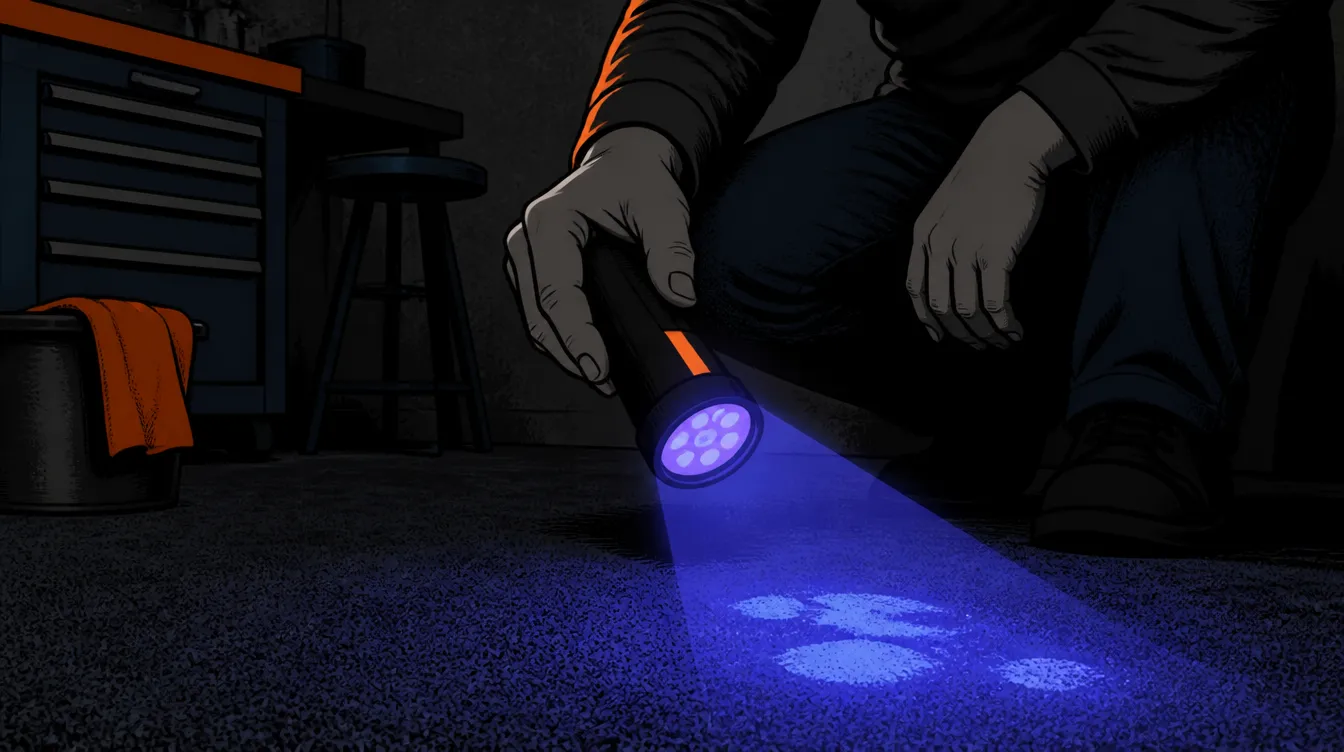
Blacklight and UV flashlights get bought for a specific, narrow job, checking for pet stains, scorpions, counterfeit currency, or curing certain resins, and the marketing around them leans heavily on wavelength claims (usually 365nm or 395nm) that are hard for a shopper to verify independently. Here is the honest scope of what follows: there is no dedicated UV or blacklight flashlight test in the data this guide draws from. What does exist is a detailed, hands-on test of eighteen general-purpose white-light flashlights, which shares the same underlying concerns, honest brightness claims, battery performance, heat management, that any flashlight buyer should scrutinize regardless of the light's wavelength.
If you came here specifically to buy a UV flashlight, treat the findings below as evidence about how flashlight brands in general perform against their own marketing claims, not a UV-specific verdict.
What the testing showed
The numbers below come from Project Farm, who tested eighteen white-light flashlights for initial brightness, brightness at 30 seconds and 15 minutes, heat buildup, weight, beam throw distance, and battery capacity. No UV or blacklight product was part of this test. You can watch the full breakdown on the flashlight test. Fenix was named the overall winner, with Wurkkos as the budget pick.

Winner
Fenix
Price shown in test: $135, the most expensive flashlight tested
Affiliate link. We may earn a commission at no extra cost to you.

Budget pick
Wurkkos
Price shown in test: $40
Affiliate link. We may earn a commission at no extra cost to you.
Brightness claims did not always survive real testing
Sofirn's flashlight is rated for 3,000 lumens but measured only 1,201 lumens at initial brightness in the test, well below its own claim. By contrast, Olight's flashlight measured 5,607 lumens at the 30-second mark, actually better than its own rating, described as the best of all brands tested at that checkpoint. That is the core lesson worth carrying into a UV flashlight purchase too: a manufacturer's stated output number is a claim, not a guarantee, and independent verification is the only way to know if it holds up.

Runner-up
Olight
Price shown in test: $112
Affiliate link. We may earn a commission at no extra cost to you.
Heat management varied enormously between brands
Fenix, the overall winner, ran almost too hot to handle at 127F after 15 minutes on its brightest setting. Coast, a much larger flashlight, stayed relatively cool at 92F over the same period. Nitecore's turbo mode delivered the single highest initial lumen reading of the whole test (7,434 lumens) but automatically stepped down after just 14 seconds specifically to manage heat, evidence that peak brightness numbers on a spec sheet often come with real thermal limitations that only show up under sustained use.
Battery capacity claims were sometimes conservative and sometimes optimistic
Olight's flashlight was rated for 5,000 mAh but delivered 5,090 mAh in testing, beating its own claim. Sofirn's flashlight, rated similarly at 5,000 mAh, delivered only 4,710 mAh, under its rating. Fenix's battery had the best raw capacity result of the whole field at 6,290 mAh against a 6,000 mAh rating.
How to read this for your own purchase
Since no UV-specific product was tested, apply the pattern this test reveals, real gaps between marketing claims and measured performance, as a reason to seek out independent UV flashlight reviews specifically before buying based on a wavelength or lumen claim alone.
If you are buying any flashlight, UV or white light, for a task where verified output actually matters (checking for stains under a specific wavelength, or needing genuine throw distance for outdoor use), this test's core lesson is to look for independently verified performance numbers rather than trusting a manufacturer's printed rating alone.
If sustained runtime matters for your use case, note how much brightness dropped off between the initial reading and the 15-minute mark for several brands in this test; a light that looks impressively bright in a five-second demo may not hold that output for a long inspection job.
If heat buildup matters for your application (handheld use for extended periods), this test found a real spread between brands, from a light nearly too hot to hold after 15 minutes to one that stayed comfortably cool, a difference worth checking for any flashlight regardless of its light spectrum.
It is also worth knowing what actually distinguishes a genuine UV flashlight from a white light with a purple-tinted lens, since that distinction matters more for buyers in this category than almost any brightness number. A true UV flashlight uses an LED that emits primarily in the 365 to 395 nanometer range, largely outside human visible light, which is what makes fluorescent materials like pet stains or certain minerals glow under it. A cheap "blacklight" that is really just a dim purple-tinted white LED will not trigger that fluorescent reaction nearly as effectively, no matter how bright it looks to the naked eye in a dark room. Since wavelength output is not something a shopper can verify visually, and no test in this dataset measured it directly, look specifically for a stated nanometer range on the product listing itself as the minimum bar before trusting any other performance claim.
A few universal rules the data supports for any flashlight purchase:
- Verify brightness and capacity claims against independent testing when it exists, rather than trusting the number on the box alone; this test found real gaps in both directions.
- Check sustained output, not just peak output. The single highest lumen reading in this test lasted only 14 seconds before the light itself throttled down.
- Heat management is a real, measurable product difference. Factor it in if you will be holding a light for extended periods.
Looking for more lighting products tested the same hands-on way? Browse the rest of the flashlights and lighting tests for headlamps, shop lights, and security lights.