
Olight and Streamlight both carry serious reputations among flashlight buyers who actually care about beam quality rather than a lumen number printed in giant type. Both brands sell into the tactical and everyday-carry space, both charge a real premium over the no-name competition, and both claim genuinely impressive output. That leaves the actual decision resting on which one truly performs, since the marketing copy for both reads about the same.
A hands-on tester bought 19 flashlights, including both Olight and Streamlight, and ran the full lineup through initial brightness, sustained brightness, beam pattern quality, light throw, battery capacity, and runtime testing. One of the two took the overall win, and the other one won its own specific category outright.
Here is exactly how they stacked up.
What the testing showed
Every result below comes from Project Farm's independent bench test. You can watch the full breakdown on the complete 19-flashlight showdown, which puts Olight and Streamlight directly alongside Fenix, Acebeam, Nitecore, Nebo, and a long list of budget competitors.

Runner-up
Acebeam Defender P17
Price shown in test: $120
Affiliate link. We may earn a commission at no extra cost to you.
The lineup went through initial brightness measured with an integrating sphere, brightness at 30 seconds and again at 15 minutes, beam pattern quality (focused, medium, and broad settings), temperature after 15 minutes of use, weight, illumination of a tree line 75 feet away, light throw distance via candela measurement, battery capacity against the advertised rating, maximum current and wattage output, runtime on the highest setting, and a 2 meter drop test.
Olight won overall, at a real price premium

Winner
Olight
Price shown in test: $140 (stated as the most expensive of the 19 tested)
Affiliate link. We may earn a commission at no extra cost to you.
Olight, at 140 dollars, the most expensive light of all 19 tested, finished with the best average result. The tester's verdict: "the Olight came out on top with the best average finish of 5.3, but it is very expensive at a price of around $140." Its hot spot was described as very consistent with not much spill, offering plenty of coverage. The real tradeoff noted directly by the tester: less runtime on the highest setting compared to some dimmer competitors.
Streamlight won its own outright category
Streamlight, at 107 dollars, did not take the overall win, but it won the 15-minute sustained brightness category outright, meaning it held its output better over time than any other light in the test, including Olight. Its spill (the wider glow surrounding the main beam) was less intense than its hot spot, but it did a notably better job lighting the full 75 foot tree line target than Olight's tighter, more focused beam.
A much cheaper light tied for third with a genuine "real Fenix"
A genuine Fenix flashlight, at 80 dollars, tied for third place overall (average finish 6.8) with a 33 dollar WindFire, both well below Olight and Streamlight's price points. WindFire in particular earned an explicit callout: "a great value" that the tester said would be his personal choice if size were not a concern, effectively functioning as the video's budget pick even without a formally declared category.
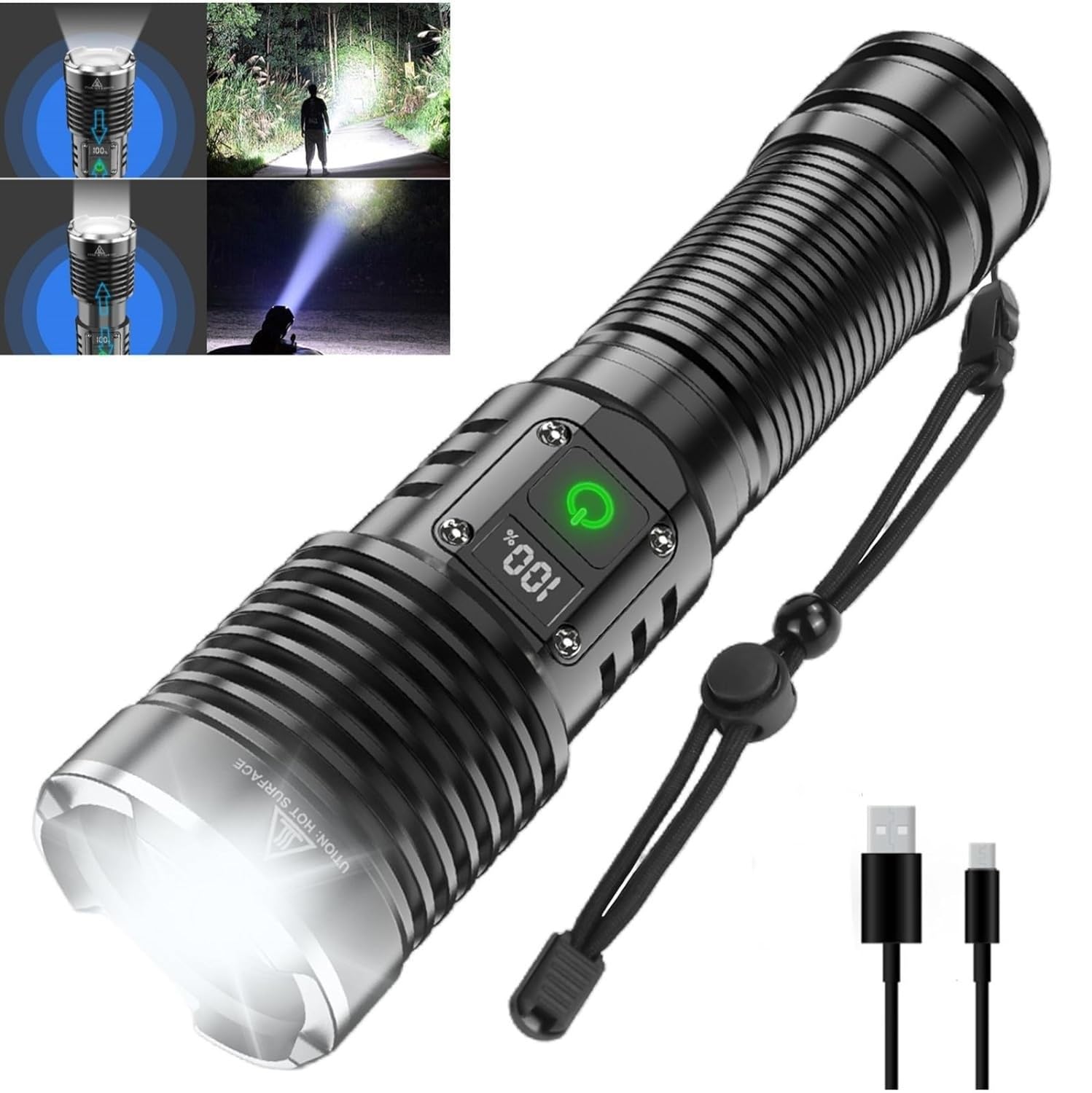
Budget pick
WindFire
Price shown in test: $33
Affiliate link. We may earn a commission at no extra cost to you.
Two lights won specific technical categories despite modest overall finishes
Skyfire, at just 40 dollars, won both the light-throw category and the battery-capacity category outright, despite a comparatively modest showing on raw brightness. That is a useful reminder that a light can dominate a specific spec relevant to your use case (like maximum throw distance for outdoor work) without being the single best all-around performer.
How to read this for your own purchase
Olight and Streamlight both delivered real, verified performance, they just excel at different things. Olight's win is about overall consistency and coverage; Streamlight's category win is specifically about holding brightness over a sustained period, which matters more for extended use than a bright initial flash.
If you want the single best all-around flashlight and the price fits your budget, the tested data supports Olight, with the honest caveat that its runtime on the highest setting is not the strongest in the lineup.
If sustained brightness over time matters more to you than peak consistency, for example if you use a flashlight for extended work sessions rather than quick checks, Streamlight's outright win in that specific category is the more relevant data point.
If neither premium brand fits your budget, the genuine Fenix at 80 dollars and WindFire at 33 dollars both delivered results competitive with much pricier lights in this same test.
A few universal rules the results support:
- A light's hot spot versus spill balance matters for your specific use. A tight, bright hot spot (like Olight's) is great for distance, while a light with more spill (like Streamlight's) is better for lighting a wide area evenly.
- Runtime on the actual brightest setting is a real tradeoff. The brightest overall performer in this test explicitly did not have the best runtime, a genuine engineering compromise worth knowing before you buy.
- Category wins matter more than overall rank for specialized use. If throw distance or battery capacity matters most to you, Skyfire's specific category wins at just 40 dollars are more relevant than its middling overall finish.
Want to see how the rest of the lineup, including the year's newer test with Fenix as the overall winner, stacks up? Read our general flashlight roundup, or browse the flashlights and lighting tests for more brand comparisons.