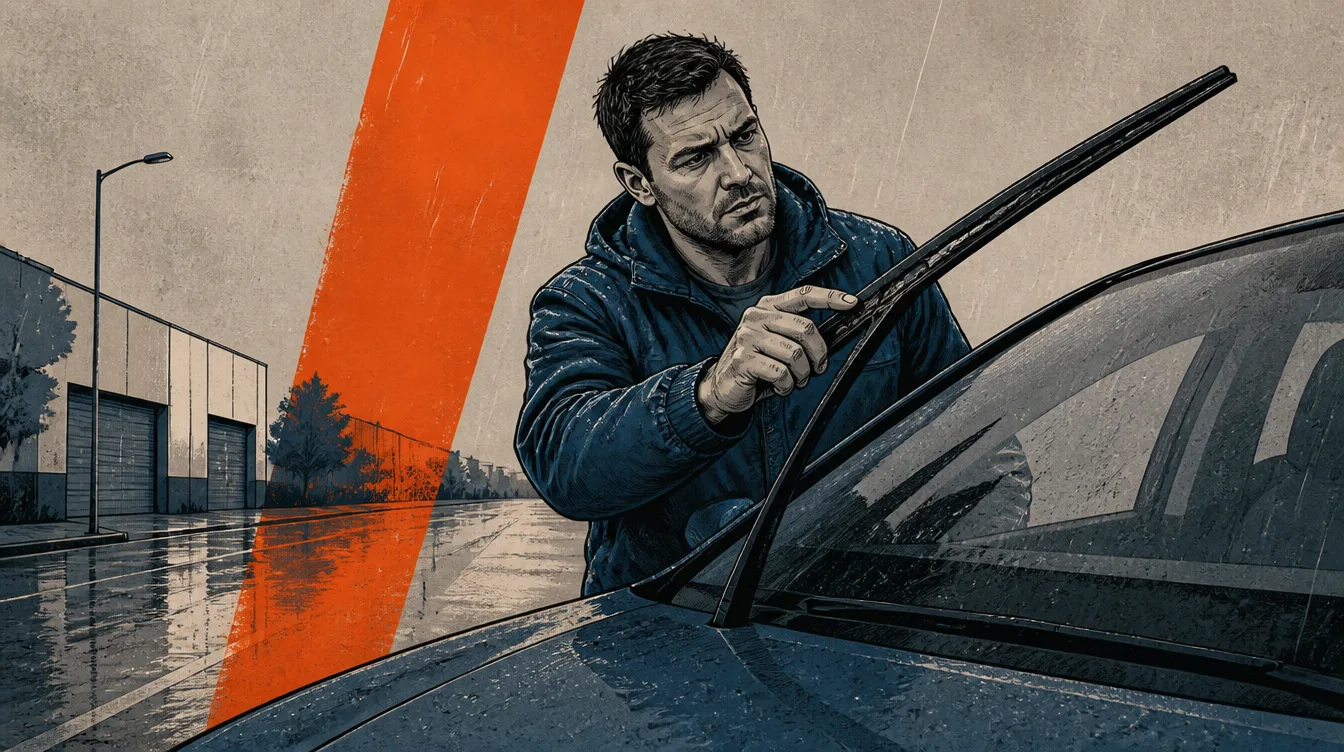
The advice to "replace your wipers every six to twelve months" gets repeated so often it stops meaning anything specific. What actually kills a wiper blade, and how fast, is a question most drivers only think about the moment a streak shows up mid-storm. Two separate hands-on tests actually aged real wiper blades under real conditions, sun exposure, ice, and simulated rain, rather than just judging them fresh out of the package.
Here are the six questions worth answering before you buy your next set, using data from both tests rather than a guess.
What the testing showed
The figures below come from two of Project Farm's independent hands-on tests, one covering 8 wiper blade brands with a full year of UV exposure and one covering 9 brands with an ice and frozen-condition test. The full breakdowns are on the 2020 wiper blade test and the 2019 wiper blade test.
The 2020 test specifically compared each blade's performance new versus after a full year of UV exposure, tracking both noise levels and rain sweep performance before and after aging. Bosch ICON, at 18.94 dollars, won that test, standing out in a heavy rain at slower speed simulation. The 2019 test, run against a different 9-blade field, included a dedicated ice and frozen-condition check alongside simulated rain sweep testing, and it was won by Michelin Endurance XT at 38.94 dollars, the most expensive blade in that lineup, with manufacturer-cited durability testing for over 2 million wipes and flexibility claimed from negative 8F to 195F.

Winner
Bosch ICON
Price shown in test: $18.94
Affiliate link. We may earn a commission at no extra cost to you.

Winner
Michelin Endurance XT
Price shown in test: $38.94, the most expensive blade tested
Affiliate link. We may earn a commission at no extra cost to you.
Aging changed how blades performed, not just how they looked
The 2020 test's before-and-after structure is the closest data available on the "how long do they last" question. By tracking the same blades new and after a year of UV exposure, it captured real degradation rather than a single snapshot, which is exactly the gap most wiper blade advice skips over.
Country of manufacture and construction varied more than most buyers expect
The 2020 test also logged each blade's country of manufacture as part of its comparison, alongside a 55 mph light rain sweep test and a separate heavy rain at low or stopped speed test, the specific scenario where Bosch ICON stood out and won overall. The 2019 test took a different structural approach entirely, running direct head-to-head sweep comparisons between Michelin Endurance XT and each individual competitor rather than a single group scorecard, which is why that test's write-up references specific matchups like "head-to-head vs Rain-X Latitude" and "head-to-head vs Bosch" as separate results.

Runner-up
Rain-X Silicone Endura
Price shown in test: $24.97
Affiliate link. We may earn a commission at no extra cost to you.
How to read this for your own purchase
Does climate change how long a wiper blade lasts?
Yes, based on the two tests together. The 2020 test's UV exposure component and the 2019 test's ice and frozen-condition check point to different failure modes, sun-driven rubber degradation versus cold-weather stiffening, both of which shorten a blade's effective life depending on where you live and drive.
Is a pricier blade a longer-lasting one?
Not automatically. Michelin Endurance XT, the most expensive blade across both tests at 38.94 dollars, won specifically with cited long-term durability claims. But Bosch Clear Advantage, at just 10.92 dollars for a pair in the same 2019 test, tied for third place overall and was named the value pick, showing a budget option can still hold up respectably.
What actually fails first on an old wiper blade?
Both tests measured noise as an aging indicator, a worsening squeak or chatter as rubber degrades is one of the earliest warning signs before a visible streak shows up. The 2020 test's structure, which specifically tracked noise "new vs UV exposed," treats this as a measurable early-failure signal rather than just an annoyance.
Between the two tests, sun exposure and cold exposure both emerged as distinct, separately measured stressors rather than a single generic "wear and tear" category, which is a more useful framework for judging your own blades than a flat calendar reminder. If your climate leans toward one stressor over the other, hot, sunny summers versus harsh winters, weight the relevant test's findings more heavily than a generic replacement interval pulled from a label.
For the rest of the parts that keep a windshield and cabin working, browse the auto parts and repair tests.