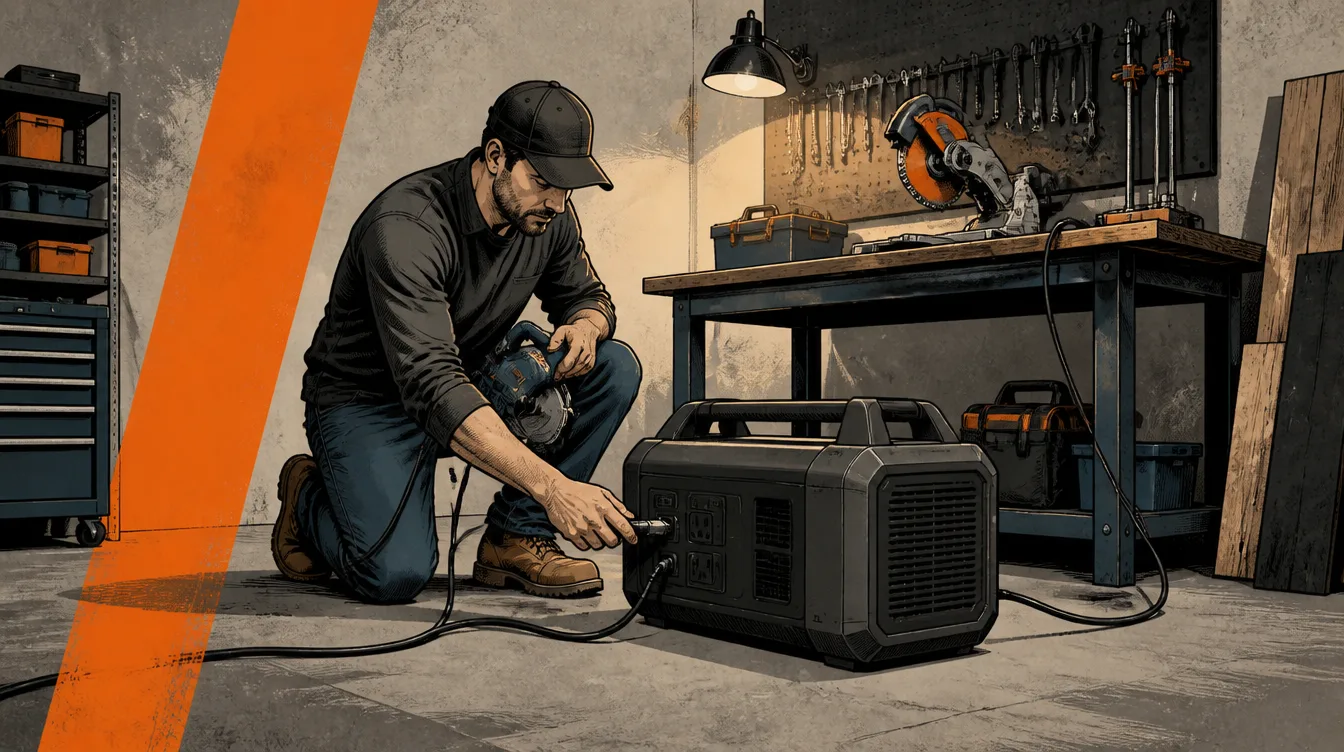
Portable power stations have turned into an arms race of watt-hour numbers and peak-wattage claims, and EcoFlow's Delta line sits right in the middle of that fight against Jackery, Bluetti, Anker, and a growing field of competitors. The specs on the box promise a certain runtime and output, but the only way to know if a unit actually delivers that under real load is to put a meter on it.
A hands-on test of nine portable power stations, spanning roughly $700 to $1,500 in price, measured exactly that: real charging speed, real continuous output before shutdown, real standby drain, and real runtime against rated capacity. EcoFlow was one of the nine units tested, and the results put it in a genuinely strong position on value, even though it did not win outright.
What the testing showed
The numbers below come from Project Farm, who tested nine portable power stations for noise, idle power draw, surge capacity, maximum continuous output, battery efficiency, charging speed, UPS performance, and 15-hour standby drain. The specific EcoFlow model in the test is not confirmed as a Delta Pro; treat the "EcoFlow" results below as the brand's unit in this test, not a Delta Pro-specific verdict. You can watch the full breakdown on the portable power station test. Jackery was named the overall winner; EcoFlow was named the explicit budget pick.
EcoFlow was the narrator's named value pick

Budget pick
EcoFlow
Price shown in test: $699
Affiliate link. We may earn a commission at no extra cost to you.
The narrator's own words on EcoFlow: "if you're looking for the lowest priced and best all-around budget power station, I really like the EcoFlow. It earned A's in every category and it would definitely be my choice if the price is right." EcoFlow also posted standout individual results: the quietest unit under light load of all 9 units tested at 37.8 dB, and the fastest raw charging wattage claim referenced in the video (its own rated spec claims 0 to 80 percent in 50 minutes).
Jackery won on raw capacity and overall consistency
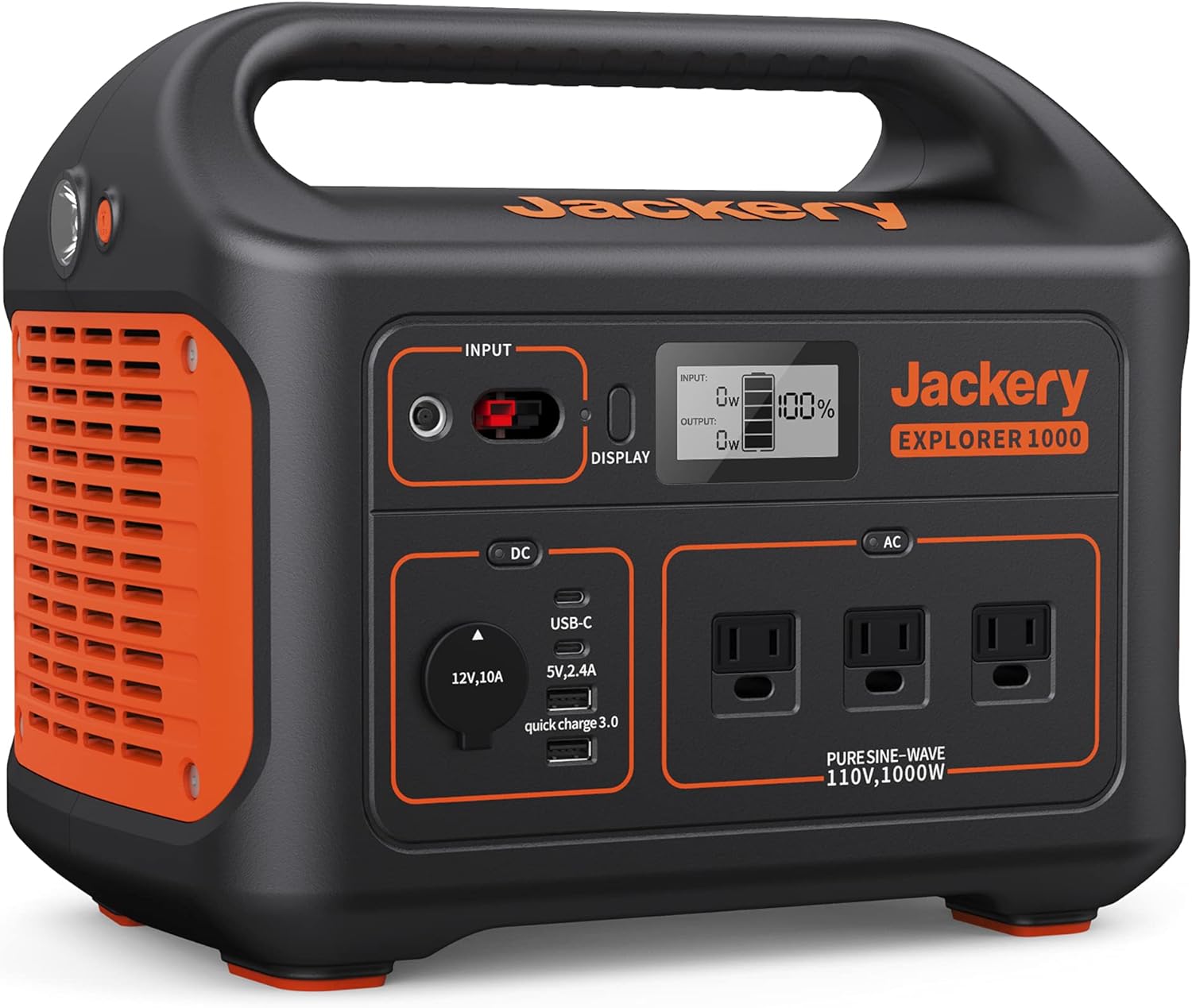
Winner
Jackery
Price shown in test: $1,499
Affiliate link. We may earn a commission at no extra cost to you.
Jackery, the most expensive unit tested at $1,499, was declared the overall winner: "in my opinion, the best overall power station is definitely the Jackery. It also earned A's in every category and it has about twice the watt hour capacity." Jackery's tested capacity was rated at 2,042 Wh, roughly double EcoFlow's rated capacity in this test, and it also posted the best 15-hour standby drain of all 9 units (89 percent remaining) and the fastest raw charging wattage measured by the analyzer (1,701 to 1,738 W).
Even top performers hit real limits under heavy load
Jackery, despite winning overall, failed the test's toughest challenge: powering an air compressor plus two halogen lights simultaneously, shutting down when demand ramped past its 2,200 W rating to around 2,600 W. On the maximum continuous output test, Jackery still finished a strong second at 2,401 W, behind only DJI Power's 2,641 W. Battery efficiency (delivered watt-hours versus rated capacity) also varied: Jackery delivered 87.2 percent of its rating, behind Dabbsson's 91.8 percent and EcoFlow's 87.9 percent, both of which beat Jackery on this specific efficiency measure despite Jackery's larger raw capacity.
How to read this for your own purchase
Watt-hour capacity on the box tells you the size of the tank; it does not tell you how efficiently a unit uses that capacity or how it behaves under a genuine power surge, and this test measured both.
If budget is the deciding factor and you do not need maximum capacity, the test's own language supports EcoFlow directly: it earned top grades across every measured category and was the unit specifically recommended for buyers prioritizing price.
If you need the largest continuous capacity and best long-term standby performance, Jackery's roughly double watt-hour rating and best-in-test standby drain (89 percent after 15 hours) make it the stronger pick, at nearly double the price of the budget option.
If you plan to run genuinely heavy simultaneous loads, note that even the overall winner in this test shut down when demand exceeded its rating; check a unit's surge and continuous wattage rating against your actual heaviest expected load, not just its headline capacity number.
It is also worth thinking about how you would actually use a unit like this before weighing the test results too heavily toward any single category. A camper who mainly needs to keep a phone, a fan, and a small cooler running overnight cares far more about standby drain and quiet operation under light load than about maximum continuous wattage, since that scenario never approaches a unit's rated ceiling. Someone using a power station as home backup during outages cares much more about maximum continuous output and how the unit behaves when several appliances demand power at once, exactly the scenario where this test's air-compressor-plus-lights challenge separated the units that held up from the ones that shut down. Match the category you weigh most heavily in this data to the situation you are actually buying for, rather than chasing whichever unit scored best on the average across every measured category.
A few universal rules the data supports:
- Efficiency (delivered versus rated watt-hours) matters as much as raw capacity. Two units in this test beat the overall capacity winner on that specific measure.
- Noise under load is a real, measurable difference between units, not just a marketing footnote; the spread in this test ran from 37.8 dB to over 48 dB.
- No unit in this test handled unlimited simultaneous load. Budget for headroom above your expected peak draw, not just your average draw.
Want to see how these power stations compare to other car power gear? Browse the rest of the jump starters and car power tests for chargers, jump starters, and inflators tested the same hands-on way.