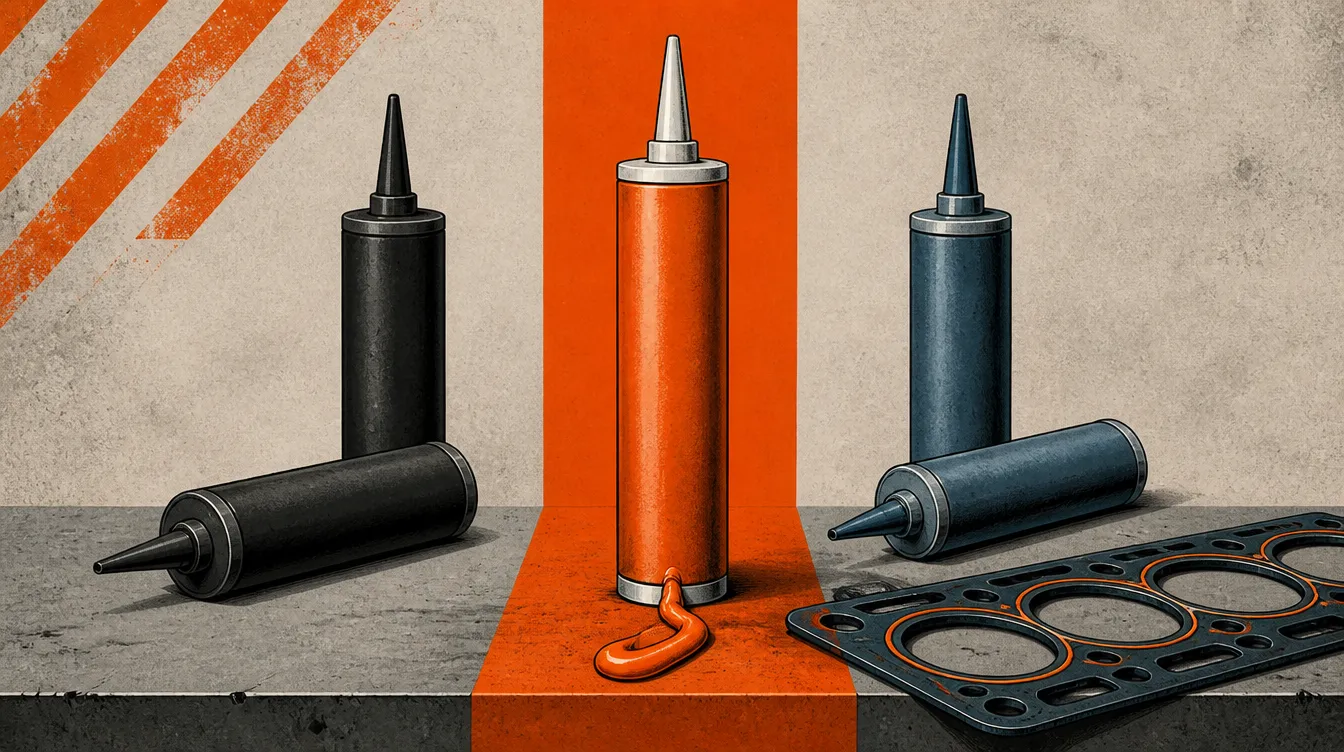
Which RTV Gasket Maker Brand Wins?
In our test we compared 13 rtv gasket maker options head to head. Mopar came out on top. See the measured results, the runner-up, the budget pick, and a link to the full test video.
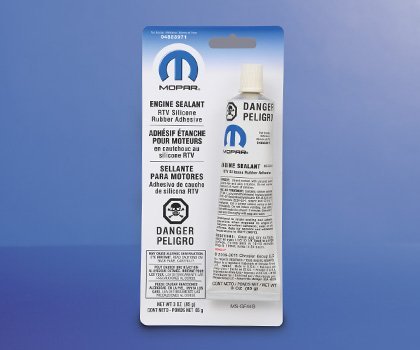
Mopar
Price shown in test: $13 for 3 oz (spoken as '4.33 cents per ounce', unit likely should be dollars since 13/3=4.33; the number itself is mathematically consistent)
Affiliate link. We may earn a commission at no extra cost to you.

Toyota
Price shown in test: $20 for 3 oz ($6.67 per oz). Note: this exact price and per-ounce figure is spoken word-for-word identically for both Toyota and John Deere in immediate succession, a likely caption duplication; see videoNotes.
Affiliate link. We may earn a commission at no extra cost to you.
The quick take
The short version of why each pick lands where it does, built straight from the measured results.
“The Mopar performed the best with an average finish of third place.”
Best in 2 of 6 measurements, including Tensile Strength and Pressure Test.
The measured results
Every number below is read straight from the test. Products are listed in the order they finished.
Tensile Strength
- 1Mopar75.6 lb
73.4 lb, 74.6 lb; best tensile result of any brand at that point in testing, very consistent
- 2Toyota FIPG (Formed In Place Gasket)66.8 lb
74 lb, 76 lb; outperformed AISIN, fully cured across the entire PVC end cap surface
- 3Honda Bond101.2 lb
91.4 lb, 89 lb; best tensile results of any brand tested, described as a very impressive, commanding lead over Mopar
- 4Versachem Mega Gray63.8 lb
73.6 lb, 68.6 lb, average 68.7 lb; moved into the lead over Permatex Ultra Gray at that point in testing
- 5JB Weld Ultimate Gray49.8 lb
49 lb, 51.8 lb; less than 3 lb of variance across the three samples
- 6Pro Seal Gray RTV Silicone Instant Gasket55.2 lb
44.4 lb, 45.8 lb, average 48.5 lb; almost completely cured despite the lower tensile strength
- 7Permatex Ultra Gray66.4 lb
54.2 lb, 66.4 lb; described as pretty consistent results, first product tested
- 8Permatex Right Stuff58.4 lb
65.4 lb, 56 lb, average 59.9 lb; performed better than some other brands despite an uncured section
- 9AISIN58 lb
56.8 lb, 60.4 lb; performed about the same as Permatex Right Stuff, very consistent
- 10John Deere33 lb
31.6 lb, 28.8 lb; gave up earliest of any brand tested, though results were internally consistent
- 11Yamalube 511.4 lb
10.2 lb, 12 lb, average 11.2 lb; the weakest tensile results of any brand tested, though it did fully cure across the entire PVC end cap surface on the second test piece
- 12Loctite Gray39 lb
38.4 lb, 38 lb; the lowest tensile results among the first five silicone RTVs tested, but very consistent
- 13AC Delco
very gooey across the entire first test piece; no pound figure is given for this brand in the tensile test, only the qualitative description
Flex Adhesion Test
- 1Mopar4.8 lb2nd
second place behind Versachem, described as very good flexibility and strength
- 2Toyota FIPG (Formed In Place Gasket)2.8 lb4th
fourth place in this category (a little stronger than AISIN's 1.8 lb)
- 3Honda Bond3.6 lb3rd
performed better than average
- 4Versachem Mega Gray5.2 lb
best result of any brand in this category ('Versa Kim came out on top')
- 5JB Weld Ultimate Gray2.6 lb
more flexibility than Permatex Ultra Gray, released slowly
- 6Pro Seal Gray RTV Silicone Instant Gasket0.8 lb
the weakest result of any brand tested, did not demonstrate as much adhesive strength as other brands
- 7Permatex Ultra Gray2.4 lb
let go quickly with little flexing or bending
- 8Permatex Right Stuff2.4 lb
very close to Permatex Ultra Gray's result, quick release
- 9AISIN1.8 lb
quick to let go, though almost fully cured across the test area at the time of this test
- 10John Deere
did not make it off of zero pounds before letting go, the weakest result of any brand tested
- 11Yamalube 5
let go very quickly at less than 1 lb, among the weakest results of any brand tested
- 12Loctite Gray2 lb
quick release, not much flexibility
- 13AC Delco
did not cure and let go while still reading zero pounds, the same result as John Deere
Pressure Test
- 1Moparjust over1,000 PSI
in the main narration, explicitly restated as 1,010 PSI in the capstone recap sentence; best combination of tensile strength and hardness of any brand tested
- 2Toyota FIPG (Formed In Place Gasket)640 PSI
before a massive blowout
- 3Honda Bond
began losing pressure at 380 PSI
- 4Versachem Mega Gray790 PSI
a strong result though ultimately fourth-best behind Mopar, JB Weld, and Pro Seal in the capstone recap
- 5JB Weld Ultimate Gray875 PSI
second-best result of any brand tested behind Mopar
- 6Pro Seal Gray RTV Silicone Instant Gasket820 PSI
third-best result of any brand tested behind Mopar and JB Weld
- 7Permatex Ultra Gray125 PSI
before giving up
- 8Permatex Right Stuff135 PSI
about 10 PSI better than Permatex Ultra Gray
- 9AISIN
began leaking at 520 PSI, topped out just over 600 PSI
- 10John Deere
experienced a massive leak at only 200 PSI, the worst main-test pressure result of any brand
- 11Yamalube 5
began leaking very quickly at around 20 PSI, the worst result of any brand in this test
- 12Loctite Gray
lost pressure quickly at 120 PSI
- 13AC Delco600 PSI
described as a very good result despite its uncured/gel state
Gasoline Resistance
- 1Mopar
PASSED, held up just fine after 2 hours of E10 exposure
- 2Toyota FIPG (Formed In Place Gasket)
FAILED, did not survive the 2 hour E10 exposure test
- 3Honda Bond
FAILED, no longer bonded after the 2 hour E10 exposure test
- 4Versachem Mega Gray
PASSED, held up just fine after 2 hours of E10 exposure
- 5JB Weld Ultimate Gray
PASSED, held up just fine after 2 hours of E10 exposure
- 6Pro Seal Gray RTV Silicone Instant Gasket
FAILED, did not survive the 2 hour E10 exposure test
- 7Permatex Ultra Gray
FAILED, destroyed by the E10 gasoline after 2 hours
- 8Permatex Right Stuff
FAILED, described by the narrator as 'the wrong stuff for gasoline exposure'
- 9AISIN
FAILED, destroyed by the E10 gasoline
- 10John Deere
FAILED, destroyed by the E10 gasoline
- 11Yamalube 5
FAILED, 'the gasoline was just too much for the yamalube'
- 12Loctite Gray
FAILED, destroyed by the E10 gasoline
- 13AC Delco
FAILED, totally dissolved by the E10 gasoline
Hardness
- 1Mopar24
(durometer)
- 2Toyota FIPG (Formed In Place Gasket)19.5
(durometer), cross-referenced tensile strength of 72.3 lb
- 3Honda Bond41
(durometer), cross-referenced tensile strength of 93 lb
- 4Versachem Mega Gray24
(durometer), cross-referenced tensile strength of 67.8 lb
- 5JB Weld Ultimate Gray15.5
(durometer), the softest of the lineup
- 6Pro Seal Gray RTV Silicone Instant Gasket17
(durometer), almost as soft as JB Weld
- 7Permatex Ultra Gray35.5
(durometer)
- 8Permatex Right Stuff43
(durometer), the hardest gasket maker of the lineup
- 9AISIN18
(durometer), cross-referenced tensile strength of 58.4 lb
- 10John Deere16
(durometer), cross-referenced tensile strength of only 31 lb, the softest and weakest combination in the lineup
- 12Loctite Gray42
(durometer)
- 13AC Delco
described as a gel, too soft to test with the durometer
- 11Yamalube 5not tested
Test Cup Weight
- 1Mopar20.28 g
- 2Toyota FIPG (Formed In Place Gasket)15.51 g
very close to AISIN's 15.48 g
- 3Honda Bond20.93 g
- 4Versachem Mega Gray21.97 g
very close to Permatex Ultra Gray
- 5JB Weld Ultimate Gray18.17 g
about 2 g less than Permatex Ultra Gray
- 6Pro Seal Gray RTV Silicone Instant Gasket15.78 g
about 7 g less than Permatex Ultra Gray and Versachem
- 8Permatex Right Stuff22.17 g
- 9AISIN15.48 g
- 10John Deere17.39 g
- 12Loctite Gray21.74 g
very close to Versachem
- 13AC Delco16.91 g
- 7Permatex Ultra Graynot tested
- 11Yamalube 5not tested
Cured Area
- 1Mopar
quite a bit of uncured gasket maker remaining in the center of the PVC end cap at 72 hours (no mm figure given for this brand)
- 2Toyota FIPG (Formed In Place Gasket)
came out on top of the separate cure-completeness leaderboard, fully curing the test piece
- 3Honda Bond8.7 mm
in the separate cure-completeness leaderboard, behind Toyota's full cure
- 4Versachem Mega Gray
still a pretty large uncured area at 72 hours (no mm figure given)
- 5JB Weld Ultimate Gray
still pretty gooey in the middle at 72 hours; cured-area width 6.26 mm, slightly wider than Permatex Ultra Gray's 5.79 mm
- 6Pro Seal Gray RTV Silicone Instant Gasket11.38 mm
in the separate cure-completeness leaderboard, described as performing about the same as Toyota's fully-cured result
- 7Permatex Ultra Gray5.79 mm
cured-area width at 72 hours; center of the PVC end cap still not fully cured
- 8Permatex Right Stuff
a section not quite cured at 72 hours (no mm figure given)
- 9AISIN
performed about the same as Permatex Right Stuff for curing (qualitative, no mm figure given)
- 10John Deere
small area still not fully cured even at 72 hours; 8.37 mm in the separate cure-completeness leaderboard, the widest uncured area among the brands given a specific figure there
- 12Loctite Gray
quite a bit of uncured material remaining in the center of the PVC end cap (no mm figure given)
- 11Yamalube 5not tested
- 13AC Delconot tested
How it was tested
- tensile/pull strength test on PVC end caps, 3 samples per brand, measured in lb, after a 72 hour cure
- cure completeness at 72 hours (qualitative, plus a separate mm-based cured-area measurement given for a subset of brands: Toyota, Pro Seal, Honda Bond, John Deere)
- test cup weight of dispensed product, in grams
- durometer hardness measurement
- flex/adhesion downward force test on a plastic-to-metal bond, applied 5 inches from the metal, measured in lb until the bond released
- capstone pressure test: metal clamshell assembly pressurized with jack oil, measured in PSI until seal failure
- application-technique myth-test using John Deere as the sole test subject: skin-over wait time, surface cleaning, use of a gasket alongside the RTV, and cure time before pressurizing
- chemical resistance: 2 hour exposure to E10 gasoline, pass/fail
“The Mopar performed the best with an average finish of third place.”
Data notes and caveats
13-brand RTV gasket maker showdown (Permatex has two separate entries: Ultra Gray and Right Stuff). The video's own final scorecard gives explicit average-finish numbers only for the top 3: Mopar (winner, average finish approximately 3rd), Toyota (runner-up, 3.3), Honda Bond (third overall, 3.8); the remaining 10 brands' overall average placement is not individually stated, only their per-category results, captured in full above. Several separate category leaderboards exist alongside the single overall winner and should not be confused with it: Honda Bond won the adhesive/tensile-strength leaderboard outright (93.9 lb average); Toyota won the cure-completeness leaderboard outright (fully cured); Versachem won the flex/adhesion downward-force test outright (5.2 lb); Mopar won the capstone pressure test outright (1,010 PSI) and also had the best overall average finish. Only 3 of 13 brands survived the E10 gasoline resistance test: JB Weld, Versachem, and Mopar. Every price-per-ounce figure in this video is spoken with the word 'cents' where the arithmetic clearly implies dollars (e.g. Permatex Ultra Gray: $9 for 3.5 oz spoken as '2.57 cents per ounce' when 9/3.5=2.57); this is preserved verbatim throughout rather than silently corrected, since it is consistent enough across nearly every brand to likely be a transcription/narration habit rather than a real error, except for two flagged genuine anomalies: (1) Loctite's own stated per-ounce figure (4.33) does not match its own stated bulk price of $9 for 2.7 oz, which computes to 3.33, not 4.33 - the number 4.33 does correctly match Mopar's own bulk price ($13 for 3 oz) introduced two brands later, raising the possibility of a captioning cross-contamination between the two price mentions; and (2) Toyota's and John Deere's price-introduction clauses are spoken word-for-word identically ('$20 for three ounces or six dollars and sixty seven cents per ounce'), a likely caption duplication error, with no way to determine from the transcript alone which brand (if either) has the correct figure. Both are reported verbatim per-brand above rather than guessed at. A single-brand application-technique myth-test (skin-over wait time, surface cleaning, gasket use, cure time) is embedded partway through the video using John Deere as the test subject; those figures are kept separate from John Deere's main head-to-head results in its notes field, since they represent a different experimental question (does technique matter) rather than a brand-vs-brand comparison.