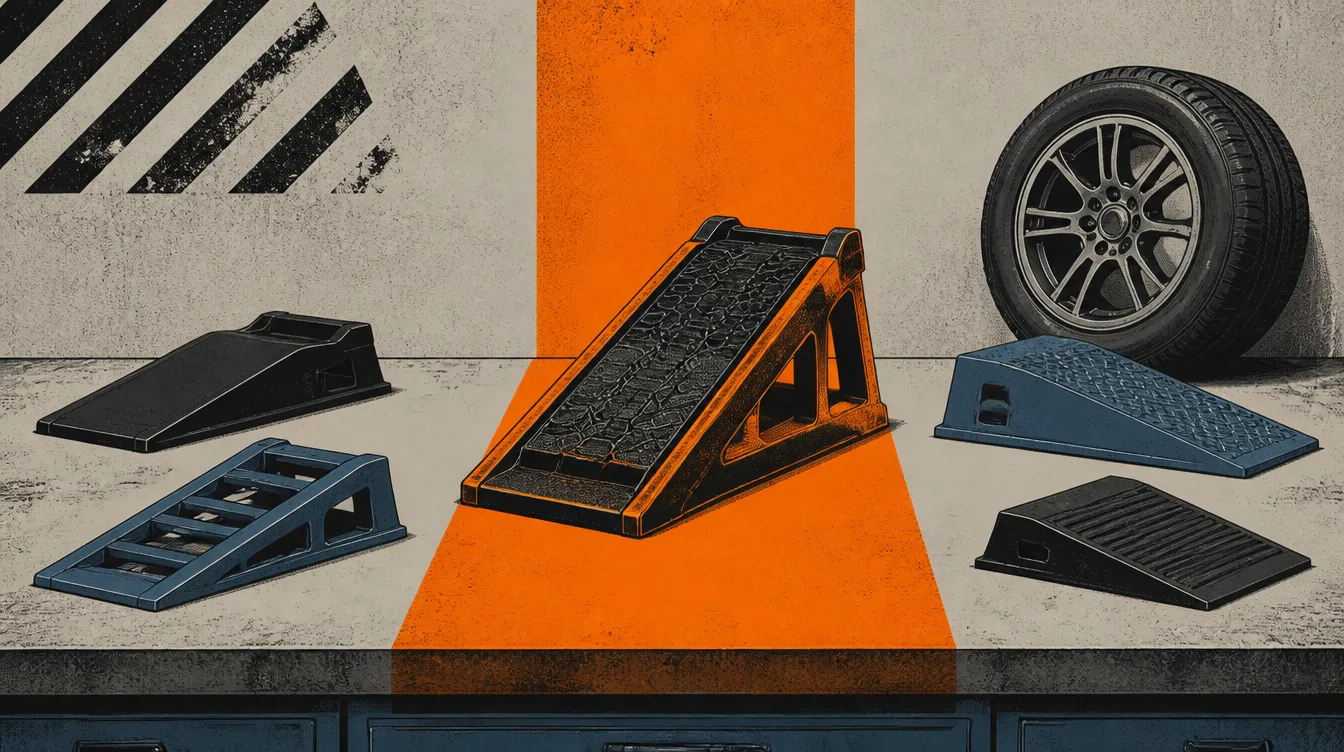
Which Car Ramps Brand Wins?
In our test we compared 11 car ramps options head to head. Pittsburgh Plastic came out on top. See the measured results, the runner-up, the budget pick, and a link to the full test video.
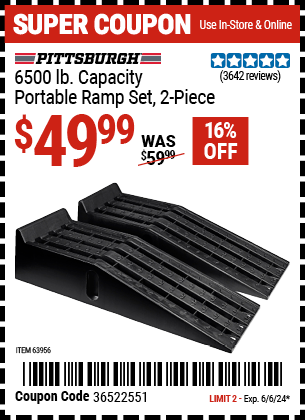
Pittsburgh Plastic
Price shown in test: 60
Affiliate link. We may earn a commission at no extra cost to you.

BiSupply
Price shown in test: 74
Affiliate link. We may earn a commission at no extra cost to you.
The quick take
The short version of why each pick lands where it does, built straight from the measured results.
“the Harbor Freight Pittsburgh plastic ramps came out on top with the best average score, a rating of 2.6”
Best in 1 of 8 measurements, including Average finish score.
The measured results
Every number below is read straight from the test. Products are listed in the order they finished.
Claimed specs
- 1Pittsburgh Plastic
rated 6,500 lb per pair, claimed 6 in max lift height, claimed 17 degree ramp angle, extruded traction grooves, integrated rubber stops, made in China, sold at Harbor Freight
- 2BiSupply6.3 in
of lift claimed, 4,000 lb weight capacity per tire ramp claimed, extra wide at 11.5 in, claimed thick durable plastic construction, made in China
- 3Likeem
three-ton (6,000 lb) capacity claimed at product intro, 8.5 in of lift claimed, high-quality durable wear-resistant plastic, non-slip surface with raised edges, made in China
- 4MaxxHaulup to3,250 lb
per ramp or 6,500 lb per pair claimed, rubber stops on the base, claimed 6 in lift height, rigid traction surface, made in China
- 5Black Widow10,000 lb
weight capacity per pair claimed, 6.25 in of lift claimed, made in China, has six rubber stops (the most of any brand mentioned in the video)
- 6Eastwood1.5
ton (3,000 lb) per-ramp load rating claimed, made in China
- 7Pittsburgh Steel2,000 lb
per-ramp weight capacity claimed, raised safety ribs on both sides, claimed 8 in of lift (the most claimed lift of any brand), made in China, sold at Harbor Freight
- 8EM Auto
two-stage incline claimed, 2.5 ton (5,000 lb) capacity for both ramps combined claimed, 17 degree incline claimed, made in China
- 9Rhino Ramp17 degree
incline claimed for low clearance vehicles, stackable for storage, 'Core Trax' non-skid base claimed, made in USA
- 10Val Wag5
ton hydraulic jack built into each ramp, claimed 10,000 lb low-profile car lift service capacity, minimum height 7.7 in, maximum lift height claimed as 13 in (separately, the measured maximum clearance at the highest setting is given as 14.25 in, a discrepancy from the 13 in claim kept verbatim and unresolved), made in China
- 11Peterson2,000 lb
capacity per ramp claimed, maximum lift of 8 in claimed, durable black powder-coated finish claimed, made in USA, steel construction (one of only two steel-ramp brands in the video)
Weight
- 1Pittsburgh Plastic9.7 lb
- 2BiSupply9.28 lb
- 3Likeem9.38 lb
- 4MaxxHaul9.4 lb
- 5Black Widow9.28 lb
each (identical to the figure given for BiSupply elsewhere in the transcript; flagging as a possible coincidence or transcription duplication rather than resolving it)
- 6Eastwood9.57 lb
- 7Pittsburgh Steel15.15 lb
the heaviest of all brands up to that point in the video
- 8EM Auto8.5 lb
- 9Rhino Ramp8.17 lb
- 10Val Wagjust over37 lb
each, by far the heaviest of all 11 brands
- 11Peterson14.42 lb
Slip test (rear-wheel-drive SUV on smooth concrete)
- 1Pittsburgh Plastic
did not stay in place on the bare floor; performed better after cleaning the floor and rubber stops but still slid; a damp cloth under the ramps made a huge difference, with only a little sliding once the vehicle reached the top
- 2BiSupply
slipping just as badly as the Pittsburgh steel ramps on the bare floor; began moving a little on the damp cloth but finally gained enough grip for the vehicle to reach the top without a problem
- 3Likeem
slipping just as badly as the other plastic ramps on the bare floor; the wet cloth underneath added a lot of traction and the vehicle made it to the top
- 4MaxxHaul
rubber stops did not prevent slipping on the bare floor; cleaning the floor and stops helped but the ramps still slid unevenly; the ramps finally stayed in place once damp t-shirts were placed underneath
- 5Black Widow
both ramps moved on the bare floor; stayed in place once placed on top of the damp fabric, which the narrator attributes to having six rubber stops
- 6Eastwood
sliding on the bare floor; slid just a little on the damp cloth before gaining a good grip
- 7Pittsburgh Steel
moved on the smooth concrete floor; a damp cloth did very little to help, and the ramps continued to move
- 8EM Auto
moved on the bare floor; with only one rubber stop underneath, continued sliding even on the damp cloth; made more progress on a second attempt but still slid out from underneath the front tire, one of the few brands that did not ultimately succeed on this test
- 9Rhino Ramp
slid on the bare floor; slid about as badly after cleaning; a damp cloth was not enough to keep the ramps in position on two separate attempts, one of the few brands that did not ultimately succeed on this test
- 10Val Wag
sliding on the bare floor, described as sliding as badly as the steel ramps; a damp cloth added a little traction but not enough to keep the ramps in place, one of the few brands that did not ultimately succeed on this test
- 11Peterson
moved on the bare floor; the damp fabric 'just didn't provide much traction for the steel ramps', and they continued to move, one of the few brands that did not ultimately succeed on this test
Runaway force test
- 1Pittsburgh Plastic175 lb
described as not having much of a hump behind the front tires
- 2BiSupply163.8 lb
described as not having much of a hump
- 3Likeemjust over172 lb
described as not having much of a hump
- 4MaxxHaul338 lb2nd
restated as 338.5 lb in the closing recap; finished second overall in this test behind Val Wag
- 5Black Widowjust over173 lb
described as performing very close to the Pittsburgh plastic ramps
- 6Eastwood168 lb
described as almost the same as BiSupply
- 7Pittsburgh Steel240.5 lb2nd
described as moving into second place at that point in the video (finished third overall behind Val Wag and MaxxHaul, per the closing recap: 'MaxxHaul finished in second place at 338.5 and Pittsburgh steel ramps 240.5 lb')
- 8EM Auto196.3 lb
described as a little better runaway protection than most other brands
- 9Rhino Ramp215 lb
described as a little better protection than Pittsburgh plastic
- 10Val Wag367.7 lb
the best (highest) of all 11 brands, won this test outright, attributed to a steel bar located just behind the wheel
- 11Petersonaround129 lb
described as the least amount of force of any brand, the weakest result in this test
Tip-over force test
- 1Pittsburgh Plastic752 lb3rd
third place overall in this test
- 2BiSupply705 lb
described as looking and performing a lot like the Pittsburgh steel ramps
- 3Likeem726.4 lb
resolved from a transcript line reading 'the Lincoln ramps... performed a little bit better at 726.4 pounds', which is almost certainly a caption mangling of 'Likeem', resolved by elimination since it is the only untested brand remaining at that point in the sequence before Val Wag
- 4MaxxHauljust over673 lb
described as pretty good; cheapest brand tested
- 5Black Widowjust over678 lb
described as pretty good
- 6Eastwoodalmost691 lb
- 7Pittsburgh Steel727 lb
described as performing well without kicking out
- 8EM Auto899 lb
described as by far the best of all brands, winning this test outright
- 9Rhino Ramp766.1 lb2nd
second place overall in this test
- 10Val Wag703 lb
described as looking very stable but noticeably taller than most other brands
- 11Peterson683.2 lb
resolved from a transcript line reading '[Peterson] brand steel ramps held back the Ford Ranger for a while, but finally gave up at 683.2 pounds', where the brand name itself appears to have been dropped from the caption, resolved by elimination since Pittsburgh Steel was already covered earlier in this test at 727 lb and Peterson is the only other steel-ramp brand
Static overload test (~7,750 lb tractor)
- 1Pittsburgh Plastic
rated 6,500 lb per pair, held up fine under the 7,750 lb load
- 2BiSupply
rated 4,000 lb each; one ramp experienced small damage but did not collapse
- 3Likeem
rated 5,000 lb each; held up really well with no visible weak areas
- 4MaxxHaul
rated 6,500 lb per pair, handled the 7,750 lb load just fine
- 5Black Widow
rated 10,000 lb per pair, held up great under the load
- 6Eastwood
rated 3,000 lb each; held up better than BiSupply, with one ramp beginning to bend but not crack
- 7Pittsburgh Steel
rated 2,000 lb each; held up fine with no damage
- 8EM Auto
rated 2,500 lb each; held up better than some ramps with higher weight ratings
- 9Rhino Ramp
rated 6,000 lb per pair; the 7,750 lb load was a little too much and one ramp experienced a crack in the plastic, though it did not collapse
- 10Val Wag
held up just fine under the load
- 11Peterson
rated 2,000 lb each, the same as Pittsburgh Steel; collapsed under the 7,750 lb load, the only brand in the video to fully collapse in this test; the narrator notes 'a little more steel would have really helped'
Hydraulic press failure load test
- 1Pittsburgh Plastic
rated 3,250 lb, reached almost 25,000 lb before failing, described as doing even better than MaxxHaul; finished second overall in this test at just under 25,000 lb, behind BiSupply
- 2BiSupply
reached a peak force of almost 25,500 lb before beginning to collapse, described as the strongest ramp of all 11 tested and looking remarkably good afterward; won this test outright at well over 25,000 lb
- 3Likeem
in this section the narrator states a rated capacity of 'just 3,300 lb', which conflicts with the three-ton (6,000 lb) capacity claimed earlier in the video; kept verbatim as two different stated figures rather than resolved. Performed at over 20,000 lb, more than its stated rating, with quite a bit of damage; the test was held longer than most other brands
- 4MaxxHaul
rated 3,250 lb; reached over 19,000 lb before the test was stopped early to avoid flying metal objects, so the true failure point was not reached; described as performing about six times better than its rating
- 5Black Widow
reached almost 24,000 lb, described in the transcript as 'almost five times its rated capacity'; this only reconciles with the per-pair 10,000 lb claim if the press test loaded a single ramp at its per-ramp rating of roughly 5,000 lb (24,000 / 5,000 is approximately 4.8x), which is the reading used here; the ramp showed some damage but still looked usable
- 6Eastwood
rated 3,000 lb; collapsed at almost 22,000 lb; the narrator kept this test running longer than most other brands, causing more damage
- 7Pittsburgh Steel
rated 2,000 lb; performed better than expected, beginning to bend around 7,000 lb and reaching a peak force of 9,000 lb before finally collapsing
- 8EM Auto
rated 2,500 lb; performed at over 14,000 lb, with quite a bit of damage
- 9Rhino Ramp
rated 3,000 lb per ramp; performed at almost 15,000 lb, with quite a bit of damage
- 10Val Wag
began bending around 7,000 lb when the hydraulic ram itself began bearing the load; reached more than 23,000 lb before the test was ended early for safety reasons, so the true failure point was not reached; quite a bit of structural damage was noted
- 11Petersonnot tested
Front-wheel-drive low-clearance test (Buick LeSabre)
- 1Pittsburgh Plasticabout2 in
of clearance; performed very well and stayed in position through both the ascent and the descent
- 2BiSupply2 in
of clearance, described as plenty; performed great
- 3Likeem2 in
of clearance, described as plenty; performed very well with no problems
- 4MaxxHaulabout1.75 in
of clearance; performed well with only a small amount of movement once the vehicle was directly on top; the rubber stops were noted as already falling off
- 5Black Widow
the old Buick 'made it up and down the ramps without a problem'
- 6Eastwood
has six rubber stops (tied with Black Widow for the most of any brand); the Buick rolled up and down without any problems; the exact clearance figure was not clearly captured in the transcript ('with [inches] of clearance')
- 9Rhino Rampabout2 in
of clearance; the narrator did not use the brakes while descending and the ramps shot out from underneath the front wheels, causing minor damage to both the car and the ramps; the narrator attributes this to having only one rubber stop, located at the front of the ramp
- 10Val Wag
offered barely enough clearance; small amount of contact on the way up and small ramp movement at the top; the ramp nearly became a projectile on the way down but the narrator applied the brake just in time
- 11Peterson
explicitly skipped: 'Let's get the Peterson Ramps since there isn't enough clearance', consistent with its 8 in lift height being too tall for the low-clearance Buick
- 7Pittsburgh Steelnot tested
- 8EM Autonot tested
All measurements (4 more)+
Measured incline angle
- 1Pittsburgh Plastic18.23 degrees
steeper than the claimed 17 degrees
- 4MaxxHaul17.65 degrees
(computed from a 2 in tire-stop height, 7 in high point, and 22 in ramp length as given in the video)
- 2BiSupplynot tested
- 3Likeemnot tested
- 5Black Widownot tested
- 6Eastwoodnot tested
- 7Pittsburgh Steelnot tested
- 8EM Autonot tested
- 9Rhino Rampnot tested
- 10Val Wagnot tested
- 11Petersonnot tested
Tire stop height
- 1Pittsburgh Plasticabout2.5 in
- 2BiSupplynot tested
- 3Likeemnot tested
- 4MaxxHaulnot tested
- 5Black Widownot tested
- 6Eastwoodnot tested
- 7Pittsburgh Steelnot tested
- 8EM Autonot tested
- 9Rhino Rampnot tested
- 10Val Wagnot tested
- 11Petersonnot tested
Average finish score
- 1Pittsburgh Plastic2.6
described as the best average score of all 11 products, based on the full set of performance tests
- 2BiSupplynot tested
- 3Likeemnot tested
- 4MaxxHaulnot tested
- 5Black Widownot tested
- 6Eastwoodnot tested
- 7Pittsburgh Steelnot tested
- 8EM Autonot tested
- 9Rhino Rampnot tested
- 10Val Wagnot tested
- 11Petersonnot tested
Side-load / hydraulic mechanism stress test
- 10Val Wag
unique to this brand: the narrator lifted a Ford Ranger to the highest position on the ramps and rocked the vehicle side to side, prompted by the ramp's 'pretty sketchy' design; one ramp bent and became stuck (would not lower), though it was eventually freed when the other side was lowered first
- 1Pittsburgh Plasticnot tested
- 2BiSupplynot tested
- 3Likeemnot tested
- 4MaxxHaulnot tested
- 5Black Widownot tested
- 6Eastwoodnot tested
- 7Pittsburgh Steelnot tested
- 8EM Autonot tested
- 9Rhino Rampnot tested
- 11Petersonnot tested
How it was tested
- rear-wheel-drive slip test on smooth concrete (bare floor, then cleaned, then with damp cloths underneath the ramps)
- ground clearance and incline angle comparison
- four-wheel-drive drive-up test (all 11 brands passed without issue, not differentiated per brand in the transcript)
- front-wheel-drive low-clearance ascent and descent test using an old Buick LeSabre
- runaway force test: force required for a vehicle left out of gear with no parking brake to roll off the ramp
- tip-over force test using a Ford Ranger driven off the ramp in reverse
- static overload test using a roughly 7,750 lb tractor
- hydraulic press failure load test
“the Harbor Freight Pittsburgh plastic ramps came out on top with the best average score, a rating of 2.6”