Which Kitchen Knife Sets Brand Wins?
In our test we compared 12 kitchen knife sets options head to head. Wizeka came out on top. See the measured results, the runner-up, the budget pick, and a link to the full test video.
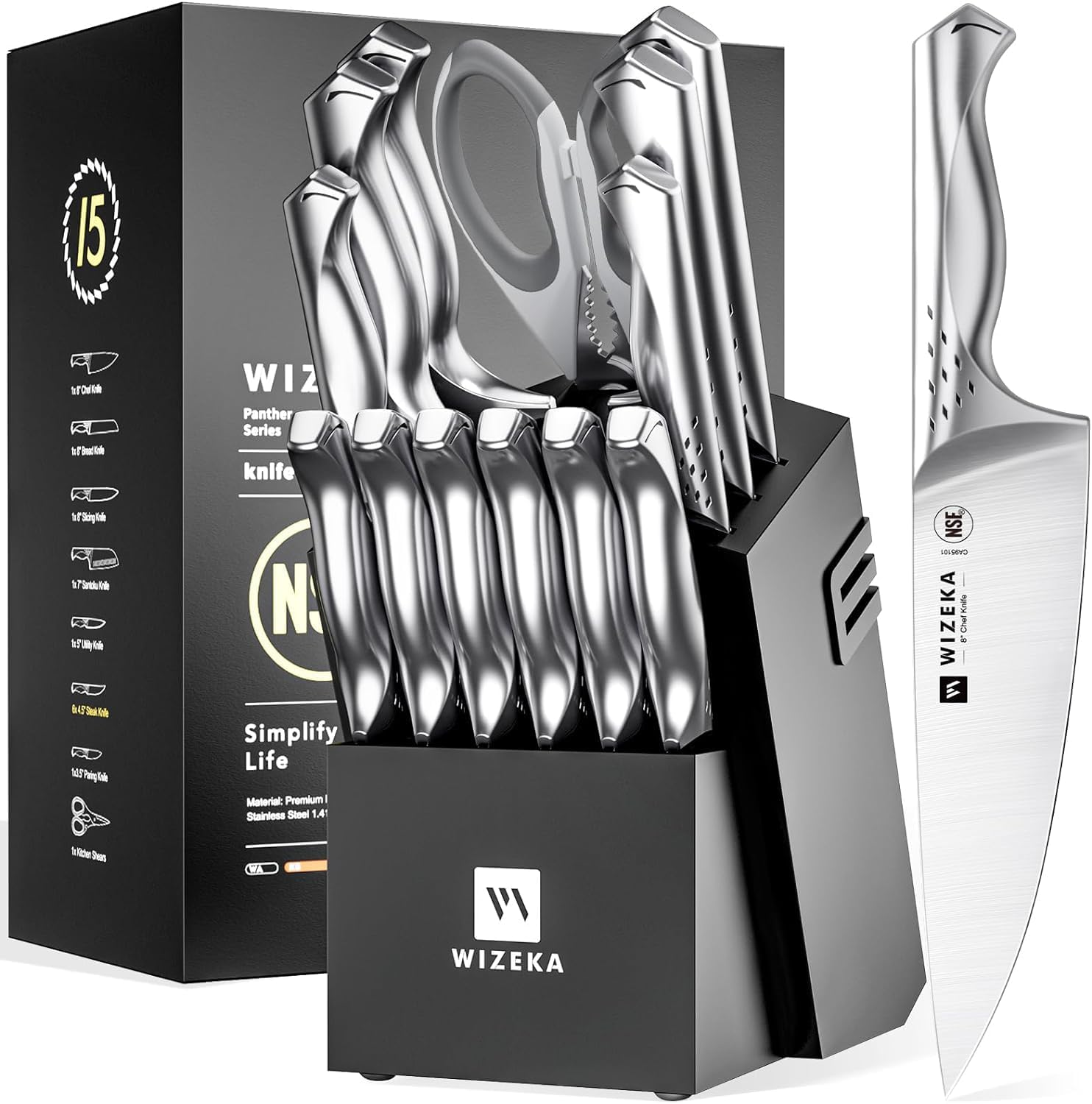
Wizeka
Price shown in test: $96
Affiliate link. We may earn a commission at no extra cost to you.

Global
Price shown in test: $200
Affiliate link. We may earn a commission at no extra cost to you.

Martha Stewart
Price shown in test: $49
Affiliate link. We may earn a commission at no extra cost to you.
The quick take
The short version of why each pick lands where it does, built straight from the measured results.
“So which knife set is the best? Three of the graded areas were subjective, so I converted the scores into an A through F grading scale and did not count these areas for calculating the average finish. And the Wusthof came out on top with the best average finish of 1.8. It's a great overall set of knives.”
Placed top three in 1 of 6 measurements.
Placed top three in 1 of 6 measurements.
The measured results
Every number below is read straight from the test. Products are listed in the order they finished.
Paring knife intro
- 1Wizeka95 g
initial sharpness score 140, the sharpest of all 12 sets when new (lower score is sharper on the tester's scale)
- 2Global Osaka 6-piece bamboo knife block set65 g
initial sharpness score 180, made in Japan, claims hand crafted, ice tempered, Rockwell hardness 56 to 58, 10 to 15 degree double bevel edges, hand wash recommended
- 3Martha Stewart63 g2nd
initial sharpness score 175, second place behind the Astercook at time of testing; forged stainless steel, full tang construction, hand wash recommended to avoid corrosion
- 4Farberware38 g
initial sharpness score 400, described as pretty dull despite marketing claims of superior high-carbon stainless steel and that the set would never need sharpening; 14-piece set with scissors and utensils, made in China
- 5Astercook42 g
initial sharpness score 170, described as pretty sharp under the microscope; claims dishwasher safe, made in China
- 6Hunter.Dual46 g
initial sharpness score 235, described as pretty sharp but not quite as sharp as the Astercook; claims German high-carbon stainless steel, nonstick and rust resistant, dishwasher safe, self-sharpening block, made in China
- 7McCook55 g
initial sharpness score 235, described as trailing the Astercook by 65 sharpness points, with a less aggressive sharpening angle than the Martha Stewart; German forged stainless steel, hand wash only, made in China
- 8Cuisinart78 g
initial sharpness score 200, described as looking pretty sharp and performing well; claims classic forged triple rivet, superior high-carbon stainless steel, limited lifetime warranty, made in China
- 9Henckels97 g2nd
initial sharpness score 150, second sharpest when new behind the Wizeka; claims German engineering, ultra sharp, dishwasher safe though hand washing recommended, made in China
- 10Imarku74 g
initial sharpness score 240, described as 100 sharpness points duller than the sharpest knife (Wizeka at 140); 16-piece set, claims Japanese design but made in China, claims 13 to 15 degree angle, razor sharp, high-carbon stainless steel
- 11Zwilling48 g3rd
initial sharpness score 165, third sharpest so far when new; sharpened to a 15 degree angle, made in Germany, claims dishwasher safe and longer edge retention than other brands
- 12Yatoshi83 g
initial sharpness score 210, described as not nearly as sharp as some of the other brands despite razor sharp marketing claims; claims Rockwell hardness 57 to 58, soft comfortable handle, made in Japan
Osage orange edge retention (100 passes, 10 lb)
- 1Wizeka140
to 150, a loss of 10 points, described as 7 percent loss, finishing third in that test; also cited as the sharpest knife in absolute terms afterward at 150
- 2Global Osaka 6-piece bamboo knife block set180
to 180, zero sharpness loss, winner of this test
- 3Martha Stewart175
to 195, a loss of 20 points
- 4Farberware400
to 440, a loss of 40 points
- 5Astercook170
to 240, a loss of 70 points, described as dulled quite a bit
- 6Hunter.Dual235
to 305, described as started off duller than average and lost a lot of sharpness
- 7McCook235
to 315, described as lost a lot of sharpness
- 8Cuisinart200
to 225, a loss of 25 points
- 9Henckels150
to 155, a loss of only 5 points, described as 3 percent loss, winner of the percentage-loss ranking for this test
- 10Imarku240
to 260, a loss of 20 points
- 11Zwilling165
to 180, described as held up really well
- 12Yatoshi210
to 255, described as lost quite a bit of sharpness
Sharpened baseline
- 1Wizeka115
(all knives were manually resharpened to within 5 points of each other before the next test)
- 2Global Osaka 6-piece bamboo knife block set115
- 3Martha Stewart110
- 4Farberware
not sharpened; host states he did not sharpen the Farberware since it is not designed to be sharpened, so it is excluded from the sharpened-baseline and cutting board retention tests
- 5Astercook115
described as way sharper than any of the knives were when new
- 6Hunter.Dual110
described as the sharpest baseline at that point in the narration
- 7McCook115
described as the blade material not seeming as good as the Martha Stewart but still very sharp
- 8Cuisinart110
described as super sharp
- 9Henckels115
- 10Imarku115
described as relatively dull when new but very sharp after resharpening
- 11Zwilling115
- 12Yatoshi115
described as just as sharp as a utility blade after resharpening despite not being razor sharp when new
Chef's knife
- 1Wizeka254 g
sharpness score 130, the sharpest chef's knife of all brands tested
- 2Global Osaka 6-piece bamboo knife block set177 g2nd
sharpness score 135, second sharpest chef's knife behind the Wizeka
- 3Martha Stewart203 g
sharpness score 165, described as the sharpest chef's knife up to that point in the video
- 4Farberware136 g
sharpness score 605, described as very lightweight, calling the knife's quality into question
- 5Astercook124 g
sharpness score 195, described as actually decent
- 6Hunter.Dual145 g
sharpness score 260
- 7McCook177 g
sharpness score 245, about the same sharpness as its paring knife
- 8Cuisinart242 g
sharpness score 215, the heaviest paring/chef knife line up to that point in the video
- 9Henckels203 g
sharpness score 180, described as sharper than most of the other brands
- 10Imarku199 g
sharpness score 210, described as not nearly as sharp as the Wizeka
- 11Zwilling199 g
sharpness score 140, described as even sharper than its paring knife
- 12Yatoshi175 g
sharpness score 200, described as not nearly as sharp as the Global despite seeming well constructed
Santoku knife
- 1Wizeka
sharpness score 150, finished second behind the Global
- 2Global Osaka 6-piece bamboo knife block set
sharpness score 125, described as by far the sharpest Santoku knife, winner of this test
- 3Martha Stewart
sharpness score 165, same as its chef's knife, moved into the lead at time of testing; finished third overall in the final Santoku ranking
- 4Farberware
sharpness score 340, described as definitely not the sharpest knife in the kitchen
- 5Astercook
sharpness score 175, described as performing very well, about the same as its paring knife score
- 6Hunter.Dual
sharpness score 290, described as struggled with sharpness
- 7McCook
sharpness score above 200 (exact figure not spoken, described only as 'above 200,' consistent with its other results)
- 8Cuisinart
sharpness score 215, same as its chef's knife
- 9Henckels
sharpness score 170, described as a consistently good performer, better than average
- 10Imarku
sharpness score 260, its two prior knives scored in the 200s
- 11Zwilling
not tested; the set does not include a Santoku knife, so it was skipped in this test
- 12Yatoshi
sharpness score 265, described as not coming with a super sharp factory edge
Blade tip durability (50 in drop test)
- 1Wizeka
held up really well with just a small amount of damage
- 2Global Osaka 6-piece bamboo knife block set
took a very direct and hard hit and still held up really well
- 3Martha Stewart
blade described as thinner than the Astercook and Hunter.Dual knives; experienced a very bad bend
- 4Farberware
performed exceptionally well with a very small amount of damage despite struggling on sharpness tests; received the best possible subjective durability rating of 1
- 5Astercook
blade tip appears made of relatively soft metal; part of the tip broke off and the tip is badly bent
- 6Hunter.Dual
blade tip relatively soft, similar to the Astercook, but experienced a little less damage than the Astercook
- 7McCook
blade tip a little thicker than the Martha Stewart's but experienced just as much damage
- 8Cuisinart
heavier than all previous paring knives tested; some damage to the blade tip but held up a lot better than most of the previous brands
- 9Henckels
a very heavy knife, similar to the Wizeka; held up really well
- 10Imarkuabout20 percent
lighter than the Henckels at 74 g; experienced quite a bit more damage than the heavier Wizeka and Henckels knives
- 11Zwilling
extremely lightweight at only 48 g; held up really well with only a small amount of damage
- 12Yatoshi
claims Rockwell hardness around 57 to 58; the high-strength steel held up really well with only minor damage
Corrosion resistance
- 1Wizeka
showed either a couple of rust spots or slightly less rust than the Henckels, exact assignment ambiguous, see notes
- 2Global Osaka 6-piece bamboo knife block set
rusted pretty badly; host attributes this to the high-carbon steel construction, which is supposed to be hand washed rather than run through a dishwasher
- 3Martha Stewart
no visible rust other than some water spots; tied for the best possible subjective corrosion rating of 1, along with the Zwilling
- 4Farberware
knife edge already beginning to rust after about an hour of the mild rusting agent test
- 5Astercook
sharpened blade edge is also rusting in the mild rusting agent test
- 6Hunter.Dual
small amount of rust on the knife edge
- 7McCook
small amount of rust beginning to form
- 8Cuisinart
small amount of rust beginning to form
- 9Henckels
showed either a couple of rust spots or slightly less rust than the position-7 brand (Wizeka); exact assignment ambiguous, see the Wizeka entry's notes
- 10Imarku
only a couple of areas of shallow rust
- 11Zwilling
performed very well with no visible rust; tied for the best possible subjective corrosion rating of 1, along with the Martha Stewart
- 12Yatoshi
experienced quite a bit of rusting, which the host attributes to the high-carbon steel construction, similar to the Global
Cutting board retention (100 passes, 10 lb, sharpened knives)
- 1Wizeka115
to 135, a loss of 20 points, finished second behind the Global
- 2Global Osaka 6-piece bamboo knife block set115
to 125, a loss of only 10 points, winner of this test
- 3Martha Stewart110
to 155, moved into the lead at time of testing (loss of 45 points)
- 5Astercook115
to 200, described as lost a lot of sharpness
- 6Hunter.Dual110
to 315, described as pretty dull afterward
- 7McCook115
to 175, described as dulled quite a bit
- 8Cuisinart110
to 160, a loss of 50 points, described as performed well
- 9Henckels115
to 150, a loss of 35 points, finished third in this test
- 10Imarku115
to 165, a loss of 50 points
- 11Zwilling115
to 170, described as performed about the same as the Imarku
- 12Yatoshi115
to 155, described as did a pretty good job of holding a sharp edge
- 4Farberwarenot tested
All measurements (1 more)+
Handle comfort
- 2Global Osaka 6-piece bamboo knife block set
host found the handle very uncomfortable despite the knife being very sharp and durable
- 7McCook
described by the host as comfortable, with a rating of 2
- 12Yatoshi
host found this the most comfortable handle of all the knives tested
- 1Wizekanot tested
- 3Martha Stewartnot tested
- 4Farberwarenot tested
- 5Astercooknot tested
- 6Hunter.Dualnot tested
- 8Cuisinartnot tested
- 9Henckelsnot tested
- 10Imarkunot tested
- 11Zwillingnot tested
How it was tested
- initial paring knife factory sharpness, measured with a Best Certified Knife Sharpness Tester (lower score = sharper)
- paring knife blade edge retention: 100 passes across a piece of Osage orange wood (Janka hardness approximately 2,500) with 10 lb of downward weight on the knife
- manual resharpening of all knives except the Farberware to within 5 sharpness points of each other, using progressively finer diamond stones and a leather strop
- paring knife blade edge retention after resharpening: 100 passes across a cutting board with 10 lb of downward weight
- chef's knife weight and factory sharpness
- Santoku knife factory sharpness (Zwilling excluded, no Santoku knife in that set)
- blade tip durability: dropped through a vertical pipe from 50 in height onto a hard surface, rated on a subjective scale
- handle comfort, rated subjectively by the host
- corrosion resistance: knives sprayed with a mild rusting agent of hydrogen peroxide, vinegar, and salt and inspected after about an hour, rated subjectively
“So which knife set is the best? Three of the graded areas were subjective, so I converted the scores into an A through F grading scale and did not count these areas for calculating the average finish. And the Wusthof came out on top with the best average finish of 1.8. It's a great overall set of knives.”