Which Inverter Generator Brand Wins?
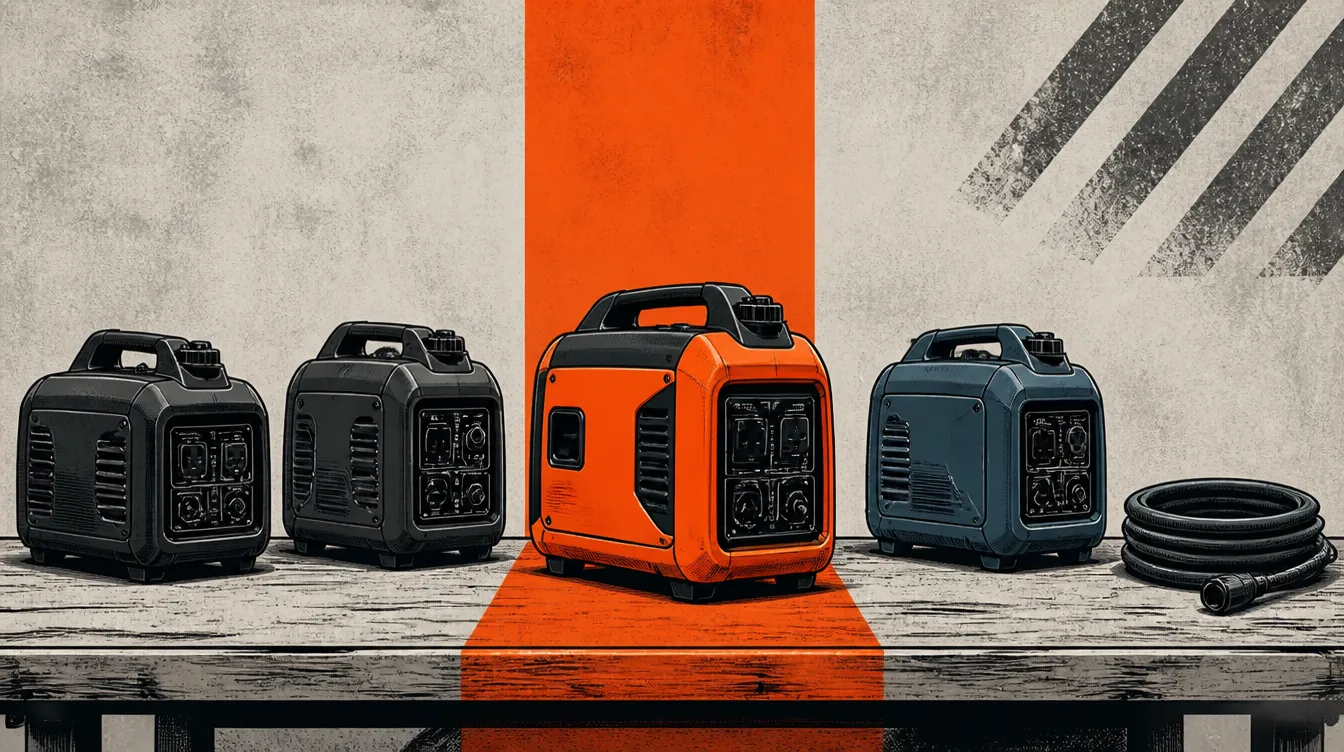
In our test we compared 3 inverter generator options head to head. Honda EU2200i came out on top. See the measured results, the runner-up, the budget pick, and a link to the full test video.
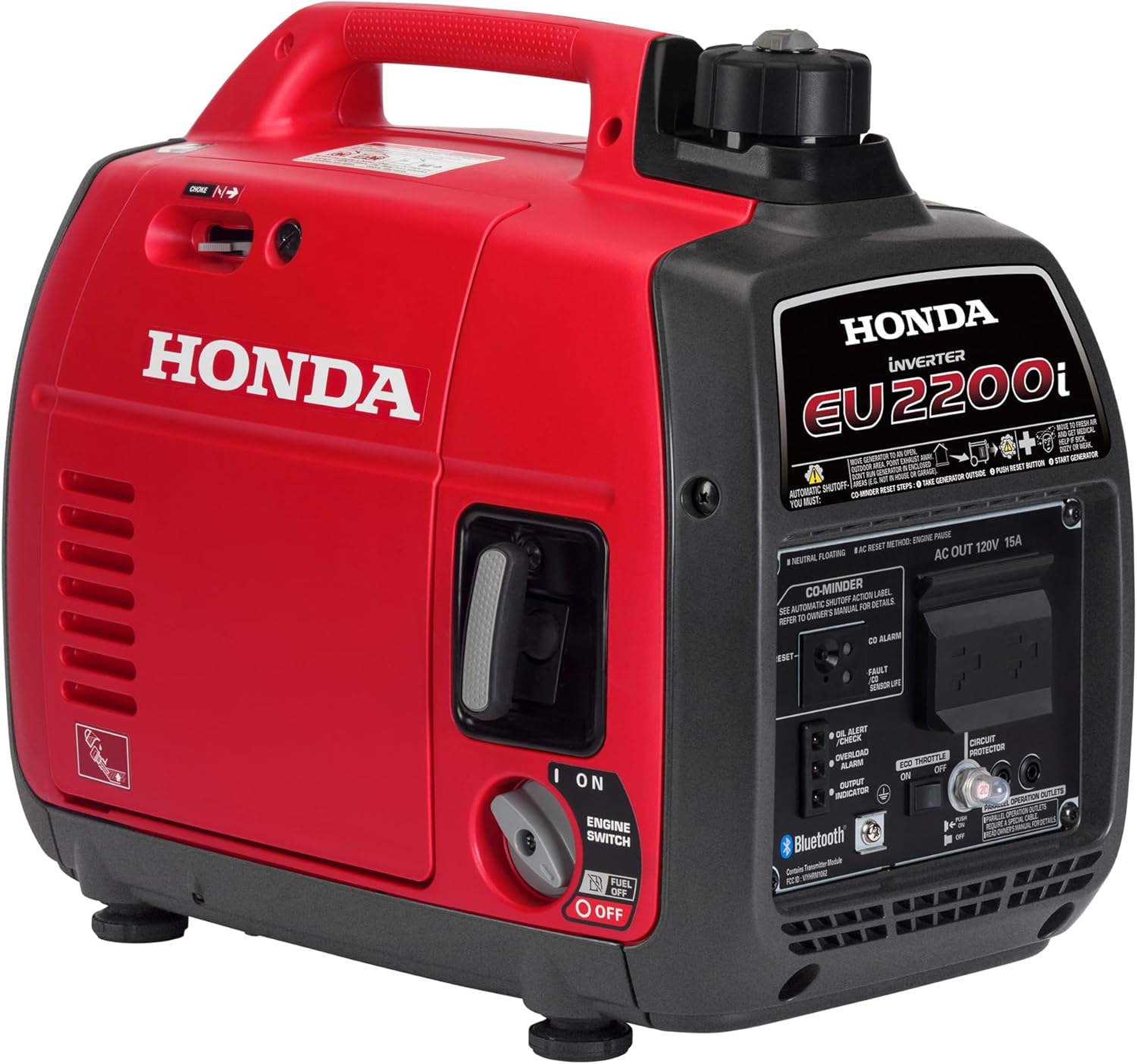
Honda EU2200i
Price shown in test: $1,200 to $1,400 (stated as ranging from $1,200 during the intro, and as between 12 and 1400 dollars in the closing verdict)
Affiliate link. We may earn a commission at no extra cost to you.
The quick take
The short version of why each pick lands where it does, built straight from the measured results.
“the Honda won the showdown, but it is very expensive at a price between 12 and 1400 dollars”
The measured results
Every number below is read straight from the test. Products are listed in the order they finished.
Voltage drop test
- 1Honda EU2200i
eco mode: dropped only to 111.7V under load, the smallest drop of the three, recovered in 2.77 seconds (fastest), held at 121.8V under load (highest); eco off: never dropped below 120V at all, zero recovery time needed, held at 121.8 to 122V, the best result of the three brands
- 2GENMAX GM2200i
eco mode: dropped to 99V under load, took 6 seconds to recover, held at 119.6V under load; eco off: dropped to 116.3V, took 5 seconds to recover; both metrics slightly worse than the Predator's recovery speed despite a slightly smaller initial drop in eco mode
- 3Predator 2000
eco mode: dropped to 97.9V under load (slightly lower than the Genmax's 99V) but recovered faster, in 3.44 seconds versus the Genmax's 6; eco off: dropped to 117.2V (slightly more than the Genmax's 116.3V) but again recovered faster, in 3 seconds versus the Genmax's 5
Electricity cleanliness (sine wave)
- 1Honda EU2200i
produced pure sine wave electricity with a clean waveform on the oscilloscope, no load and under load
- 2GENMAX GM2200i
produced pure sine wave electricity with a clean waveform on the oscilloscope, no load and under load
- 3Predator 2000
produced pure sine wave electricity with a clean waveform on the oscilloscope, no load and under load
Noise test
- 1Honda EU2200i
quietest of the three generators, average exhaust noise of 58.9 decibels; quietest individual reading was 50.2 decibels in eco mode with the exhaust facing the sound meter and no load
- 2GENMAX GM2200i
loudest of the three generators, average exhaust noise of 64.8 decibels
- 3Predator 2000
second quietest of the three generators, average exhaust noise of 61.6 decibels
Fuel efficiency at 1500W (near max load)
- 1Honda EU2200i
ran the longest of the three at just over 32 minutes before running out of the 16 oz of gasoline; this was the only one of the three brands in this specific test whose stop was a genuine fuel-out rather than an overload trip or apparent overheating shutdown
- 2GENMAX GM2200i
shut down suddenly at just under 19 minutes; narrator says it appears the generator overheated and experienced vapor lock rather than simply running out of fuel, and it took about 3 minutes of effort to get it running again
- 3Predator 2000
the first of the three to stop, at 12 minutes 45 seconds, but this was an overload protection trip (the generator is rated for 1600W max running watts, close to the 1500W plus 8W LED test load) rather than a true fuel-out or fuel-efficiency result
Fuel efficiency at 500W, eco mode off
- 1Honda EU2200i
ran out of fuel first among the three at about 43 minutes 15 seconds
- 2GENMAX GM2200i
lasted 7 minutes longer than the Honda, out of fuel at almost 51 minutes
- 3Predator 2000
outlasted both the Honda (by almost 12 minutes) and the Genmax (by almost 5 minutes), the winner of this specific test at just over 55 minutes
Fuel efficiency at 500W, eco mode on
- 1Honda EU2200i
ran out of fuel first among the three at 61 minutes, about 30 seconds before the Genmax and about a minute and a half before the Predator; still a very close three way result once eco mode was engaged
- 2GENMAX GM2200i
outlasted the Honda by about 30 seconds, out of fuel at just under 61.5 minutes, about a minute short of the Predator
- 3Predator 2000
the winner of this specific test at 62.5 minutes, about a minute longer than the Genmax and about a minute and a half longer than the Honda
Starting force
- 1Honda EU2200i
took the most peak pull force of the three main brands to start, 24 kg or about 52.9 lb, roughly twice the Genmax's force
- 2GENMAX GM2200i
took the least peak pull force of the three main brands to start, 8.5 kg or about 18.7 lb, the easiest of the three to start
- 3Predator 2000
took 12.5 kg or about 27.5 lb of peak pull force to start, a little more effort than the Genmax but well under half of the Honda's
Vibration
- 1Honda EU2200i
vibrated the least of the three brands, close to 9 m per s squared
- 2GENMAX GM2200i
measured 11.55 m per s squared, more than the Honda but less than the Predator
- 3Predator 2000
vibrated the most of the three brands at 16.65 m per s squared, though the narrator still calls this pretty good
All measurements (2 more)+
Oil condition after about 98 hours total runtime (96 on current oil)
- 1Honda EU2200i
oil level still full, no need to add oil; spark plug still looked really good with much less carbon buildup than the Predator's
- 2GENMAX GM2200i
oil level still full, no need to add oil; spark plug still looked good, similar condition to the Honda's
- 3Predator 2000
definitely burning oil; had to have oil added around the 49 hour mark after shutting down for being low on oil; spark plug had quite a bit of carbon deposits for under 100 hours of use
Oil wear metal analysis (independent lab)
- 1Honda EU2200i
lowest aluminum content and lowest iron content of the three brands, described as having definitely the least amount of wear metal in the oil
- 2GENMAX GM2200i
highest aluminum content of the three brands (worst on this specific metal), but second lowest iron content (better than the Predator, worse than the Honda)
- 3Predator 2000
highest iron content of the three brands (worst on this metal); second highest aluminum content, behind the Genmax
How it was tested
- voltage and voltage drop under load, in eco mode and with eco mode off, using a space heater
- electricity cleanliness / pure sine wave quality on an oscilloscope, no load and under load
- exhaust noise level in decibels at multiple angles, in eco mode with and without load
- fuel efficiency and runtime at a near maximum 1500W load with three space heaters
- fuel efficiency and runtime at a 500W halogen load with eco mode off
- fuel efficiency and runtime at a 500W halogen load with eco mode on
- peak starting pull force on the starter rope
- vibration measured at the generator's mounting surface
- oil level, oil consumption, and spark plug condition after about 98 hours of total runtime
- independent lab analysis of motor oil for wear metals (aluminum and iron)
“the Honda won the showdown, but it is very expensive at a price between 12 and 1400 dollars”
Data notes and caveats
All three main brand names (Honda, GENMAX, Predator) match the video description's product list literally, with no significant auto-caption mangling to resolve. The Harbor Freight Tailgater ($125) and a larger Predator 4000 unit appear only as reference comparisons for the oscilloscope dirty-electricity demonstration and the noise/starting-force baselines; they are not part of the description's tested product list and are not carried through the fuel efficiency, oil wear, spark plug, or vibration tests, so they are excluded from products here rather than treated as a fourth and fifth competitor. The narrator explicitly names only an overall winner (Honda); no explicit overall runner up or budget pick is stated in the closing verdict, only per-test placements (for example Predator finishing second in the noise test), so runnerUp and budgetPick are left null rather than inferred. The products array above orders Genmax ahead of Predator for the number two and three overall positions as a best effort synthesis based on Genmax's clean oil/spark plug health and lower price versus Predator's oil burning and carbon buildup issues, but this specific 2nd/3rd ordering is not something the narrator states outright, unlike the explicit 1st place declaration for Honda. The 1500W near max load fuel test is not a clean apples to apples fuel efficiency comparison: the Predator's stop at 12:45 was an overload protection trip (near its 1600W rated limit) and the Genmax's stop at just under 19 minutes appears to be a vapor lock/overheating shutdown per the narrator, while only the Honda actually ran until its fuel was genuinely exhausted in that specific test.