Which Cordless Impact Wrenches Brand Wins?
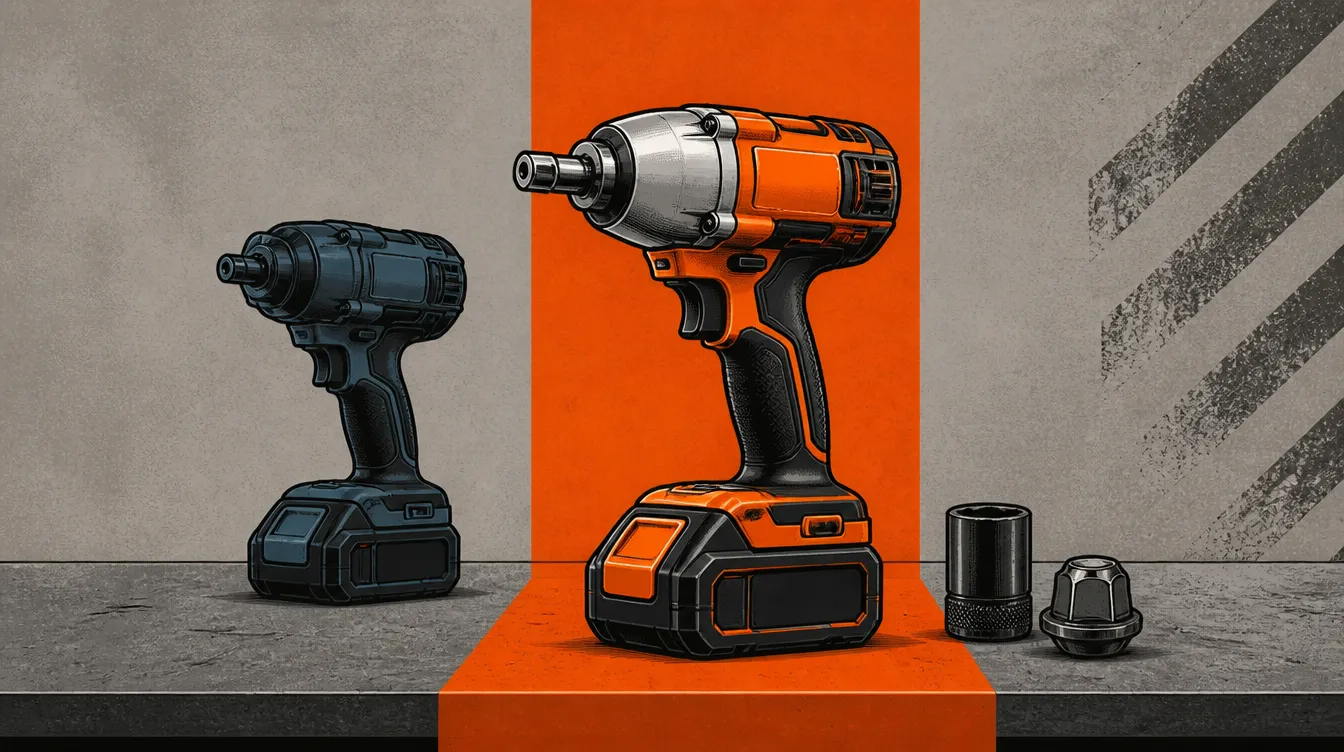
In our test we compared 2 cordless impact wrenches options head to head. Makita XWT11Z came out on top. See the measured results, the runner-up, the budget pick, and a link to the full test video.

Makita XWT11Z
Price shown in test: $138
Affiliate link. We may earn a commission at no extra cost to you.
Cousin Eddie (unbranded knockoff Makita impact wrench)
Price shown in test: just under $30
Affiliate link. We may earn a commission at no extra cost to you.
The quick take
The short version of why each pick lands where it does, built straight from the measured results.
“So, is a $30 impact wrench, or the cheap knockoff, as good as the Makita? Absolutely not. Pretty obvious that Makita dominated the showdown.”
The measured results
Every number below is read straight from the test. Products are listed in the order they finished.
All measurements (24 more)+
Weight
- 1Makita XWT11Z 18V LXT Lithium-Ion Brushless Cordless 3-Speed 1/2 in Sq. Drive Impact Wrench1,133 grams
made in China
- 2Cousin Eddie (unbranded knockoff Makita impact wrench)1,132 grams
(1 gram less than the Makita), made in China, shipped from China, took about a month to arrive
Speeds
- 1Makita XWT11Z 18V LXT Lithium-Ion Brushless Cordless 3-Speed 1/2 in Sq. Drive Impact Wrench3
forward and 3 reverse speeds, plus a reverse rotation auto stop feature
- 2Cousin Eddie (unbranded knockoff Makita impact wrench)2
forward and 1 reverse speed, plus a reverse rotation auto stop feature
Trigger response
- 1Makita XWT11Z 18V LXT Lithium-Ion Brushless Cordless 3-Speed 1/2 in Sq. Drive Impact Wrench
nearly instantaneous, no noticeable lag; completed about 4.5 rotations before Cousin Eddie even began spinning in a side by side slow motion comparison
- 2Cousin Eddie (unbranded knockoff Makita impact wrench)
noticeable trigger lag; the Makita completed about 4.5 rotations before this tool even began spinning
Loosening rotation count (trigger squeeze to anvil stop)
- 1Makita XWT11Z 18V LXT Lithium-Ion Brushless Cordless 3-Speed 1/2 in Sq. Drive Impact Wrench8 rotations
- 2Cousin Eddie (unbranded knockoff Makita impact wrench)10.5 rotations
2.5 more than the Makita, enough in some cases to fully decouple a nut from a bolt
Lowest variable trigger speed
- 1Makita XWT11Z 18V LXT Lithium-Ion Brushless Cordless 3-Speed 1/2 in Sq. Drive Impact Wrench45 RPM
offering much finer low speed control than Cousin Eddie
- 2Cousin Eddie (unbranded knockoff Makita impact wrench)470 RPM
far less fine low speed control than the Makita's 45 RPM
No-load power draw
- 1Makita XWT11Z 18V LXT Lithium-Ion Brushless Cordless 3-Speed 1/2 in Sq. Drive Impact Wrench2.61 amps
/ 52 watts forward, peaked at 3.4 amps / 65 watts reverse
- 2Cousin Eddie (unbranded knockoff Makita impact wrench)1.73 amps
/ about 34 watts, both forward and reverse
Tightening torque test, low impact (ft-lb)
- 1Makita XWT11Z 18V LXT Lithium-Ion Brushless Cordless 3-Speed 1/2 in Sq. Drive Impact Wrench57 ft-lb
at 650 PSI
- 2Cousin Eddie (unbranded knockoff Makita impact wrench)78 ft-lb
at 900 PSI
Tightening torque test, high impact (ft-lb)
- 1Makita XWT11Z 18V LXT Lithium-Ion Brushless Cordless 3-Speed 1/2 in Sq. Drive Impact Wrench178 ft-lb
at 2,050 PSI, a little short of its own 210 ft-lb rating
- 2Cousin Eddie (unbranded knockoff Makita impact wrench)91 ft-lb
at 1,050 PSI, far short of its claimed 384 ft-lb
Loosening torque test, high impact (ft-lb)
- 1Makita XWT11Z 18V LXT Lithium-Ion Brushless Cordless 3-Speed 1/2 in Sq. Drive Impact Wrench159 ft-lb
at 1,825 PSI
- 2Cousin Eddie (unbranded knockoff Makita impact wrench)113 ft-lb
at 1,300 PSI
Lug nut removal speed test
- 1Makita XWT11Z 18V LXT Lithium-Ion Brushless Cordless 3-Speed 1/2 in Sq. Drive Impact Wrench35 seconds
- 2Cousin Eddie (unbranded knockoff Makita impact wrench)49 seconds
Auto stop feature test
- 1Makita XWT11Z 18V LXT Lithium-Ion Brushless Cordless 3-Speed 1/2 in Sq. Drive Impact Wrenchabout25 seconds
finished the loosening and auto stop sequence before Cousin Eddie's nut even began to rotate in 3 of 3 side by side trials
- 2Cousin Eddie (unbranded knockoff Makita impact wrench)about34 seconds
Galled/cross-threaded nut removal, 30 second test
- 1Makita XWT11Z 18V LXT Lithium-Ion Brushless Cordless 3-Speed 1/2 in Sq. Drive Impact Wrench5.75 rotations
close to twice the work Cousin Eddie did
- 2Cousin Eddie (unbranded knockoff Makita impact wrench)2.75 rotations
10 ft drop test onto concrete
- 1Makita XWT11Z 18V LXT Lithium-Ion Brushless Cordless 3-Speed 1/2 in Sq. Drive Impact Wrench
a few scratches to the casing, less bounce than Cousin Eddie, no functional damage
- 2Cousin Eddie (unbranded knockoff Makita impact wrench)
bounced more than the Makita, only cosmetic scratching, one rubber trim piece popped off but was reseated, no functional damage
Impact-on-anvil stress test
- 1Makita XWT11Z 18V LXT Lithium-Ion Brushless Cordless 3-Speed 1/2 in Sq. Drive Impact Wrench
handle flexed near the battery under a hard blow but the tool kept working
- 2Cousin Eddie (unbranded knockoff Makita impact wrench)
the plastic casing broke at the base and the handle broke, though the tool kept working
Heat after repeated head-to-head runs
- 1Makita XWT11Z 18V LXT Lithium-Ion Brushless Cordless 3-Speed 1/2 in Sq. Drive Impact Wrench
only about 4 degrees F cooler than Cousin Eddie
- 2Cousin Eddie (unbranded knockoff Makita impact wrench)
ran about 4 degrees F hotter than the Makita
Teardown
- 1Makita XWT11Z 18V LXT Lithium-Ion Brushless Cordless 3-Speed 1/2 in Sq. Drive Impact Wrench
hammer weighs 297 g (heavier than Cousin Eddie's 253 g), plastic case is much more robust, anvil shows only a very small amount of wear after testing, uses a pin detent anvil design
- 2Cousin Eddie (unbranded knockoff Makita impact wrench)
does have a genuine brushless motor, hammer weighs 253 g (lighter than Makita's 297 g), anvil shows noticeably more wear/rounding than the Makita's, uses a friction ring anvil design
Manufacturer rated torque
- 1Makita XWT11Z 18V LXT Lithium-Ion Brushless Cordless 3-Speed 1/2 in Sq. Drive Impact Wrench210 ft-lb
maximum tightening, 295 ft-lb nut busting/loosening torque
- 2Cousin Eddie (unbranded knockoff Makita impact wrench)not tested
RPM, low impact mode
- 1Makita XWT11Z 18V LXT Lithium-Ion Brushless Cordless 3-Speed 1/2 in Sq. Drive Impact Wrenchclose to1,500
forward, just over 1,500 reverse, about 100 RPM slower than its own rating
- 2Cousin Eddie (unbranded knockoff Makita impact wrench)not tested
RPM, medium impact mode
- 1Makita XWT11Z 18V LXT Lithium-Ion Brushless Cordless 3-Speed 1/2 in Sq. Drive Impact Wrenchclose to2,000
forward, 2,140 reverse (faster than its rating)
- 2Cousin Eddie (unbranded knockoff Makita impact wrench)not tested
RPM, high impact mode
- 1Makita XWT11Z 18V LXT Lithium-Ion Brushless Cordless 3-Speed 1/2 in Sq. Drive Impact Wrenchclose to2,750
forward, just over 3,000 reverse (faster than its rating)
- 2Cousin Eddie (unbranded knockoff Makita impact wrench)not tested
Tightening torque test, medium impact (ft-lb)
- 1Makita XWT11Z 18V LXT Lithium-Ion Brushless Cordless 3-Speed 1/2 in Sq. Drive Impact Wrench100 ft-lb
at 1,150 PSI, which already beat Cousin Eddie's high impact result
- 2Cousin Eddie (unbranded knockoff Makita impact wrench)not tested
Manufacturer claims
- 2Cousin Eddie (unbranded knockoff Makita impact wrench)520
Newton meters (about 384 ft-lb) of torque claimed, 3,000 RPM no-load claimed
- 1Makita XWT11Z 18V LXT Lithium-Ion Brushless Cordless 3-Speed 1/2 in Sq. Drive Impact Wrenchnot tested
RPM, soft impact mode
- 2Cousin Eddie (unbranded knockoff Makita impact wrench)1,800
forward, close to 2,300 reverse
- 1Makita XWT11Z 18V LXT Lithium-Ion Brushless Cordless 3-Speed 1/2 in Sq. Drive Impact Wrenchnot tested
RPM, hard impact mode
- 2Cousin Eddie (unbranded knockoff Makita impact wrench)2,300
forward, 2,300 reverse, 700 RPM short of the 3,000 RPM claimed on its spec sheet
- 1Makita XWT11Z 18V LXT Lithium-Ion Brushless Cordless 3-Speed 1/2 in Sq. Drive Impact Wrenchnot tested
How it was tested
- maximum tightening and loosening torque (hydraulic ram test rig, PSI converted to ft-lb)
- no-load RPM across all speed/impact modes, forward and reverse
- no-load power draw (amps and watts)
- lug nut removal speed test (seconds)
- reverse auto stop feature response time (seconds)
- galled/cross-threaded nut removal against engine brake resistance (rotations in 30 seconds)
- head-to-head trigger response and power showdown
- 10 ft drop test onto concrete
- impact-on-anvil stress test
- heat after repeated runs
- teardown and internal component comparison (hammer weight, anvil wear, case material)
“So, is a $30 impact wrench, or the cheap knockoff, as good as the Makita? Absolutely not. Pretty obvious that Makita dominated the showdown.”