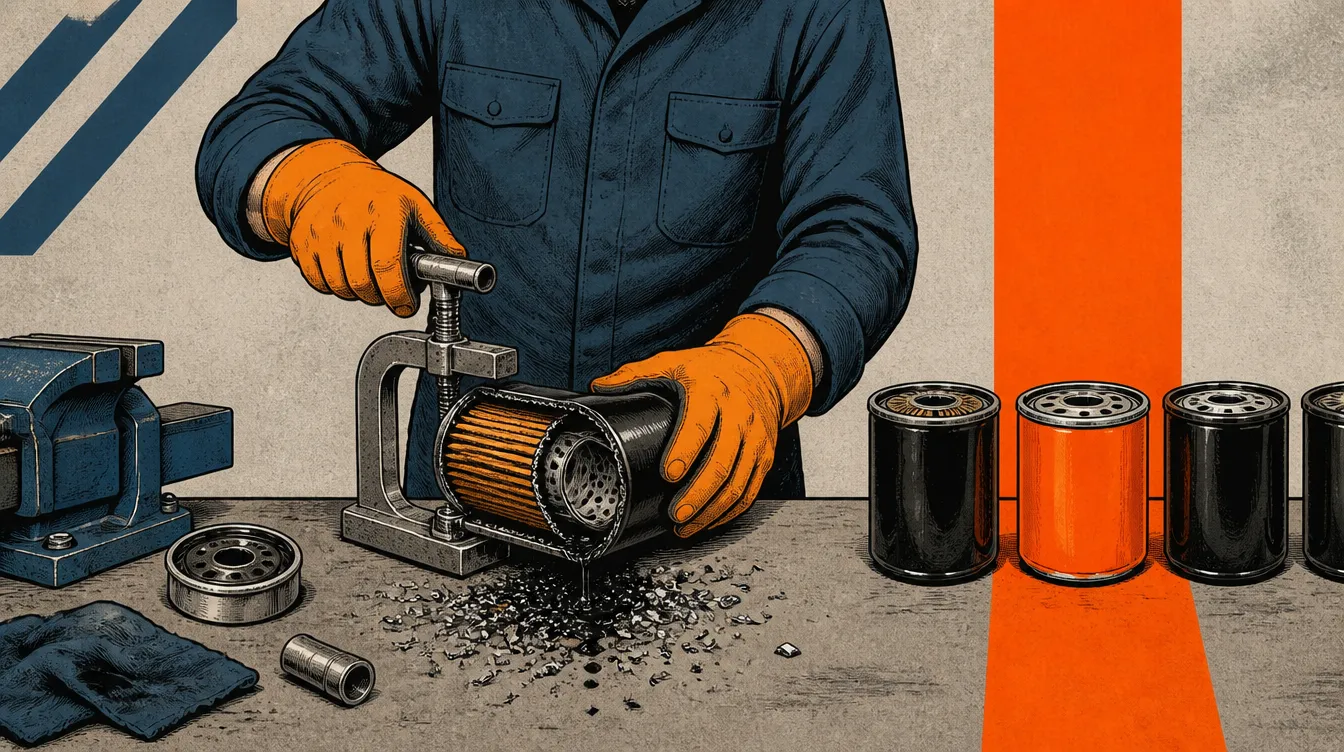
Oil filters get almost no attention compared to the oil that goes with them, which is a little odd given that the filter is the part actually standing between contaminated oil and your engine's bearings. Every filter on the shelf claims a filtration efficiency rating, a bypass valve, and an anti-drain-back valve, and the visual difference between a 4 dollar filter and a 15 dollar one is basically nothing until you cut them open.
Here is the honest situation: we do not have a dedicated, brand-versus-brand oil filter test in the testing corpus this site draws from. Project Farm has run plenty of motor oil comparisons, and one of them happened to include an oil filter debris inspection as part of its methodology, which gives real, if narrow, insight into what a filter is actually doing inside a running engine. This guide uses that finding honestly, alongside the universal buying rules the broader oil-testing body of work supports, rather than inventing a filter-brand ranking that does not exist.
What the testing showed
The relevant data point here comes from Project Farm's Kirkland versus SuperTech synthetic motor oil comparison. That test's primary focus was comparing two 5W-30 full synthetic oils, but its methodology included a real-world component that touches directly on filter performance: an oil filter debris inspection under a microscope for wear metal particles, run on the Kirkland Signature oil after the narrator's own vehicle completed a full oil-change interval.

Budget pick
Kirkland Signature
Price shown in test: $24.99 for 10 quarts (about $12.50 per 5 quart equivalent, referenced again in the closing verdict)
Affiliate link. We may earn a commission at no extra cost to you.
That inspection was paired with a full independent oil lab analysis of the used oil itself, checking wear metals, viscosity, flash point, and total base number against a new-oil baseline. The combined result: no corrosion or excessive wear metal contamination was found, and the oil lab data came back with normal viscosity and no moisture or antifreeze contamination, supporting the conclusion that the oil and filter combination had done its job protecting the engine over that service interval.
A related earlier Project Farm test, comparing Shell Rotella T6 against Chevron Delo diesel motor oil, included a similar real-world filter inspection: used oil filters pulled from a 1996 Dodge Ram Cummins after 17 months and from a Ford tractor after 14 months were both visually inspected for corrosion and debris. Neither filter showed corrosion, and both samples came back with strong total base numbers (8.9 and 7.8 respectively), supporting the conclusion that annual oil changes based on time alone are not strictly necessary if an engine regularly reaches full operating temperature.

Winner
Shell Rotella T6
Affiliate link. We may earn a commission at no extra cost to you.

Runner-up
Chevron Delo 400
Affiliate link. We may earn a commission at no extra cost to you.
What this data does not tell you is which filter brand, Fram, Mobil 1, Wix, K&N, or any other name on the shelf, filters better than another under controlled bench conditions. That specific brand-versus-brand comparison has not been run in the testing this site indexes, and we are not going to manufacture a winner where none exists.
How to read this for your own purchase
Since a direct filter brand ranking is not available, the most honest guidance is to buy based on the engineering fundamentals every real oil filter test (including the debris-inspection data above) points to, and to treat the filter as inseparable from the oil-change interval decision as a whole.
Match the filter to your engine's actual specification. Every filter has a thread size, gasket diameter, and bypass valve pressure rating designed for a specific application. A filter that does not match those specs, even from a reputable brand, can underperform a correctly matched cheaper one.
Buy a filter with an anti-drain-back valve if your engine sits for long periods between starts. This valve keeps oil in the filter housing rather than draining back into the pan overnight, which matters for engines that are not driven daily, since it prevents a dry-start moment on the next cold start.
Do not stretch oil-change intervals purely to save filter cost. The real-world filter inspections in the tests above found healthy results specifically because the oil-change interval and the operating conditions (regular full-temperature driving) were reasonable. A filter cannot compensate for an interval that runs well past what the oil and vehicle actually need.
Filtration micron rating is a real spec worth checking, even without a brand-versus-brand test to point to. A lower micron rating traps finer particles, which matters more for engines with tight tolerances or higher mileage where wear metal contamination becomes a bigger factor.
If you are choosing a filter alongside a specific oil, it is worth reading how the oil itself performed first. Browse the rest of the engine oil and fluids tests for brand-versus-brand motor oil comparisons that include the kind of used-oil and filter-debris data referenced above.