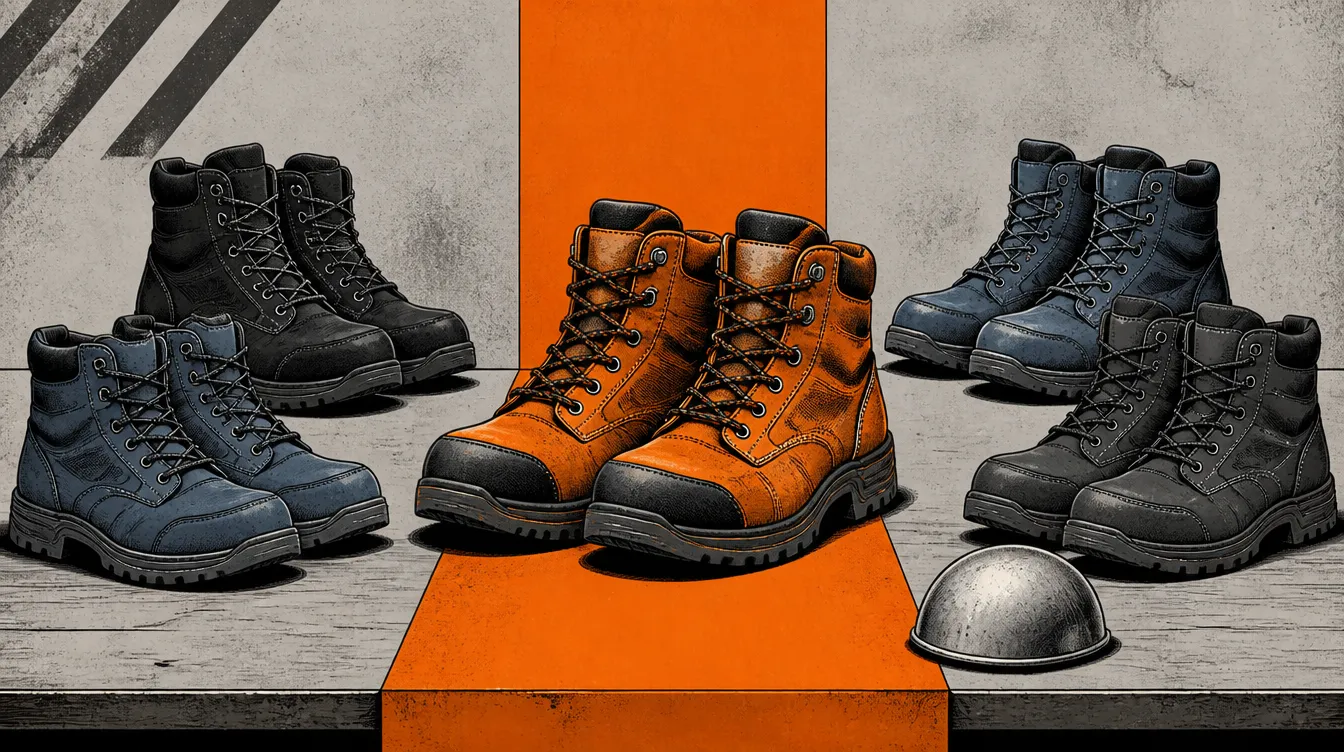
Work Boots 2021 Test: Which Brand Wins?
In our 2021 test we compared 12 work boots options head to head. Skechers came out on top. See the measured results, the runner-up, the budget pick, and a link to the full test video.
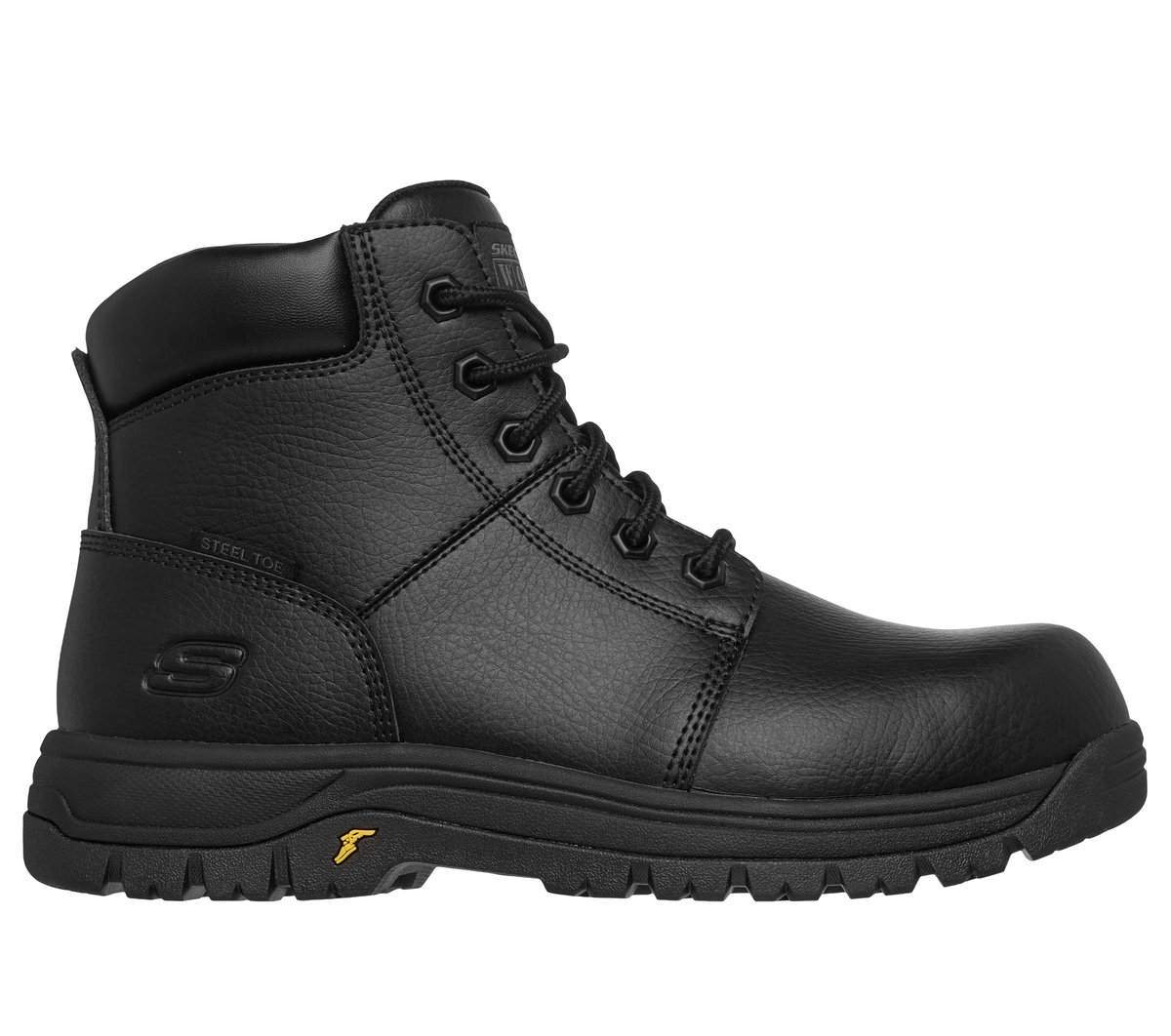
Skechers
Price shown in test: $51
Affiliate link. We may earn a commission at no extra cost to you.
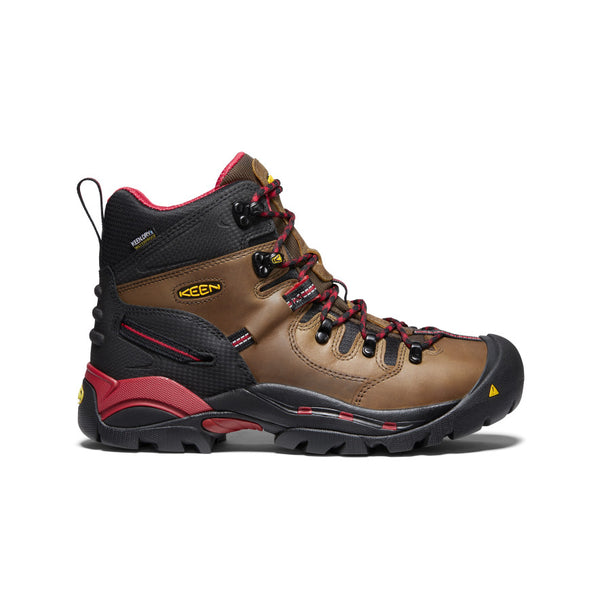
Keen
Price shown in test: $225, the most expensive boot tested
Affiliate link. We may earn a commission at no extra cost to you.
Skechers
Price shown in test: $51
Affiliate link. We may earn a commission at no extra cost to you.
The quick take
The short version of why each pick lands where it does, built straight from the measured results.
“The Keen did a very good job, but $225 is a lot of money to spend on a pair of boots. So, if you're looking for a great value, the Skechers is going to be very hard to beat. In my opinion, the Skechers outperformed many of the more expensive brands for a fraction of the price.”
Best in 1 of 6 measurements, including Electrical Protection.
Best in 3 of 6 measurements, including Dry Traction, Top Puncture Resistance and Electrical Protection.
Best in 1 of 6 measurements, including Electrical Protection.
The measured results
Every number below is read straight from the test. Products are listed in the order they finished.
Weight
- 1Skechers4 lb
0.4 oz (1,828 g)
- 2Keen5 lb
6.5 oz (2,453 g), the heaviest boot tested
- 3Timberland3 lb
10.8 oz (1,667 g)
- 4Carhartt4 lb
3.3 oz (1,909 g)
- 5Dickies Prowler4 lb
2.4 oz (1,885 g)
- 6Irish Setter3 lb
12.3 oz (1,711 g)
- 7Wolverine3 lb
12.1 oz (1,704 g)
- 8Caterpillar3 lb
15.4 oz (1,798 g)
- 9OUXX3 lb
7.5 oz (1,578 g)
- 10Condor3 lb
15.3 oz (1,794 g)
- 11Indestructible Shoe2 lb
11.1 oz (1,224 g)
- 12Buffalo1 lb
1.3 oz (492 g), by far the lightest of anything tested
Dry Traction
- 1Skechers100 lb2nd
second best of all brands tested
- 2Keen106 lb
best of all brands tested
- 3Timberland84 lb
- 4Carhartt91 lb3rd
third best dry traction
- 5Dickies Prowler92 lb
- 6Irish Setter93 lb2nd
second best dry traction
- 7Wolverine67 lb
tied with the Indestructible Shoe for the weakest dry traction among the real work boots
- 8Caterpillar81 lb
- 9OUXX87 lb
- 10Condor61 lb
weakest dry traction of the real work boots
- 11Indestructible Shoe67 lb
tied with Wolverine for weakest among real work boots
- 12Buffalo72 lb
Oily Traction
- 1Skechers21 lb
- 2Keen30 lb3rd
- 3Timberland54 lb
by far the best oily traction of all brands tested
- 4Carhartt26 lb3rd
tied third best with Caterpillar
- 5Dickies Prowler27 lb
- 6Irish Setter25 lb
- 7Wolverine36 lb2nd
second best oily traction
- 8Caterpillar26 lb3rd
tied third best with Carhartt
- 9OUXX18 lb
- 10Condor28 lb
- 11Indestructible Shoe17 lb
weakest oily traction of the real work boots
- 12Buffalo25 lb
Sole Puncture Resistance
- 1Skechers
steel plate in sole, nail could not puncture at 604 lb
- 2Keen
nail could not puncture at 660 lb, best of all brands tested
- 3Timberland298 lb
- 4Carhartt132 lb
- 5Dickies Prowler102 lb
notably weaker than Condor's 237 lb despite Condor being cheaper
- 6Irish Setter192 lb
- 7Wolverine210 lb
better than average
- 8Caterpillar131 lb
nail punctured easily
- 9OUXX
protective liner, nail could not fully puncture at 480 lb
- 10Condor237 lb
- 11Indestructible Shoe
thin metal lining, nail punctured at 291 lb
- 12Buffalo48 lb
very weak
Top Puncture Resistance
- 1Skechers95 lb
- 2Keen151 lb
best of all brands tested
- 3Timberland92 lb
- 4Carhartt108 lb
- 5Dickies Prowler134 lb2nd
second best of all brands tested
- 6Irish Setter133 lb3rd
one pound less than the leader
- 7Wolverine100 lb
- 8Caterpillar77 lb
nail made easy work of it
- 9OUXX109 lb2nd
second best at that point in the video
- 10Condor100 lb
tied with Wolverine
- 11Indestructible Shoe49 lb
weak
- 12Buffalo29 lb
weakest of all
Electrical Protection
- 1Skechers7,300 V
average, tied for best at that point in the video
- 2Keen7,400 V
average, best of all brands tested (least voltage drop)
- 3Timberland7,250 V
average
- 4Carhartt7,200 V
average, tied with OUXX
- 5Dickies Prowler6,900 V
average, nearly the same as Condor
- 6Irish Setter7,100 V
average
- 7Wolverine7,200 V
average
- 8Caterpillar7,300 V
average, tied for best at that point in the video
- 9OUXX7,200 V
average, tied with Carhartt
- 10Condor6,900 V
average
- 11Indestructible Shoe7,350 V2nd
average, second best of all brands tested
- 12Buffalo7,000 V
average, weakest electrical protection of all
Heat Resistance
- 1Skechers
no visible damage
- 2Keen
held up very well, no visible damage
- 3Timberland
did not hold up well, notable heat damage (one of only three brands, with Condor and Buffalo, to take significant damage)
- 4Carhartt
small amount of smoke, no visible damage
- 5Dickies Prowler
no visible damage
- 6Irish Setter
began to melt, failed the heat test (rated resistant to melting at a minimum of 475 F but underperformed in this test)
- 7Wolverine
very small amount of damage
- 8Caterpillar
no visible damage
- 9OUXX
no visible damage
- 10Condor
outsole began melting almost immediately, one of the worst performers in this test
- 11Indestructible Shoe
small amount of smoke, no visible damage
- 12Buffalo
quite a bit of melting, one of the worst performers
Toe Crush Resistance
- 1Skechers
withstood 5,000 lb with a small amount of bending, steel toe about 12 percent thicker than Timberland's
- 2Keen
easily made the 5,000 lb mark with plenty of space remaining, best of all brands tested
- 3Timberland
passed the 2,500 lb standard but maxed out around 3,000 lb
- 4Carhartt
composite toe, made it to 4,700 lb before less than half inch clearance remained, only small damage
- 5Dickies Prowler
withstood 5,000 lb, steel toe bent a little but held up well
- 6Irish Setter
uses an aluminum toe instead of steel; passed the 2,500 lb standard but bent noticeably more than the steel-toe brands under 5,000 lb
- 7Wolverine
composite toe, met the 2,500 lb standard but maxed out at 3,500 lb and did not hold up as well as the steel-toe brands
- 8Caterpillar
passed the 2,500 lb standard but did not hold up as well as Dickies under greater load
- 9OUXX
passed the 2,500 lb standard with additional padding at the bottom of the shoe
- 10Condor
steel toe held its shape at around 4,000 lb, more than a half inch clearance
- 11Indestructible Shoe
the only boot with toe protection that did not meet the 2,500 lb testing standard; composite toe material did not hold up
- 12Buffalo
not applicable, no steel toe
All measurements (1 more)+
Falling Object Toe Protection
- 1Skechers
toe plate compressed quite a bit but no harm to the carrot
- 2Keen
very little toe compression, no damage to the carrot, best of all brands tested
- 3Timberland
absorbed the impact well but experienced quite a bit of compression
- 4Carhartt
toe plate compressed a little, no harm to the carrot, described as very good protection
- 5Dickies Prowler
toe cap maintained its shape, did a far better job than Condor
- 6Irish Setter
did a great job absorbing the impact and protecting the carrot
- 7Wolverine
adequate protection but not as good as several other brands
- 8Caterpillar
toe plate compressed quite a bit, no harm to the carrot
- 9OUXX
described as adequate toe protection, though Dickies, Caterpillar, and Skechers were called a little better; no carrot damage explicitly stated
- 10Condor
toe cap flattened and the sole protruded upward, but no harm to the carrot
- 11Indestructible Shoe
provided better protection than the Buffalo control shoe, but the carrot experienced multiple fractures
- 12Buffalo
catastrophic failure, the test carrot fractured into pieces on impact
How it was tested
- dry traction (pull force to slip on clean concrete)
- oily traction (pull force to slip on concrete coated in 10W-30 motor oil)
- sole puncture resistance (16-penny nail through the outsole)
- top-of-foot puncture resistance (16-penny nail through the top, behind the steel toe)
- electrical hazard protection (voltage drop from an 8,500 V electric fence charger)
- heat exposure resistance (500 F for 1 minute)
- toe crush resistance (downward force until less than half inch of toe clearance remains)
- falling object toe protection (75 lb weight dropped onto a carrot placed in the toe)
- subjective overall comfort
“The Keen did a very good job, but $225 is a lot of money to spend on a pair of boots. So, if you're looking for a great value, the Skechers is going to be very hard to beat. In my opinion, the Skechers outperformed many of the more expensive brands for a fraction of the price.”