Which Heated Jackets Brand Wins?
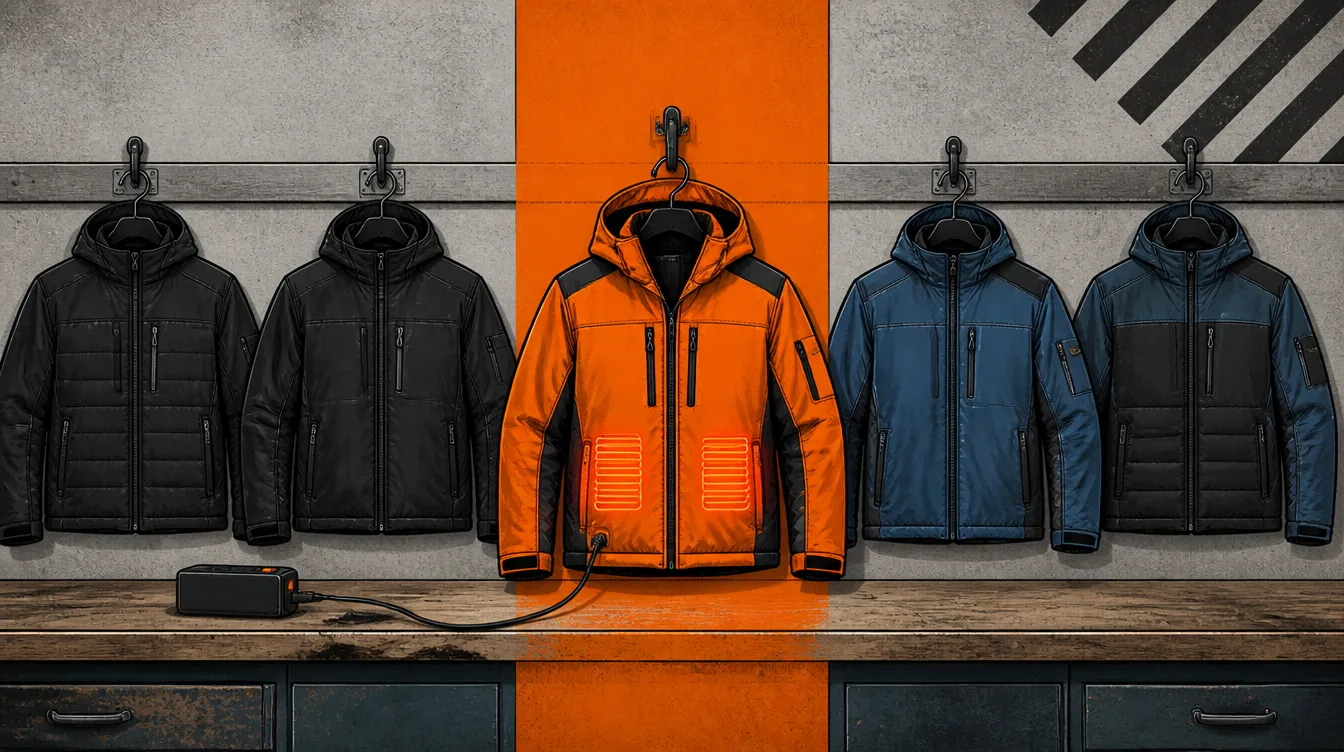
This head-to-head test of 5 heated jackets options has the measured results for each. See how they ranked and watch the full test video.

ORORO
Price shown in test: $150 for the jacket, the charger, and the battery
Affiliate link. We may earn a commission at no extra cost to you.
The measured results
Every number below is read straight from the test. Products are listed in the order they finished.
Weight
- 1Bosch 12V heated jacket (with portable power adapter, 12V battery, charger)2.4 lb
/ 1.2 kg, the lightest jacket tested
- 2ORORO heated jacket (with charger and battery)3 lb
/ 1.4 kg, just over half a pound more than the Bosch
- 3DeWalt heated jacket (with battery and charger)3.6 lb
/ 1.6 kg, the heaviest jacket tested up to that point (later tied by Milwaukee)
- 4Makita heated jacket (jacket only; battery and charger sold separately)3.4 lb
/ 1.5 kg, slightly less than the DeWalt
- 5Milwaukee M12 Heated Tough Shell Jacket, Stretch Polyester (jacket only)3.6 lb
/ 1.6 kg, tied with DeWalt as the heaviest jacket tested
Wind resistance
- 1Bosch 12V heated jacket (with portable power adapter, 12V battery, charger)
peaked at 2.5 mph of air movement through the fabric (vs 6 mph baseline robe); noticeably worse than the other four heated jackets, which fully blocked airflow
- 2ORORO heated jacket (with charger and battery)
did a great job, completely blocking the movement of air through the fabric
- 3DeWalt heated jacket (with battery and charger)
completely blocked the movement of air through the fabric, tied with ORORO for the best result
- 4Makita heated jacket (jacket only; battery and charger sold separately)
did very well, grouped with ORORO/DeWalt/Milwaukee as effectively blocking airflow
- 5Milwaukee M12 Heated Tough Shell Jacket, Stretch Polyester (jacket only)
performed just as well as ORORO, DeWalt, and Makita, fully blocking airflow
Water resistance
- 1Bosch 12V heated jacket (with portable power adapter, 12V battery, charger)
outer layer felt pretty wet after the test, inner fabric stayed dry
- 2ORORO heated jacket (with charger and battery)
did a great job; both inner and outer fabric remained dry after the test, the best result of the five brands
- 3DeWalt heated jacket (with battery and charger)
outer fabric felt slightly damp, inside of the jacket dry
- 4Makita heated jacket (jacket only; battery and charger sold separately)
outer fabric absorbed some water, inside of the jacket stayed dry
- 5Milwaukee M12 Heated Tough Shell Jacket, Stretch Polyester (jacket only)
outer fabric felt slightly damp, inside of the jacket dry
Heating element coverage
- 1Bosch 12V heated jacket (with portable power adapter, 12V battery, charger)4.5in
x 7in back element + two 3.5in x 3.5in chest elements = 52.5 sq in total, the least coverage of the five brands
- 2ORORO heated jacket (with charger and battery)7.5in
back element + two 3in x 6in chest elements = 81 sq in total, third-most of the five brands
- 3DeWalt heated jacket (with battery and charger)7.5in
back element + two 4.5in x 3in chest elements + two 4.5in x 3in shoulder elements = 85.5 sq in total, the most coverage of all five brands
- 4Makita heated jacket (jacket only; battery and charger sold separately)7in
x 5in lower-back element + two 3.5in x 3in upper-back elements + a 3.5in x 3in element near the front pockets = 77 sq in total, fourth of five brands
- 5Milwaukee M12 Heated Tough Shell Jacket, Stretch Polyester (jacket only)7in
x 4.5in back element + two 4.5in x 3in chest elements + two 4.5in x 3in pocket-area elements = 81.5 sq in total, second-most coverage of the five brands, just behind DeWalt
Total runtime at highest heat setting
- 1Bosch 12V heated jacket (with portable power adapter, 12V battery, charger)189 minutes
second-longest of the five brands
- 2ORORO heated jacket (with charger and battery)238 minutes
with only three heating elements, the longest of all five brands
- 3DeWalt heated jacket (with battery and charger)142 minutes
fourth of five brands
- 4Makita heated jacket (jacket only; battery and charger sold separately)176 minutes
third of five brands
- 5Milwaukee M12 Heated Tough Shell Jacket, Stretch Polyester (jacket only)120 minutes
the shortest of all five brands
Mobility (extended-arm scale test)
- 1Bosch 12V heated jacket (with portable power adapter, 12V battery, charger)
very good freedom of movement, just over half a pound of weight on the extended arm - the best (most mobile) result of the brands with a numeric mobility reading
- 2ORORO heated jacket (with charger and battery)1.2 lb
of weight on the extended arm; heavier fabric than Bosch and doesn't offer nearly as much mobility
- 3DeWalt heated jacket (with battery and charger)
has underarm mobility gussets; 1.2 lb of weight on the extended arm, the same as ORORO
- 4Makita heated jacket (jacket only; battery and charger sold separately)
battery and adapter are very bulky with a large bulge on the side; 1.4 lb of weight on the extended arm, the least mobile of the brands with a numeric reading
- 5Milwaukee M12 Heated Tough Shell Jacket, Stretch Polyester (jacket only)not tested
Cold chamber test
- 2ORORO heated jacket (with charger and battery)
started at 72/73/78F, ended at back 49F, chest 53F, arm 51F, average loss of 23F - the best (lowest heat loss) of all five brands
- 3DeWalt heated jacket (with battery and charger)
started at 69/75/74F, ended at back 43F, chest 55F, arm 43F, average loss of 26F, second-best of the five brands
- 4Makita heated jacket (jacket only; battery and charger sold separately)
started at 69/71/72F, ended at back 41F, chest 47F, arm 41F, average loss of 28F, tied-worst with Milwaukee
- 5Milwaukee M12 Heated Tough Shell Jacket, Stretch Polyester (jacket only)
started at 73/79/74F, ended at back 46F, chest 52F, arm 44F, average loss of 28F, tied-worst with Makita
- 1Bosch 12V heated jacket (with portable power adapter, 12V battery, charger)not tested
Real-world wind test
- 2ORORO heated jacket (with charger and battery)
back 77F, chest 50F, arm 57F, average 61F, fourth of five brands (only beating Bosch)
- 3DeWalt heated jacket (with battery and charger)
back 76F, chest 46F, arm 65F, average 62F, 1 degree better than ORORO; noted as more of a work jacket with a looser, more drafty fit around the waist/wrist/neck, though the two extra heating elements (shoulders) seemed to help
- 4Makita heated jacket (jacket only; battery and charger sold separately)
back 76F, chest 47F, arm 66F, average 63F, took the lead from DeWalt at this point, second-best of the five brands (only beaten by Milwaukee); 'did a terrific job at wind resistance and the heating elements definitely helped'
- 5Milwaukee M12 Heated Tough Shell Jacket, Stretch Polyester (jacket only)
back 81F, chest 50F, arm 68F, average 66F, the best (warmest) result of all five brands with all heat zones activated
- 1Bosch 12V heated jacket (with portable power adapter, 12V battery, charger)not tested
All measurements (15 more)+
Fabric
- 1Bosch 12V heated jacket (with portable power adapter, 12V battery, charger)
outer fabric and lining 60% cotton / 40% polyester; padding 100% polyester
- 2ORORO heated jacket (with charger and battery)
outer layer 93.5% polyester / 6.5% spandex; substrate and lining 100% polyester; jacket includes a storage bag
- 3DeWalt heated jacket (with battery and charger)not tested
- 4Makita heated jacket (jacket only; battery and charger sold separately)not tested
- 5Milwaukee M12 Heated Tough Shell Jacket, Stretch Polyester (jacket only)not tested
Warranty/origin
- 1Bosch 12V heated jacket (with portable power adapter, 12V battery, charger)
jacket and charger 3-year warranty, battery 2-year warranty, 30-day money-back guarantee; jacket and power adapter made in China, battery made in Malaysia
- 3DeWalt heated jacket (with battery and charger)
jacket 1-year warranty, battery 3-year warranty; heated gear/accessories made in China, charger made in China or Thailand, batteries made in China, Japan, Korea, or Malaysia
- 2ORORO heated jacket (with charger and battery)not tested
- 4Makita heated jacket (jacket only; battery and charger sold separately)not tested
- 5Milwaukee M12 Heated Tough Shell Jacket, Stretch Polyester (jacket only)not tested
Origin
- 2ORORO heated jacket (with charger and battery)
made in China
- 4Makita heated jacket (jacket only; battery and charger sold separately)
made in China
- 1Bosch 12V heated jacket (with portable power adapter, 12V battery, charger)not tested
- 3DeWalt heated jacket (with battery and charger)not tested
- 5Milwaukee M12 Heated Tough Shell Jacket, Stretch Polyester (jacket only)not tested
Claims/features
- 4Makita heated jacket (jacket only; battery and charger sold separately)3-year
warranty; claims up to 35 hours of runtime on low setting with a 6-Ah battery; polyester shell for wind/water resistance; stretchy side panels for mobility; fleece interior; 5 core heat zones (left chest, right chest, back, both pockets); 3 heat settings
- 5Milwaukee M12 Heated Tough Shell Jacket, Stretch Polyester (jacket only)
polyester claimed to offer up to 5 times the life; up to 8 hours of runtime on a 2-Ah battery; chest, back, and front pocket heat zones; wind and water resistant claim; 4 heat zones on the front plus 1 in the back; can include heat zones for the jacket or for compatible heated hands/gloves
- 1Bosch 12V heated jacket (with portable power adapter, 12V battery, charger)not tested
- 2ORORO heated jacket (with charger and battery)not tested
- 3DeWalt heated jacket (with battery and charger)not tested
System
- 1Bosch 12V heated jacket (with portable power adapter, 12V battery, charger)12V
system, 3 heating pads (1 lower back, 2 chest), heating power 9.5 W, max runtime 7 hours with a 2-Ah battery
- 2ORORO heated jacket (with charger and battery)not tested
- 3DeWalt heated jacket (with battery and charger)not tested
- 4Makita heated jacket (jacket only; battery and charger sold separately)not tested
- 5Milwaukee M12 Heated Tough Shell Jacket, Stretch Polyester (jacket only)not tested
Cold chamber test (minus 40F freezer, 30 min, chest/arm/back sensors)
- 1Bosch 12V heated jacket (with portable power adapter, 12V battery, charger)
started at 71/71/72F, ended at back 47F, chest 50F, arm 37F, average loss of 27F
- 2ORORO heated jacket (with charger and battery)not tested
- 3DeWalt heated jacket (with battery and charger)not tested
- 4Makita heated jacket (jacket only; battery and charger sold separately)not tested
- 5Milwaukee M12 Heated Tough Shell Jacket, Stretch Polyester (jacket only)not tested
Real-world wind test (~25 mph motorbike, upper-30s F, 15 min)
- 1Bosch 12V heated jacket (with portable power adapter, 12V battery, charger)
back 67F, chest 52F, arm 48F, average 56F - the worst (coldest) result of the five brands
- 2ORORO heated jacket (with charger and battery)not tested
- 3DeWalt heated jacket (with battery and charger)not tested
- 4Makita heated jacket (jacket only; battery and charger sold separately)not tested
- 5Milwaukee M12 Heated Tough Shell Jacket, Stretch Polyester (jacket only)not tested
Battery
- 2ORORO heated jacket (with charger and battery)2.5 Ah
at 7.4V, includes a power level indicator and a USB power port
- 1Bosch 12V heated jacket (with portable power adapter, 12V battery, charger)not tested
- 3DeWalt heated jacket (with battery and charger)not tested
- 4Makita heated jacket (jacket only; battery and charger sold separately)not tested
- 5Milwaukee M12 Heated Tough Shell Jacket, Stretch Polyester (jacket only)not tested
Features
- 3DeWalt heated jacket (with battery and charger)
high/medium/low heat settings, USB charging port, battery level indicator, 5 heat zones, wind and water resistant claim, preheat mode with blinking LED for approximately 5 minutes before switching to medium
- 1Bosch 12V heated jacket (with portable power adapter, 12V battery, charger)not tested
- 2ORORO heated jacket (with charger and battery)not tested
- 4Makita heated jacket (jacket only; battery and charger sold separately)not tested
- 5Milwaukee M12 Heated Tough Shell Jacket, Stretch Polyester (jacket only)not tested
Fabric/care
- 3DeWalt heated jacket (with battery and charger)
shell 100% cotton, liner and filling 100% polyester; machine wash cold delicate, do not wring or bleach, tumble dry on low
- 1Bosch 12V heated jacket (with portable power adapter, 12V battery, charger)not tested
- 2ORORO heated jacket (with charger and battery)not tested
- 4Makita heated jacket (jacket only; battery and charger sold separately)not tested
- 5Milwaukee M12 Heated Tough Shell Jacket, Stretch Polyester (jacket only)not tested
Battery note
- 4Makita heated jacket (jacket only; battery and charger sold separately)
does not include a charger or battery; narrator purchased a separate 2-Ah Makita battery to keep the comparison fair; battery stored in the outer left pocket (other brands store it in an inner pocket)
- 1Bosch 12V heated jacket (with portable power adapter, 12V battery, charger)not tested
- 2ORORO heated jacket (with charger and battery)not tested
- 3DeWalt heated jacket (with battery and charger)not tested
- 5Milwaukee M12 Heated Tough Shell Jacket, Stretch Polyester (jacket only)not tested
Power source
- 5Milwaukee M12 Heated Tough Shell Jacket, Stretch Polyester (jacket only)
does not come with a battery, but includes a compact charger that serves as the power source; narrator used a 2-Ah battery to test it
- 1Bosch 12V heated jacket (with portable power adapter, 12V battery, charger)not tested
- 2ORORO heated jacket (with charger and battery)not tested
- 3DeWalt heated jacket (with battery and charger)not tested
- 4Makita heated jacket (jacket only; battery and charger sold separately)not tested
Care
- 5Milwaukee M12 Heated Tough Shell Jacket, Stretch Polyester (jacket only)
machine wash gentle cycle in warm water
- 1Bosch 12V heated jacket (with portable power adapter, 12V battery, charger)not tested
- 2ORORO heated jacket (with charger and battery)not tested
- 3DeWalt heated jacket (with battery and charger)not tested
- 4Makita heated jacket (jacket only; battery and charger sold separately)not tested
Battery location
- 5Milwaukee M12 Heated Tough Shell Jacket, Stretch Polyester (jacket only)
stored in the back of the jacket (the front left pocket is separate); praised as the best design for standing/walking work use, but a liability if sitting in a seat with back support
- 1Bosch 12V heated jacket (with portable power adapter, 12V battery, charger)not tested
- 2ORORO heated jacket (with charger and battery)not tested
- 3DeWalt heated jacket (with battery and charger)not tested
- 4Makita heated jacket (jacket only; battery and charger sold separately)not tested
Mobility
- 5Milwaukee M12 Heated Tough Shell Jacket, Stretch Polyester (jacket only)
no numeric extended-arm test result given in the transcript; narrator's closing statement frames it as the best jacket for mobility in a work context
- 1Bosch 12V heated jacket (with portable power adapter, 12V battery, charger)not tested
- 2ORORO heated jacket (with charger and battery)not tested
- 3DeWalt heated jacket (with battery and charger)not tested
- 4Makita heated jacket (jacket only; battery and charger sold separately)not tested
How it was tested
- mobility test: extended-arm downward force measured on a scale while wearing each jacket (subjective, notes it can vary by build)
- wind resistance test: air blower and wind meter, baseline robe vs each jacket
- water resistance test: water poured over fabric for approximately 30 seconds, inner/outer fabric dryness assessed
- heating element size and body-coverage measurement: each heating element measured and summed to total square inches
- cold chamber test: 30 minutes inside a commercial lab freezer set to minus 40F, three body-temperature sensors (chest, arm, back), average heat loss computed
- real-world wind+cold test: motorbike ride at approximately 25 mph in upper-30s F outside temperature for 15 minutes, three temperature sensors, average temperature computed
- total runtime test on the jacket's highest heat setting
Brand head-to-head scoreboards featuring this test
Data notes and caveats
Video ends with explicit per-use-case picks rather than a single overall winner: 'Well, I think that really depends on what you're looking for. If you're looking for a good work jacket that offers a lot of mobility, the Milwaukee's going to be hard to beat... If you're looking for a casual jacket, $150 for the Roura is a pretty good price and it's also a pretty nice jacket.' Per the per-use-case-favorites rule, winner and runnerUp are left null; ORORO is set as budgetPick since it is explicitly named as the best-value/casual recommendation, and Milwaukee's work-jacket/mobility recommendation is preserved in its own product notes instead of forcing it into winner. chapterMap is false because the meta chapter 'Heating Element Size and Location' (479s-787s, over 5 minutes) actually bundles in the entire cold-chamber freezer test and the entire real-world motorbike test in addition to the heating-element measurements, so chapter titles do not cleanly map to distinct test segments in that portion of the video. Data quality is otherwise clean and numeric throughout (only real ambiguity is the ORORO brand name being caption-garbled two different ways, both clearly resolvable via the description), so confidence is high.