Which Flare Nut Wrench Brand Wins?
In our test we compared 14 flare nut wrench options head to head. Snap-on came out on top. See the measured results, the runner-up, the budget pick, and a link to the full test video.
Some figures on this page were transcribed from the test video and have not been independently re-verified. Treat the numbers as a close guide and watch the full video for the exact readings.
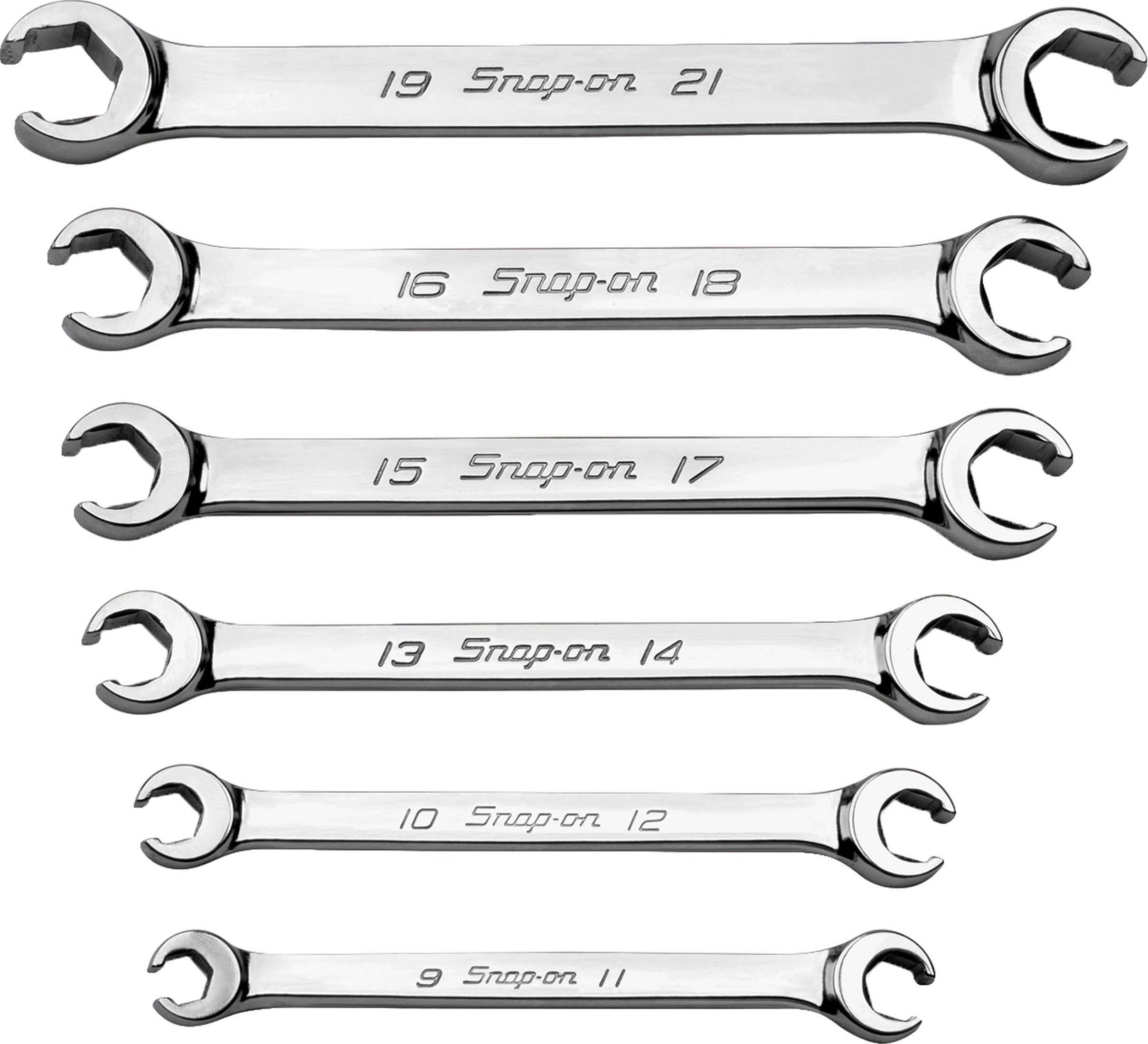
Snap-on
Price shown in test: $285 for 5 wrenches (most expensive brand tested)
Affiliate link. We may earn a commission at no extra cost to you.

Proto
Price shown in test: not stated verbatim; the price-introduction sentence for this brand appears to have been dropped by captions (the transcript jumps directly from another brand's failure-load number into "in USA and it's 122 G for the Proto" with no dollar figure). The narrator's closing statement that "for less than half the price the Proto performed better where it counts" implies a price under half of Snap-on's $285, but no exact figure is ever spoken
Affiliate link. We may earn a commission at no extra cost to you.

Williams
Price shown in test: $37
Affiliate link. We may earn a commission at no extra cost to you.
The quick take
The short version of why each pick lands where it does, built straight from the measured results.
“The Snap-on flare nut wrench set is extremely expensive but it came out on top with an average finish of 1.71.”
Best in 2 of 6 measurements, including Weight/head/slop and Overall average finish.
Best in 1 of 4 measurements, including 3/8 in fitting torque-to-failure test.
Best in 1 of 5 measurements, including 1/2 in coupling nut test, attempt 2.
The measured results
Every number below is read straight from the test. Products are listed in the order they finished.
Weight/head/slop (representative wrench)
- 1Snap-on Flank Drive112 g
head 0.7335 in (most compact of all 14 brands), 0.465 in of slop (best/tightest fit of all 14 brands)
- 2Proto122 g
head 0.785 in, 0.533 in of slop
- 3Williams92 g
head 0.838 in, slop given as "0.5 3 4 in" in the transcript (ambiguous between 0.534 in and 0.574 in; kept as flagged rather than guessed)
- 4Crescent116 g
(heaviest brand recorded up to that point in the video), head 0.774 in (most compact recorded up to that point), 0.577 in of slop (least slop recorded up to that point, though a smaller wrench size than Efficere/Duratech)
- 5Efficere102 g
head 0.855 in, slop described as "almost 3/4 of an inch," a very loose fit
- 6Duratech94 g
head 0.874 in, 0.598 in of slop
- 7Performance Toolapproximately100 g
head 0.794 in (about 10 percent smaller than Duratech's), slop described as more than the dial indicator could measure, well over an inch, the worst build-quality result of the video's early brands
- 8Kobalt100 g
head 0.879 in (a notably big head), 0.61 in of slop, described as having "quite a bit of taper"
- 9Craftsman
head 0.8335 in (a little large), 0.585 in of slop, similar to Kobalt
- 10Quinn94 g
head 0.8375 in (almost the same as Williams), 0.602 in of slop (more than Williams)
- 11GearWrench110 g
(heavier than average), head 0.7865 in, 0.766 in of slop, described as "way too much slop" for its otherwise low-taper design
- 12Milwaukee110 g
head 0.778 in (more compact than average), 0.542 in of slop (a pretty snug fit)
- 13Matco Tools118 g
(heaviest recorded up to that point), head 0.768 in (most compact recorded up to that point), 0.516 in of slop (tightest fit recorded up to that point)
- 14Mac Tools138 g
(heaviest of all 14 brands), head 0.749 in (most compact of all 14 brands), 0.639 in of slop (a pretty sloppy fit despite the compact head)
3/8 in fitting torque-to-failure test
- 1Snap-on Flank Drive271.50 in lb2nd
2nd place behind Proto
- 2Proto289.50 in lb
best of all 14 brands
- 3Williams246.50 in lb
called out in the recap as performing well, close to Kobalt
- 4Crescent196.7 in lb
moved into the lead at that point
- 5Efficere
not recoverable; the transcript sentence introducing this brand's own slip/failure point on the 3/8 in test appears to have been garbled and dropped entirely ("any fser slipped at is made in China and the durch weighs 94 G" runs two sentences together with no clean number for Efficere)
- 6Duratech194.7 in lb
outperformed Efficere
- 7Performance Tool
gave up before the dial indicator's 60 in lb minimum threshold was even reached, described as "a very poorly designed wrench with this much taper"
- 8Kobaltapproximately247.3 in lb
(transcript reads the badly garbled string "247.374410"), the first flare nut wrench in the video to outperform the open-end Snap-on baseline
- 9Craftsman
gave up under 95 in lb, described as "way too much taper," only making contact with around 60 percent of the fitting; the weakest performer on this test
- 10Quinn
transcript reads "29.3 in lb," which is roughly 10 times lower than every neighboring brand's result in the 190 to 290 in lb range on this same test; flagged as a likely dropped leading digit (plausibly closer to 200 to 290) rather than corrected to a specific value
- 11GearWrench196 in lb
described as "still pretty decent" despite the excess slop
- 12Milwaukee
transcript reads "1991.5 in lb," implausibly high compared to every other brand's 95 to 290 in lb range on this same test; flagged as a garbled/misplaced-decimal figure rather than corrected to a specific value
- 13Matco Toolsapproximately188 in lb
(transcript reads the garbled "188.jpg"), described elsewhere as an "about average" first-round result relative to the field
- 14Mac Tools145 in lb
described as "really struggled on this test," with "way too much taper and way too much slop to compete with the best in the showdown"
1/2 in coupling nut test, attempt 1
- 1Snap-on Flank Driveapproximately912 in lb
(transcript literal digits read "92.8" in two separate mentions; corrected here because both mentions independently frame it as "only 3 in lb less than" Proto's 915.6 in lb break, and a dropped leading 1 explains "92.8" reading as 912.8)
- 2Protoapproximately915.6 in lb
(transcript reads "9156," read here as a garbled decimal consistent with this test's other torque figures), wrench broke ("career ending injury"), the highest first-attempt figure recorded
- 3Williamsapproximately848.3 in lb
(transcript reads "8483"), moved into the lead at that point
- 4Crescentapproximately881.9 in lb
(transcript reads "8819"), only barely outperforming a competing brand
- 5Efficere710 in lb
- 6Duratechapproximately668.3 in lb
(transcript reads "6683")
- 7Performance Tool836 in lb
outperformed Efficere and Duratech
- 9Craftsmanapproximately477.2 in lb
(transcript reads "4772")
- 10Quinnapproximately559.1 in lb
(transcript reads "559.115"), described as "a bench warmer performance"
- 11GearWrench698.4 in lb
described as performing about the same as Efficere
- 12Milwaukee
transcript reads "74.2 in lb," implausibly low compared to the roughly 560 to 915 in lb range recorded for every other brand on this test; flagged rather than corrected
- 13Matco Toolsapproximately466.4 in lb
(transcript reads "4664"), described as "a pretty dismal" result
- 14Mac Tools722.9 in lb
described as "isn't too impressive considering the price of the tool"
- 8Kobaltnot tested
1/2 in coupling nut test, attempt 2
- 1Snap-on Flank Driveover700 in lb
per the closing summary ("the Snap-on flank drive wrench outperformed all of the flare nut wrenches on the second attempt however the Williams and Snap-on flare nut wrenches performed almost as well at over 700 in lb"); transcript's raw digit string for this figure reads "79.6," likely missing a leading digit (roughly 796), kept flagged rather than corrected
- 3Williamsapproximately755.3 in lb
the best second-attempt figure recorded; corrected from the transcript's garbled "700 55.3" because the narrator's stated 11 percent performance drop from 848.3 in lb computes to about 755, matching
- 4Crescentapproximately731.9 in lb
derived from the narrator's stated "lost about 150 in lb of performance on the second attempt" rather than a verbatim second figure; not itself a spoken number, flagged as an approximation
- 5Efficere506 in lb
a loss of over 200 in lb of strength, consistent with the stated numbers
- 6Duratechapproximately622 in lb
(transcript reads "622.org," the ".org" is a caption artifact), jaw damage measured at 8.02 mm
- 7Performance Toolapproximately688.8 in lb
transcript reads "6888," read here as a likely dropped decimal since Crescent's own second attempt is separately described as "just over 688 in lb" while performing a similar amount worse than its first attempt as Performance Tool, though this is not a fully certain correction
- 9Craftsman386.3 in lb
described as a "season ending injury," jaw contact area measured at 8.29 mm but the jaws described as too weak to work effectively
- 10Quinn
not given as a verbatim figure; the narrator states only a 28.3 percent drop from the first attempt, which would put the second attempt at roughly 401 in lb, but this is a derived approximation, not a spoken number
- 11GearWrenchapproximately652.1 in lb
(transcript reads "6521"); the narrator's stated 6.6 percent drop from 698.4 computes to about 652.5, closely matching
- 12Milwaukee
transcript reads "585.3 in lb" (from "5853") with a stated 22.4 percent drop from the first attempt; the two figures do not reconcile cleanly with either possible reading of the first-attempt number, so both are kept flagged rather than resolved
- 13Matco Tools42.8 in lb
described as throwing in the towel very early again, a dramatic decline from the first attempt
- 14Mac Tools632 in lb
a 12.6 percent drop from 722.9, which matches the stated percentage closely
- 2Protonot tested
- 8Kobaltnot tested
5/8 in coupling nut test
- 1Snap-on Flank Drive1,282 in lb
then 1,241 in lb on a second attempt on the undamaged part of the same nut, only a 3.7 percent drop, no visible wrench damage but heavy nut damage; a later closing recap sentence for this size is too garbled to cleanly parse ("the Snap-on flare nut wrench finished in third at 1,128 in pound") and is not treated as reliable
- 2Protoapproximately1,350 in lb
then 1,270 in lb on a second attempt (transcript reads "1,35" for the first figure, likely missing a trailing zero); narrator states only a 2.7 percent drop between attempts, which does not cleanly match the literal 1,350 to 1,270 figures (a 5.9 percent drop by that math), flagged as an unresolved inconsistency rather than corrected
- 3Williamsapproximately1,130 in lb
then 832.4 in lb on a second attempt (transcript reads "1,13" for the first figure, likely missing a trailing zero); narrator frames this as continuing to outperform most of the competition
- 4Crescent
recorded only in a heavily garbled closing recap segment for this size; not extracted with confidence
- 5Efficere
an initial reading of about 8.5 in lb was recorded, then discarded and retested on a brand new coupling nut at 43.2 in lb; both figures read as very poor performance for this brand
- 6Duratechapproximately798 in lb
(transcript reads "798.org")
- 7Performance Toolapproximately757.8 in lb
then 686 in lb on a second attempt (transcript reads "7578" and "686.com"); the stated 9 percent drop from 757.8 computes to about 690, closely matching 686
- 8Kobalt
recorded as the garbled string "868.42mhz" for a first figure and "32.9" for a second; narrator states this brand "performed about as well as the Crescent" (roughly 700 to 880 in lb range), so the literal "32.9" figure is very likely missing a leading digit, flagged rather than corrected
- 9Craftsman
recorded as 71.1 in lb for a first attempt and approximately 699 in lb for a second attempt (transcript reads "699.00 B"), which the narrator describes as "performed about the same on a second attempt"; this framing is inconsistent with the literal first-attempt figure of 71.1 being so much lower, so the 71.1 reading is flagged as a likely caption error rather than corrected to a specific number
- 10Quinnapproximately661.8 in lb
then 647 in lb on a second attempt (transcript reads "6618" for the first figure)
- 11GearWrench
recorded as the garbled string "856.011 15.6 in lbs," roughly 856 in lb based on the leading digits, not extracted with full confidence
- 12Milwaukee
recorded as the garbled string "776.012," roughly 776 in lb based on the leading digits, not extracted with full confidence
- 13Matco Toolsnot tested
- 14Mac Toolsnot tested
All measurements (4 more)+
5/8 in coupling nut test, attempt 1
- 13Matco Toolsapproximately698.4 in lb
(transcript reads "6984"); cross-checked against the narrator's statement that this is "100 in lb less than" Duratech's own 5/8 in figure of about 798, which matches closely
- 14Mac Toolsapproximately1,430 in lb
(transcript reads "1,43"), described as performing well above average
- 1Snap-on Flank Drivenot tested
- 2Protonot tested
- 3Williamsnot tested
- 4Crescentnot tested
- 5Efficerenot tested
- 6Duratechnot tested
- 7Performance Toolnot tested
- 8Kobaltnot tested
- 9Craftsmannot tested
- 10Quinnnot tested
- 11GearWrenchnot tested
- 12Milwaukeenot tested
5/8 in coupling nut test, attempt 2
- 13Matco Tools
recorded as "65.2 in lb" against a stated "almost 12 percent" drop from 698.4 (which would compute to about 615); the literal figure and the computed figure do not agree, flagged as a likely misplaced decimal rather than corrected
- 14Mac Toolsapproximately928.7 in lb
(transcript reads "9287")
- 1Snap-on Flank Drivenot tested
- 2Protonot tested
- 3Williamsnot tested
- 4Crescentnot tested
- 5Efficerenot tested
- 6Duratechnot tested
- 7Performance Toolnot tested
- 8Kobaltnot tested
- 9Craftsmannot tested
- 10Quinnnot tested
- 11GearWrenchnot tested
- 12Milwaukeenot tested
Overall average finish
- 1Snap-on Flank Drive1.71
best/declared overall winner
- 2Protonot tested
- 3Williamsnot tested
- 4Crescentnot tested
- 5Efficerenot tested
- 6Duratechnot tested
- 7Performance Toolnot tested
- 8Kobaltnot tested
- 9Craftsmannot tested
- 10Quinnnot tested
- 11GearWrenchnot tested
- 12Milwaukeenot tested
- 13Matco Toolsnot tested
- 14Mac Toolsnot tested
1/2 in coupling nut test
- 8Kobalt
recorded as approximately 691.5843 (transcript caption split the decimal across a line break: "691.584" then "3 mm"; joined as one continuous reading). The trailing "mm" unit is likely a captioning artifact: no other coupling-nut reading in this segment reports a jaw-growth figure anywhere near this magnitude (compare 8.29mm, 9.01mm elsewhere), while 691.58 sits squarely in the same range as this brand's own torque-to-failure readings (247.3, and the 5/8in test's ~700-880 range); most likely this is an in-lb torque figure with a mislabeled unit, but not reassigned here since the unit itself was not part of the split-decimal glitch.
- 1Snap-on Flank Drivenot tested
- 2Protonot tested
- 3Williamsnot tested
- 4Crescentnot tested
- 5Efficerenot tested
- 6Duratechnot tested
- 7Performance Toolnot tested
- 9Craftsmannot tested
- 10Quinnnot tested
- 11GearWrenchnot tested
- 12Milwaukeenot tested
- 13Matco Toolsnot tested
- 14Mac Toolsnot tested
How it was tested
- brand weight and head size of the most common representative wrench in each set (grams and inches)
- shaft/jaw slop or backlash measurement with a dial indicator (inches)
- 3/8 in brake line fitting torque-to-failure test using a calibrated Proto torque wrench (in lb), including an unranked GearWrench regular open-end wrench as a baseline control
- 1/2 in soft coupling nut torque test, two attempts per brand on rotated/fresh contact points (in lb and mm of jaw damage), including an unranked GearWrench regular open-end wrench as a baseline control
- 5/8 in soft coupling nut torque test, one or two attempts per brand depending on nut damage (in lb and mm of jaw gap growth), with no open-end wrench baseline available at this size
- overall average finish/ranking across the flare nut wrench tests
“The Snap-on flare nut wrench set is extremely expensive but it came out on top with an average finish of 1.71.”
Data notes and caveats
14 flare nut wrench brands (Snap-on, Proto, Williams, Mac Tools, Crescent, Kobalt, GearWrench, Duratech, Milwaukee, Performance Tool, Craftsman, Matco Tools, Quinn, Efficere) tested at three fitting sizes (3/8 in, 1/2 in, 5/8 in), plus an unranked GearWrench regular open-end combination wrench used throughout as a control to test the video's second research question: whether a standard open-end wrench can match a flare nut wrench. The narrator's explicit conclusion on that question: flare nut wrenches keep their advantage on small brake-line-sized fittings (3/8 in) but lose it as fastener size increases, with a good open-end wrench being very hard to beat at 5/8 in and larger. This transcript is exceptionally garbled with dropped decimal points, missing leading/trailing digits, and stray caption artifacts (".org", ".com", "mhz", "/ MIM") scattered across dozens of individual torque figures, especially in the 1/2 in and 5/8 in sub-tests; every questionable figure is flagged in its brand's results rather than silently corrected, and confidence is set to low accordingly, even though brand identity resolution (Efficere, Duratech, Kobalt, Matco Tools vs Mac Tools) is fairly solid. No meta chapters exist for this video. The narrator's stated overall winner by average finish is Snap-on (1.71), but the narrator's own explicitly stated personal favorite is Proto, and both Williams (best value) and Crescent (best money-saver) receive separate distinct value callouts near the end.